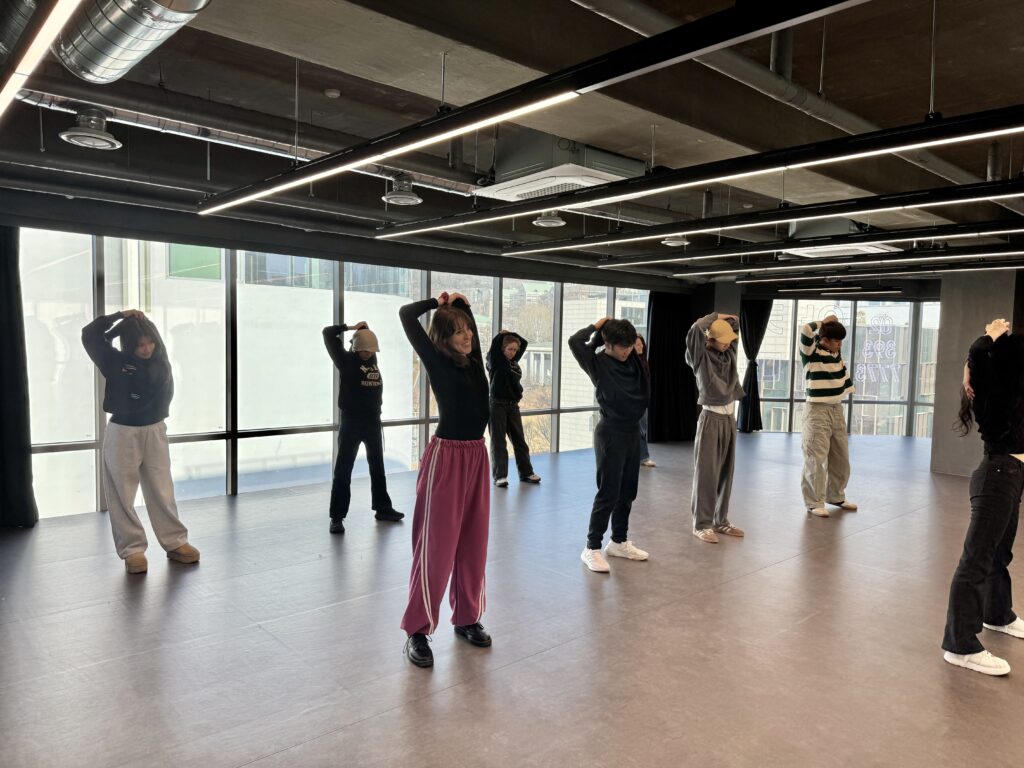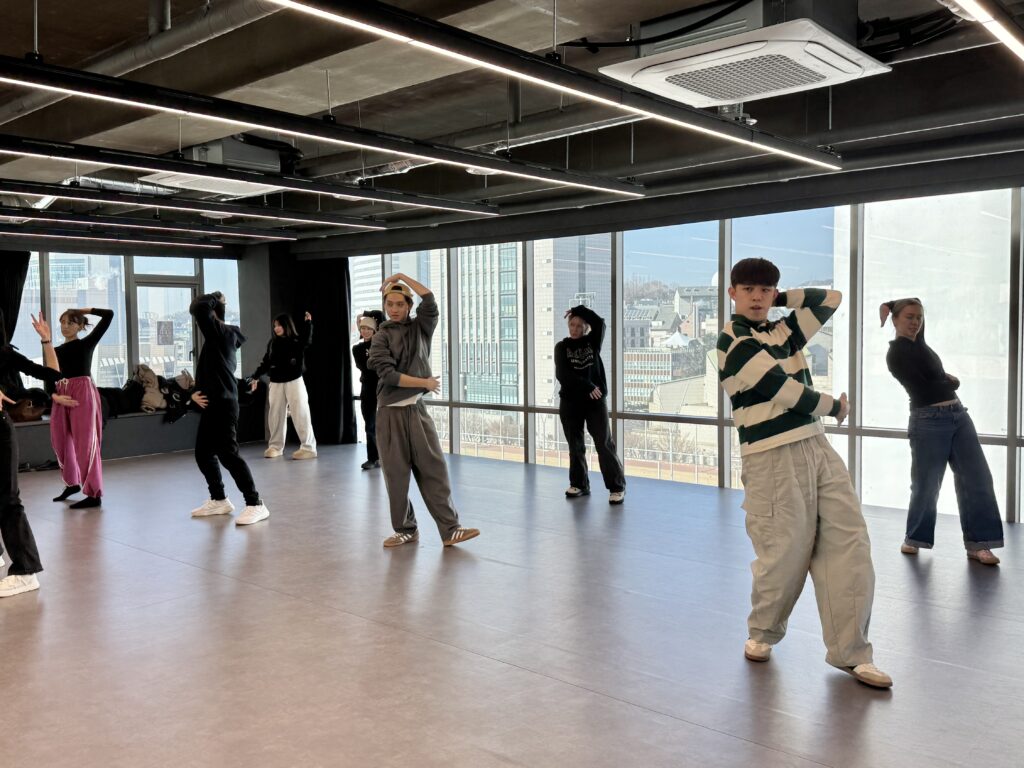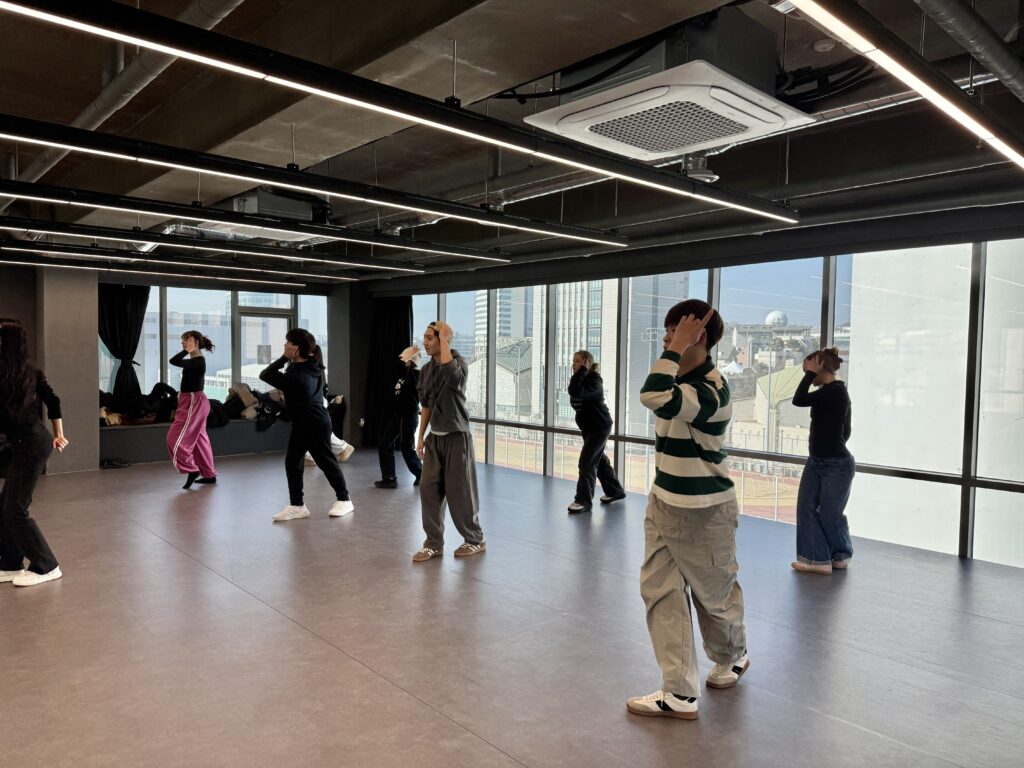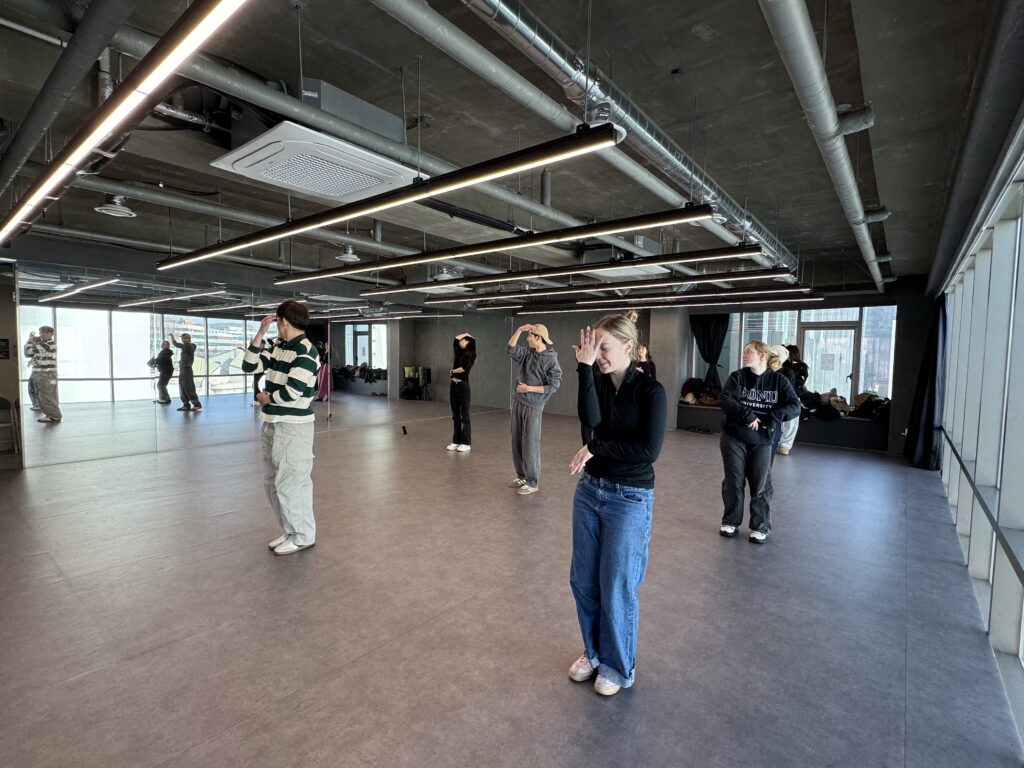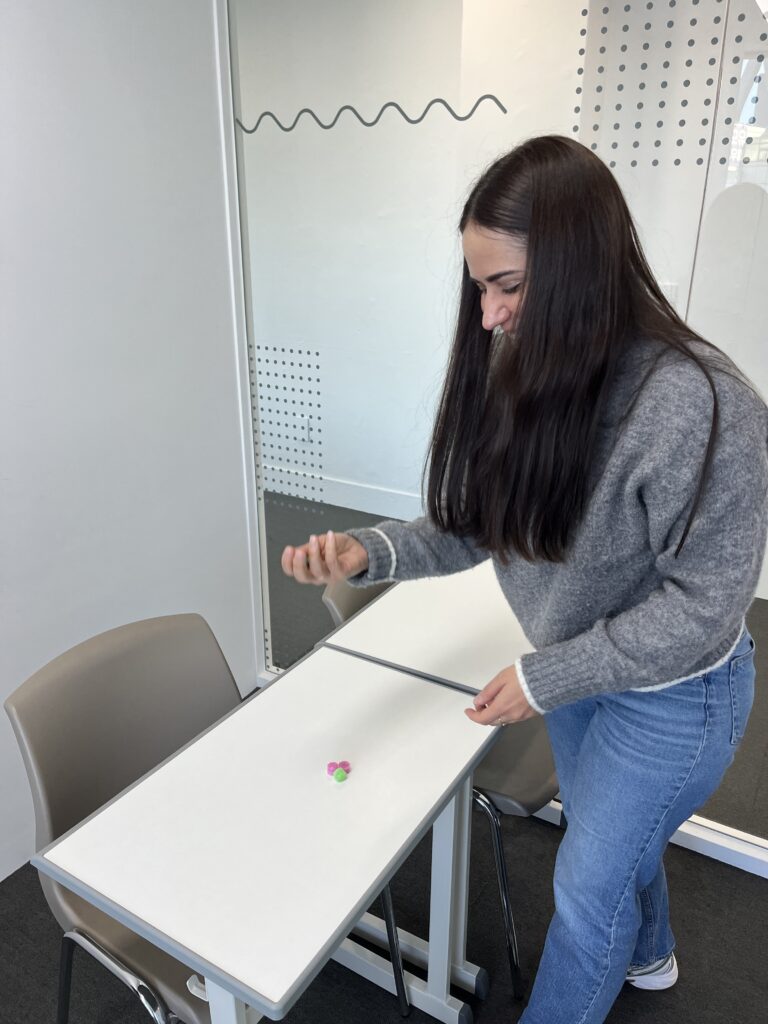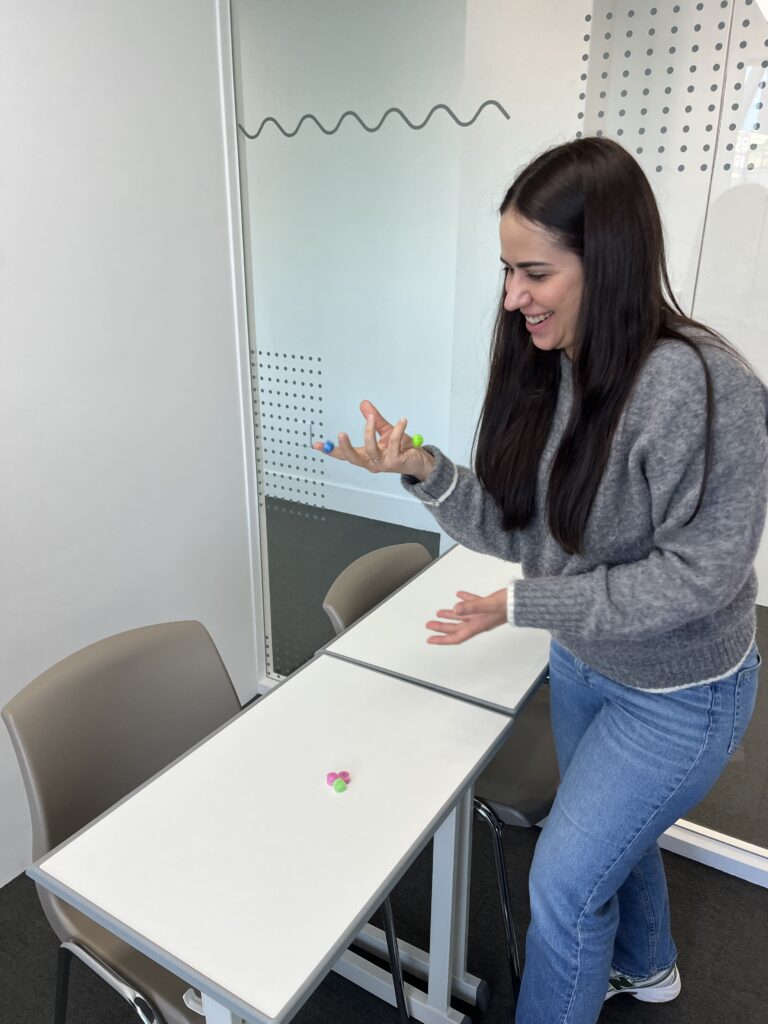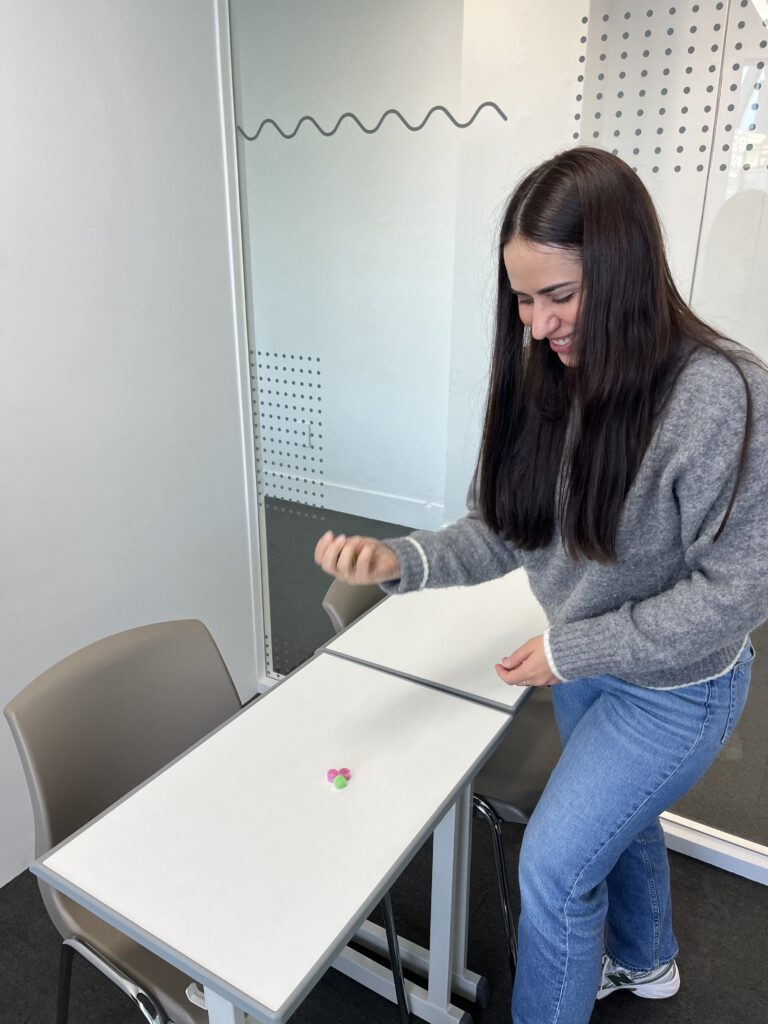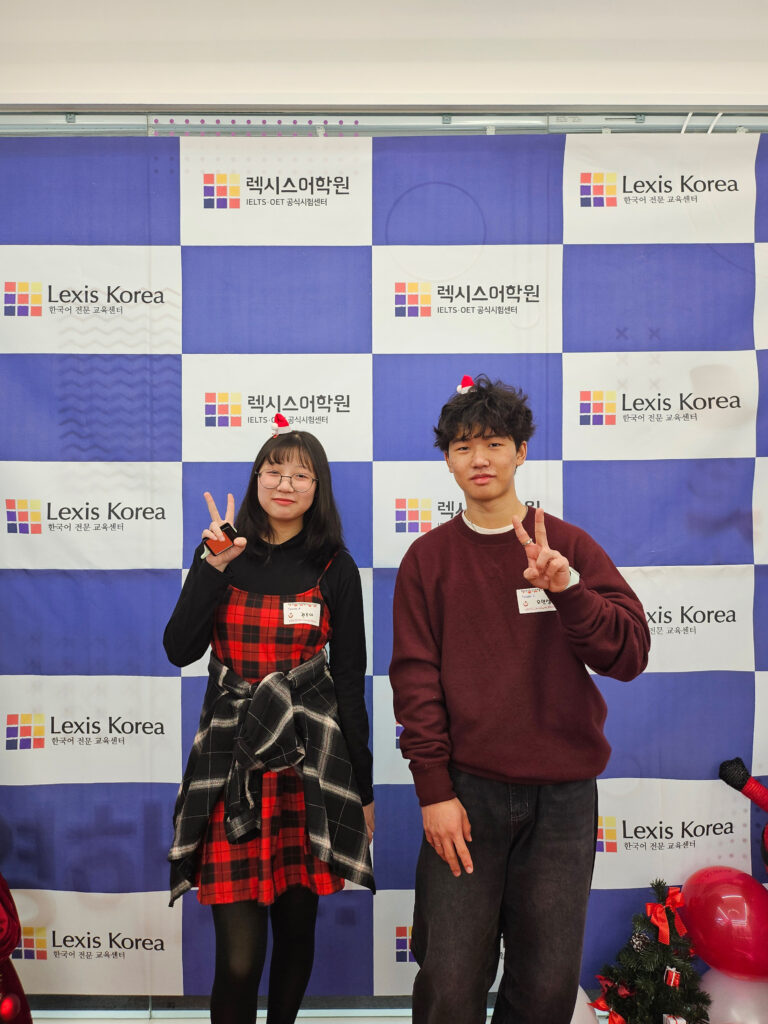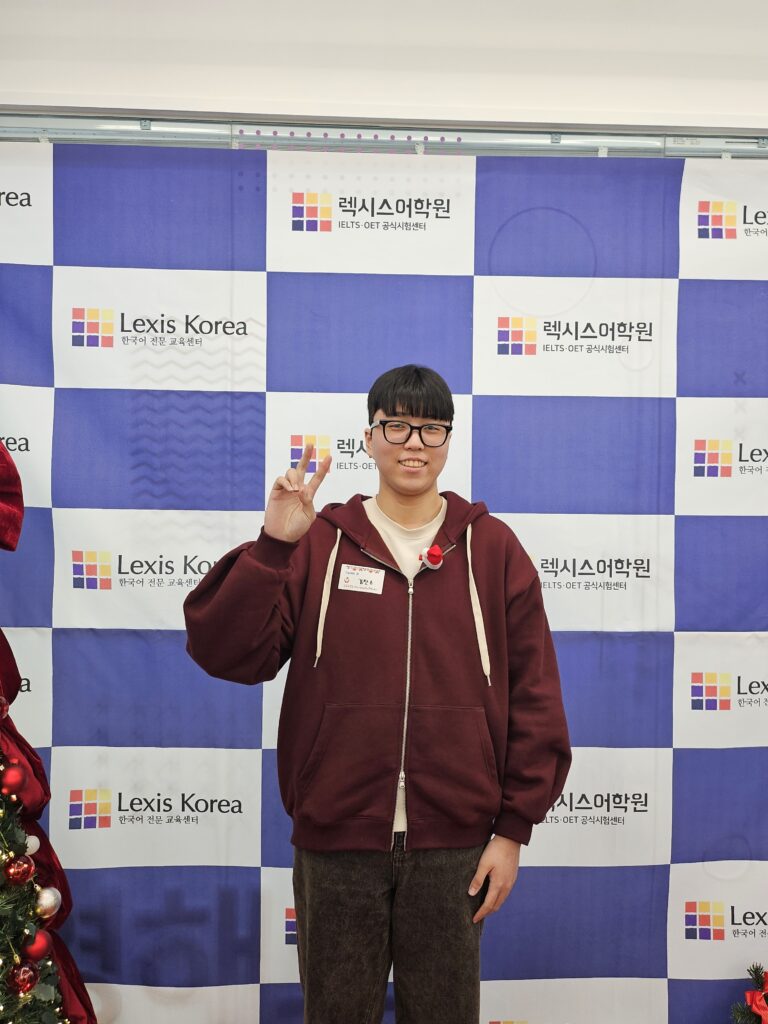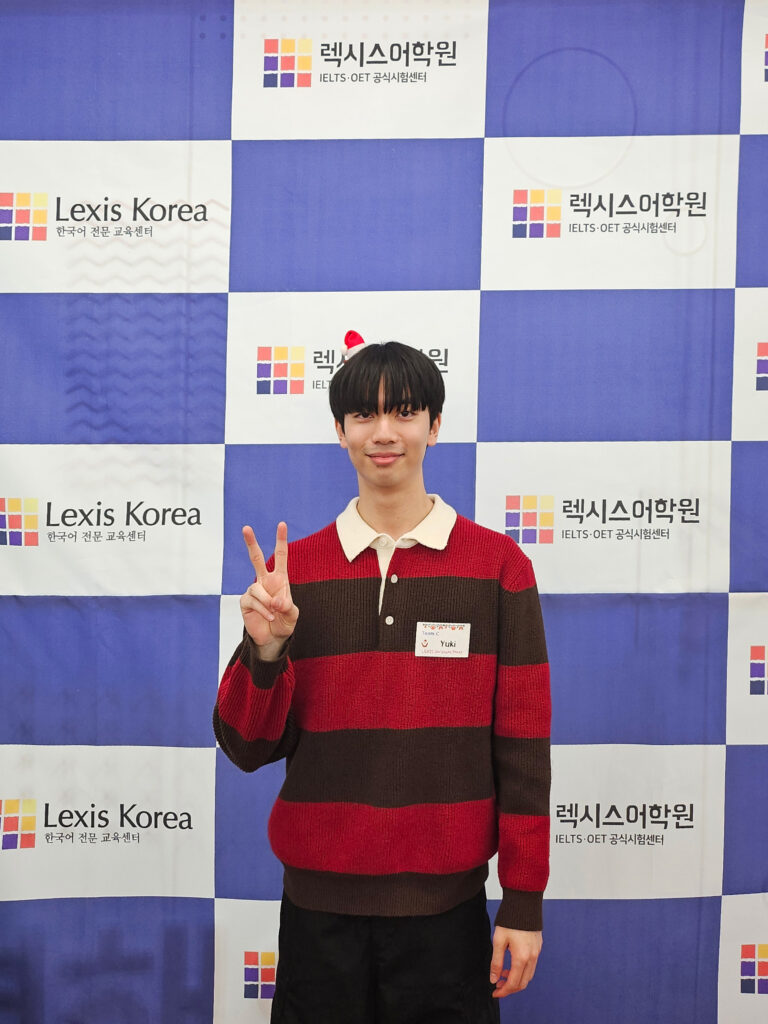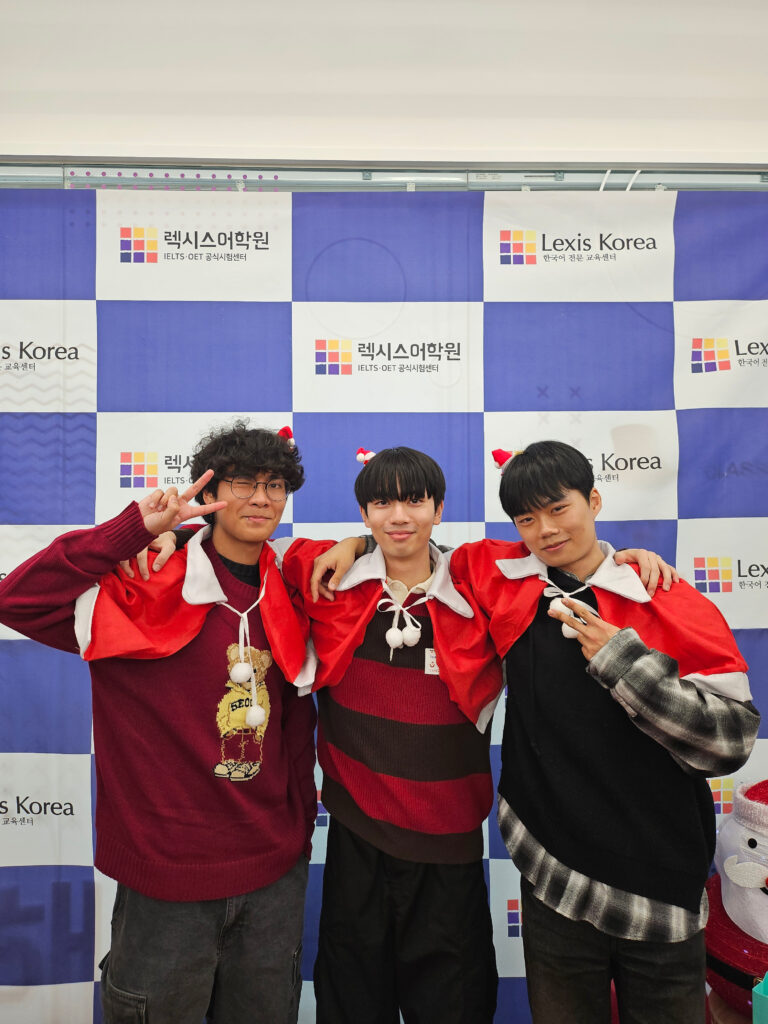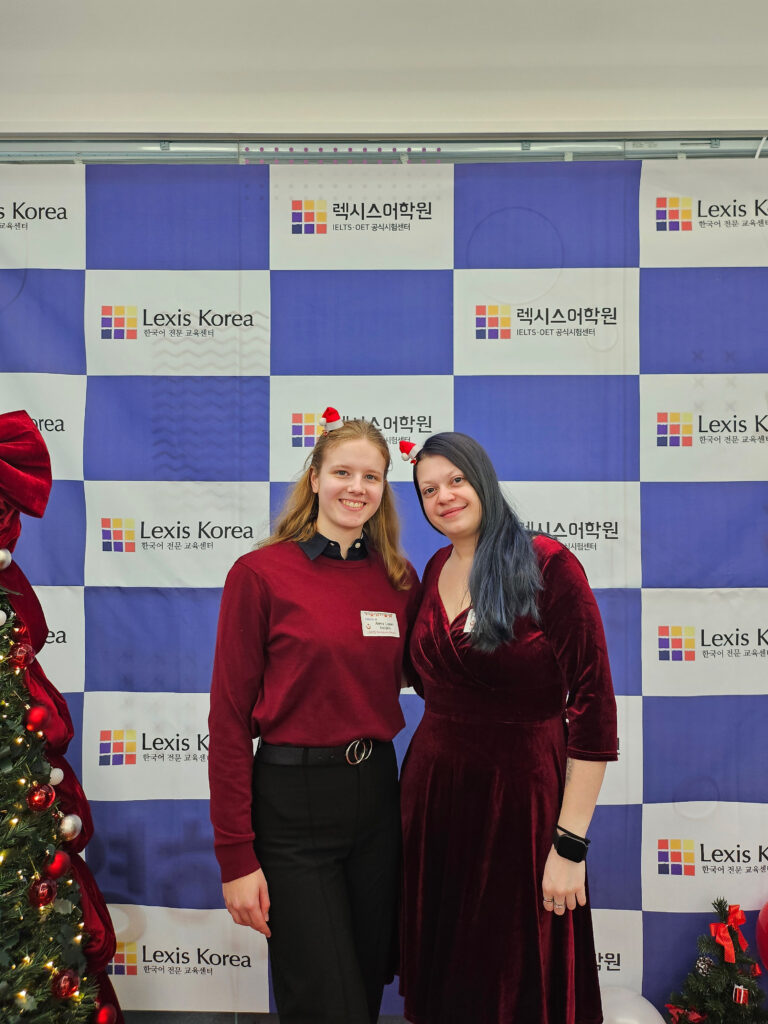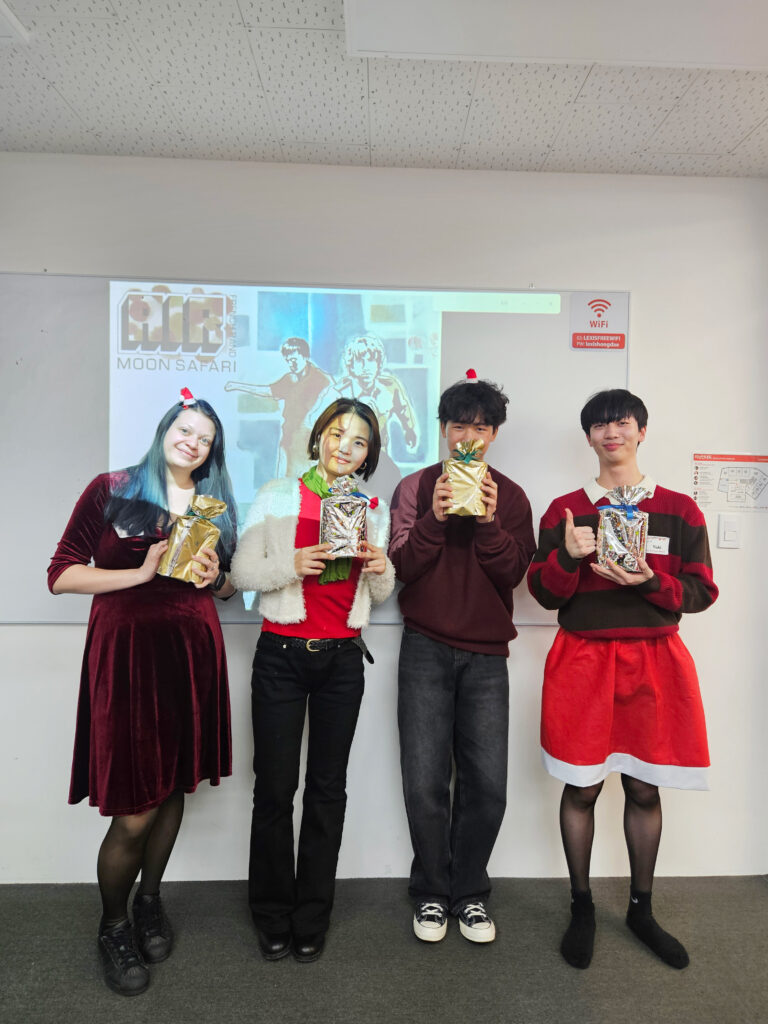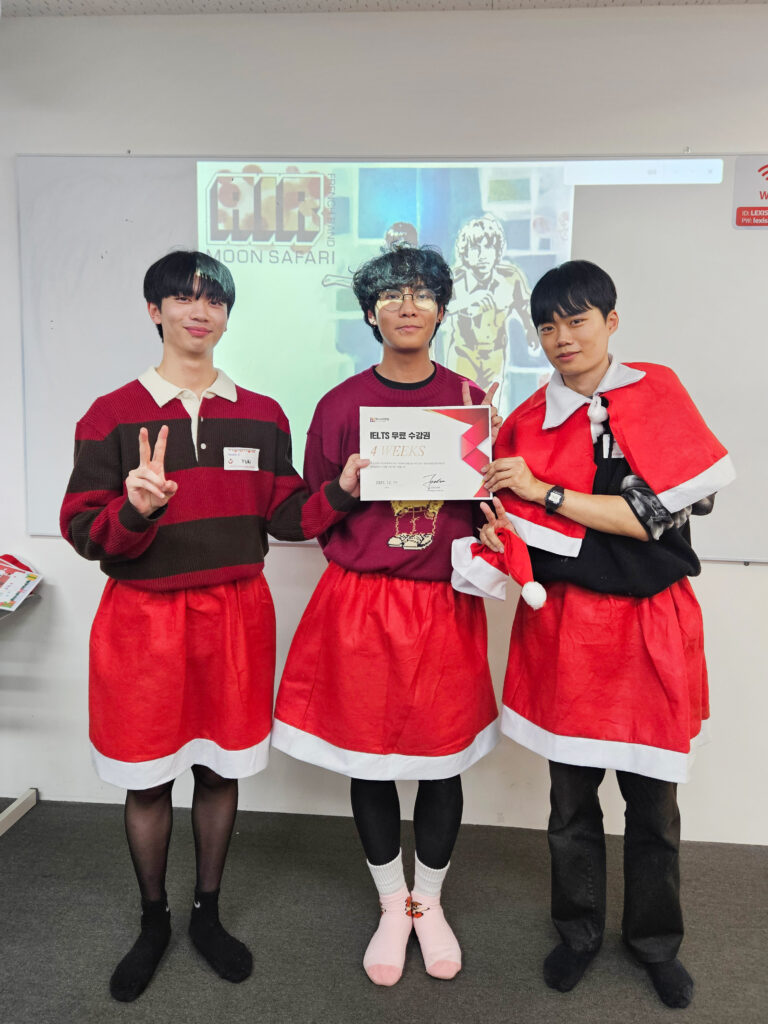
K-POP DANCE – Apink – Love Me More

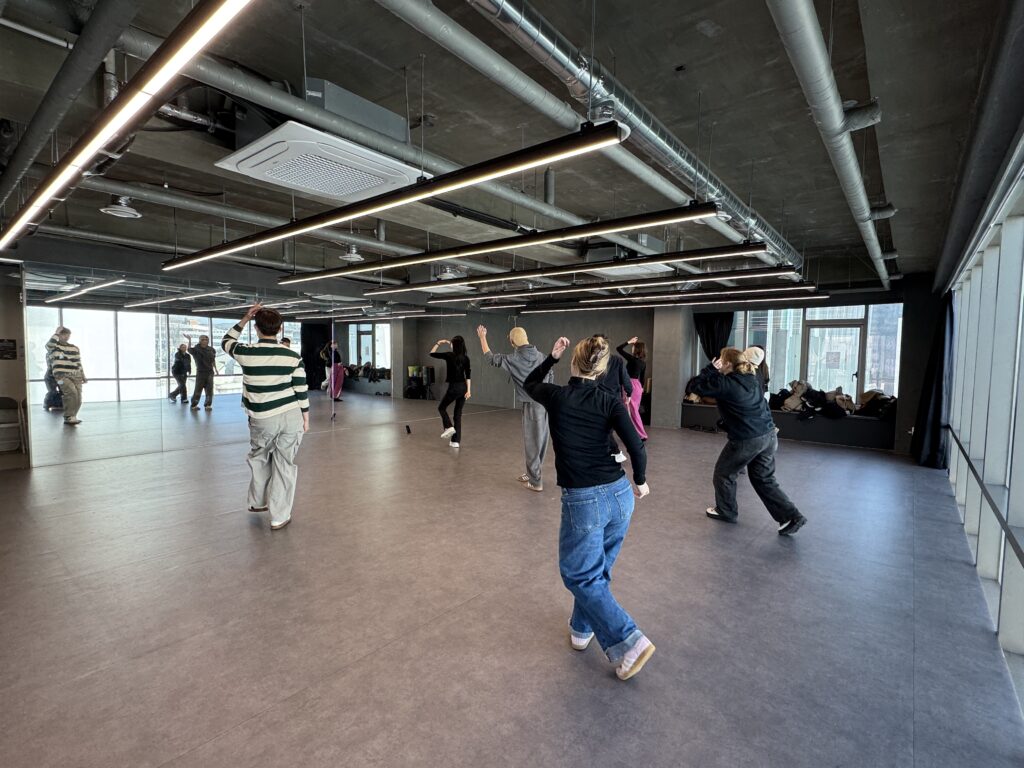
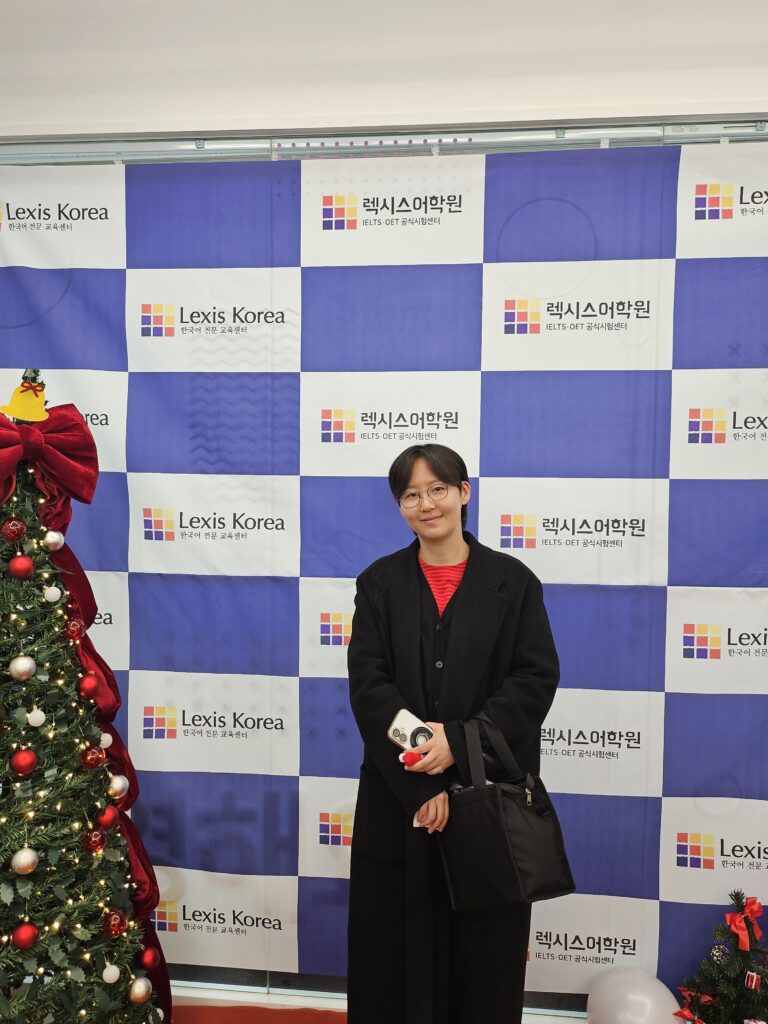
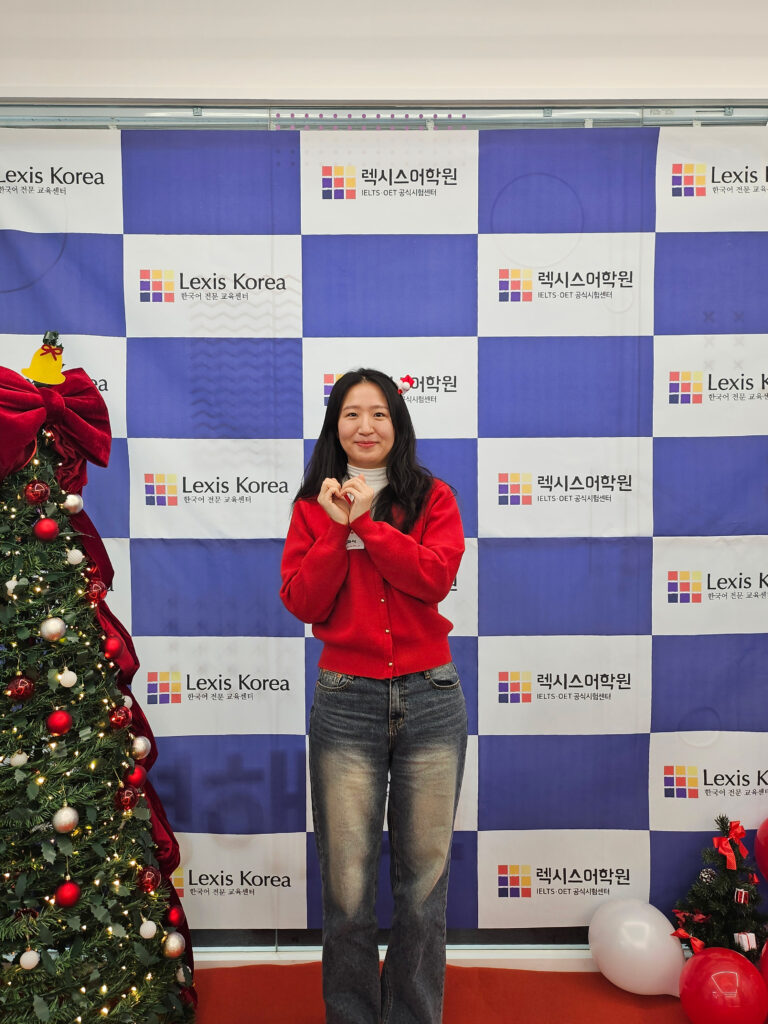
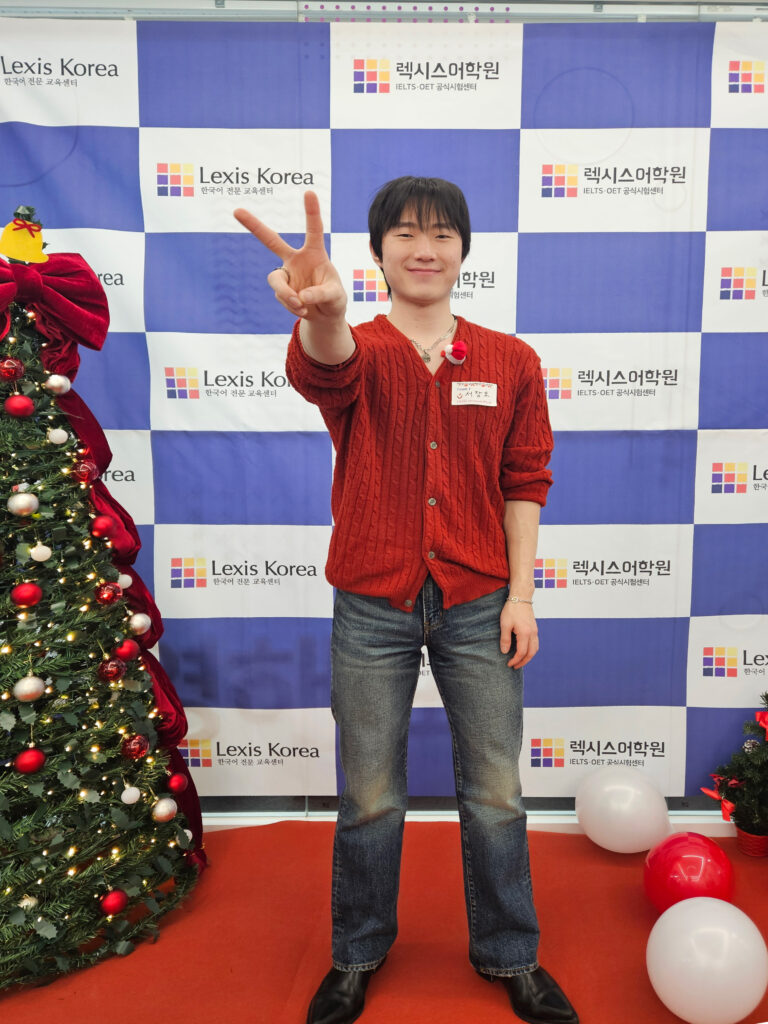
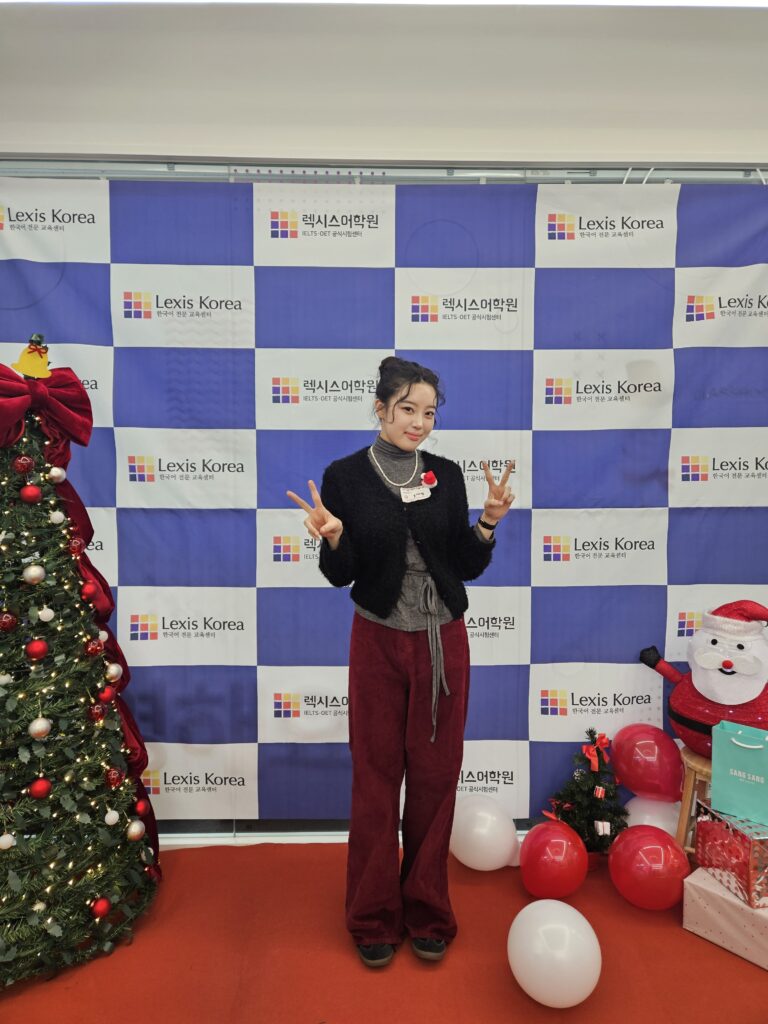
안녕하세요! 금요일에 우리는 K-POP 안무를 배웠어요.

이번 시간에 배운 안무는 ‘Apink’의 ‘Love Me More’이에요 🙂

안무를 배우기 전에 스트레칭으로 굳은 몸을 풀었어요.

이제 본격적으로 안무를 배워 볼까요?

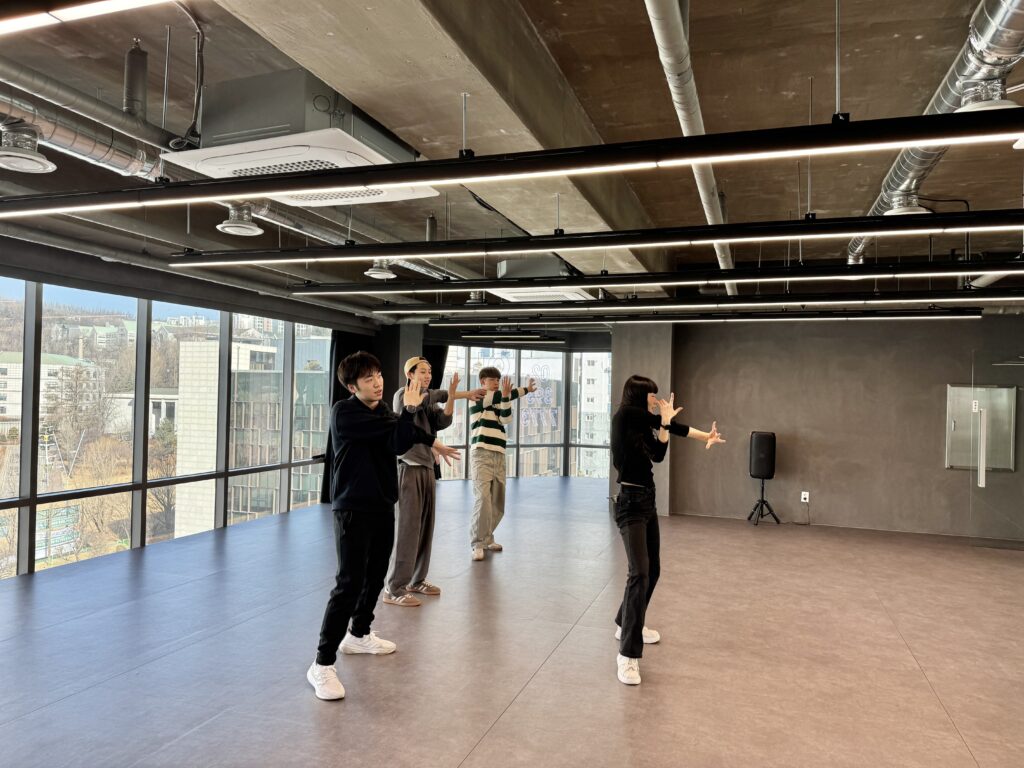
안무 선생님을 따라 한 동작씩 익혀 갔어요.

먼저 느린 음악 속도에 맞춰 동작을 연습하고, 그다음 원래 속도에 맞춰서도 해 보았어요 🙂

모두 집중해서 선생님을 따라 했어요.

처음에는 조금 어려웠지만, 연습할수록 점점 더 잘하게 되었어요.

중간에 잠시 쉬는 시간도 가졌지만, 학생들은 계속 연습했어요.

열정이 정말 대단해요!

마지막으로 각자 휴대폰으로 동영상을 촬영했어요.

나중에 즐거운 추억으로 남을 것 같아요!

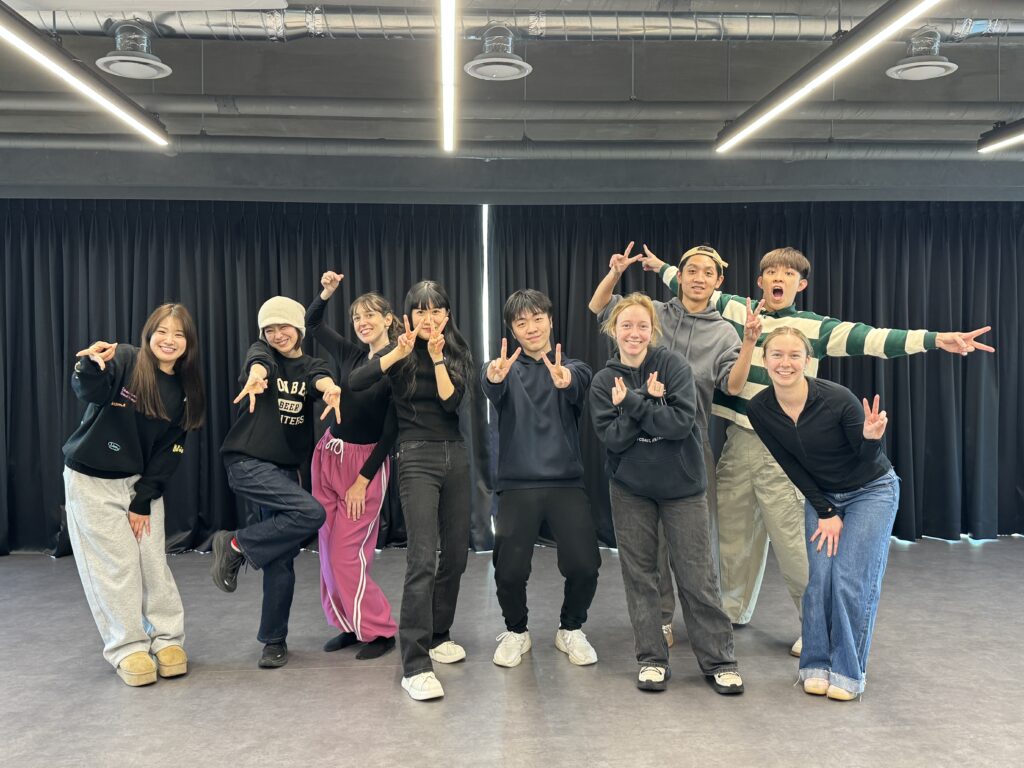
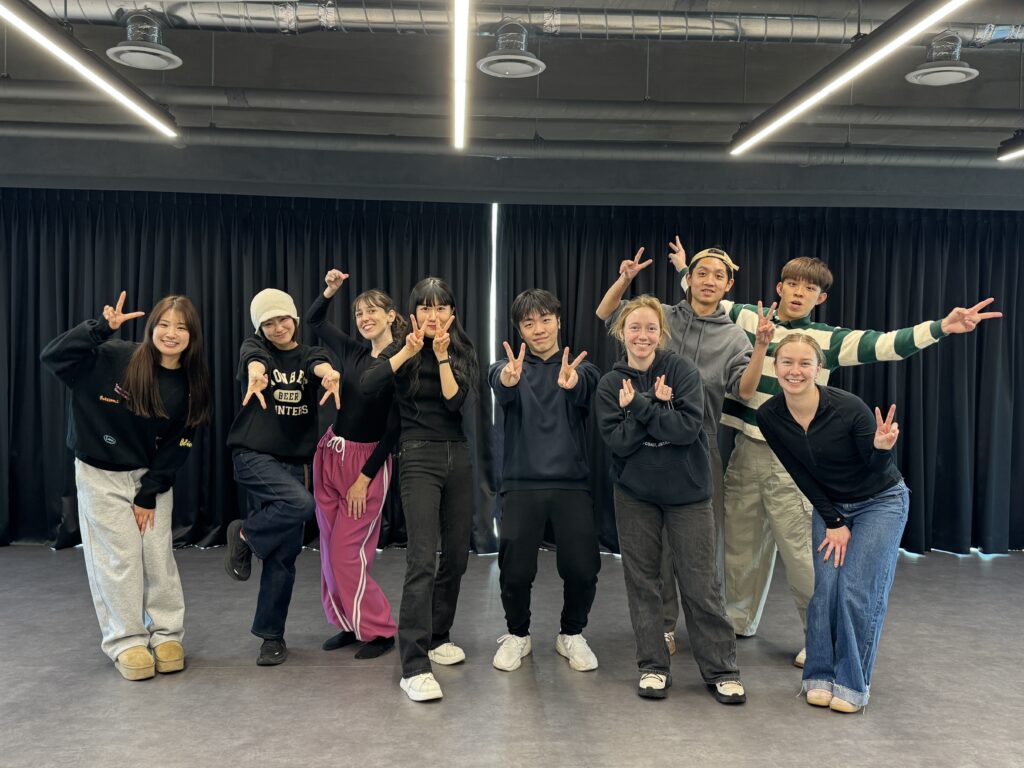
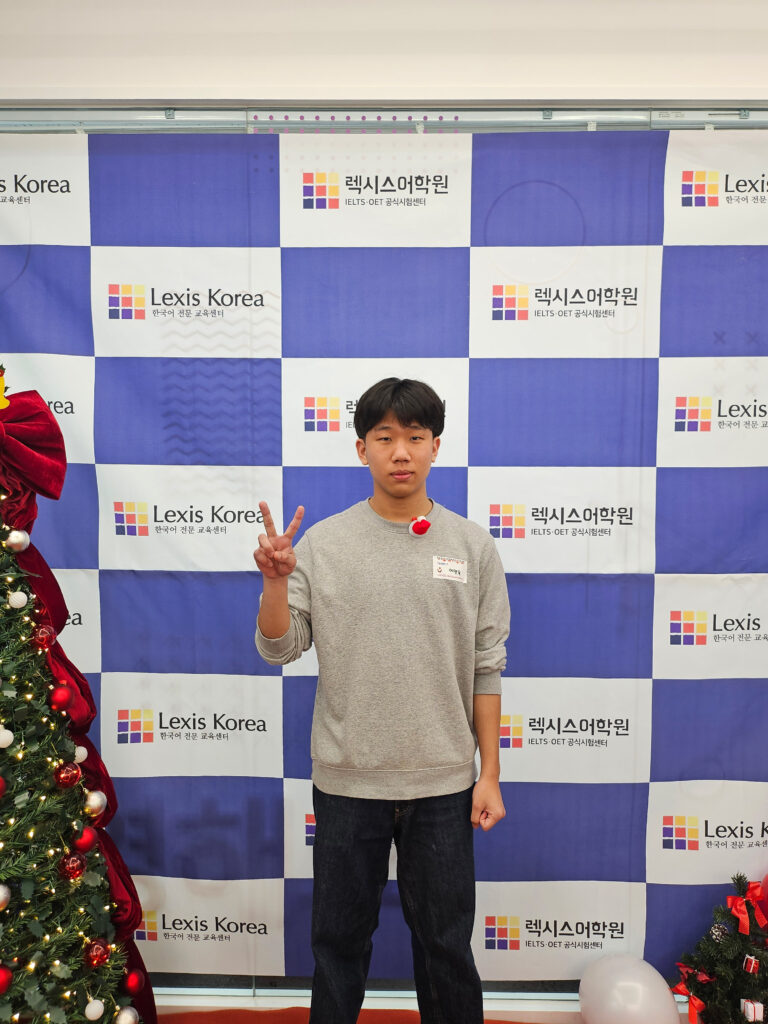
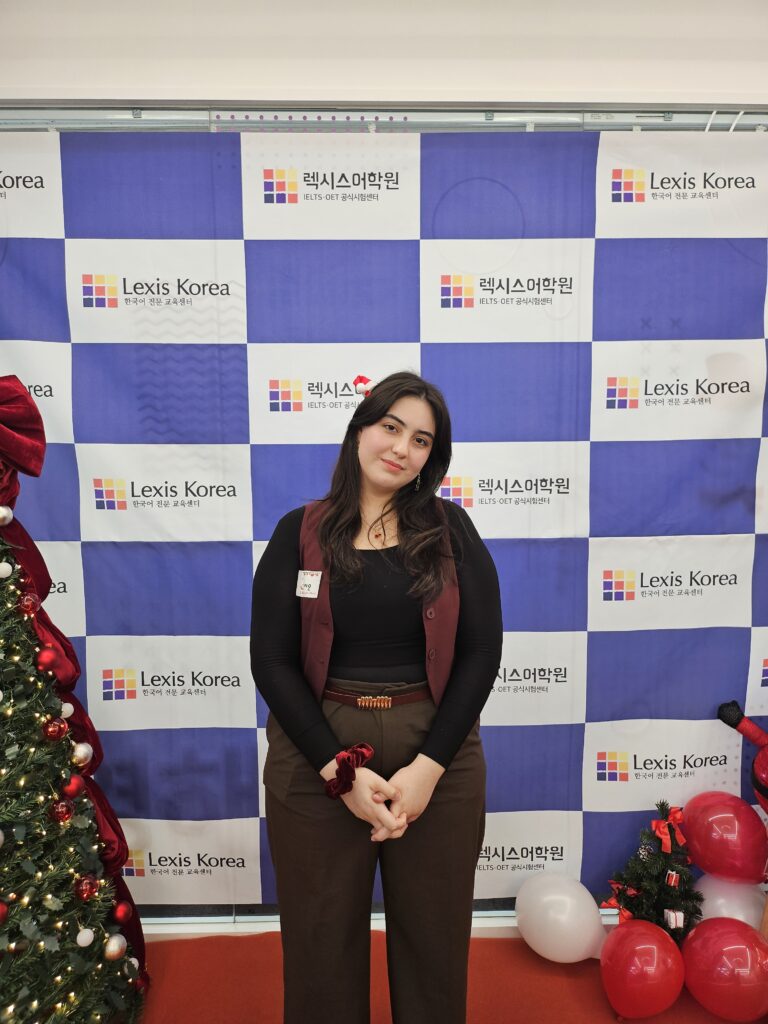
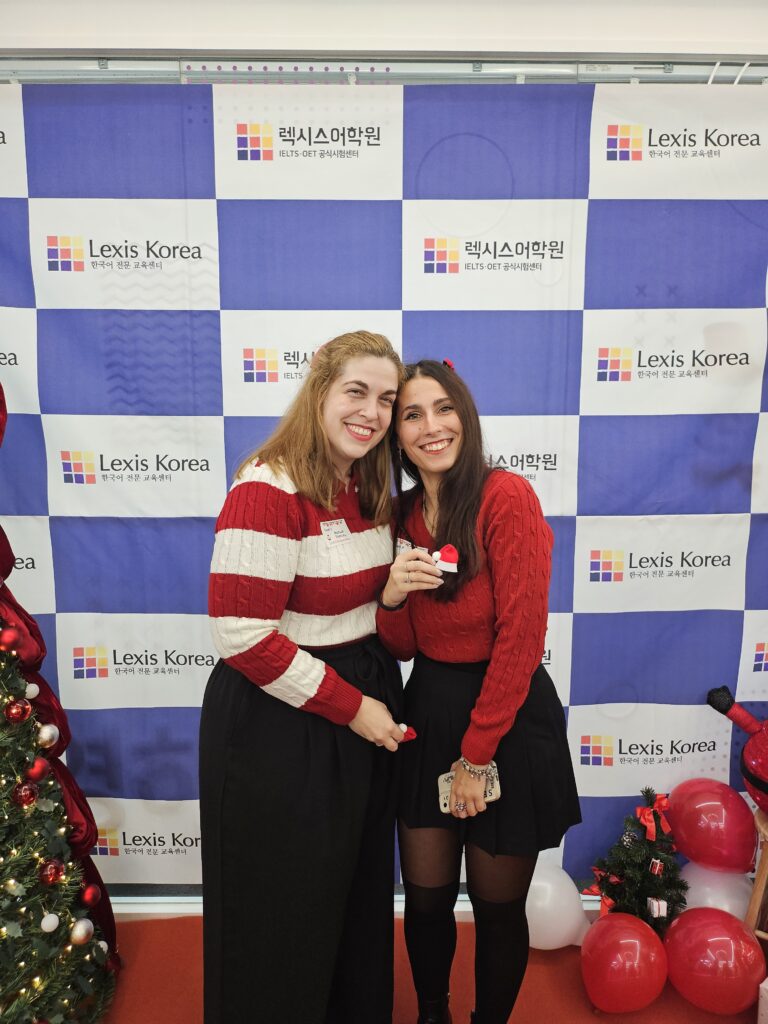
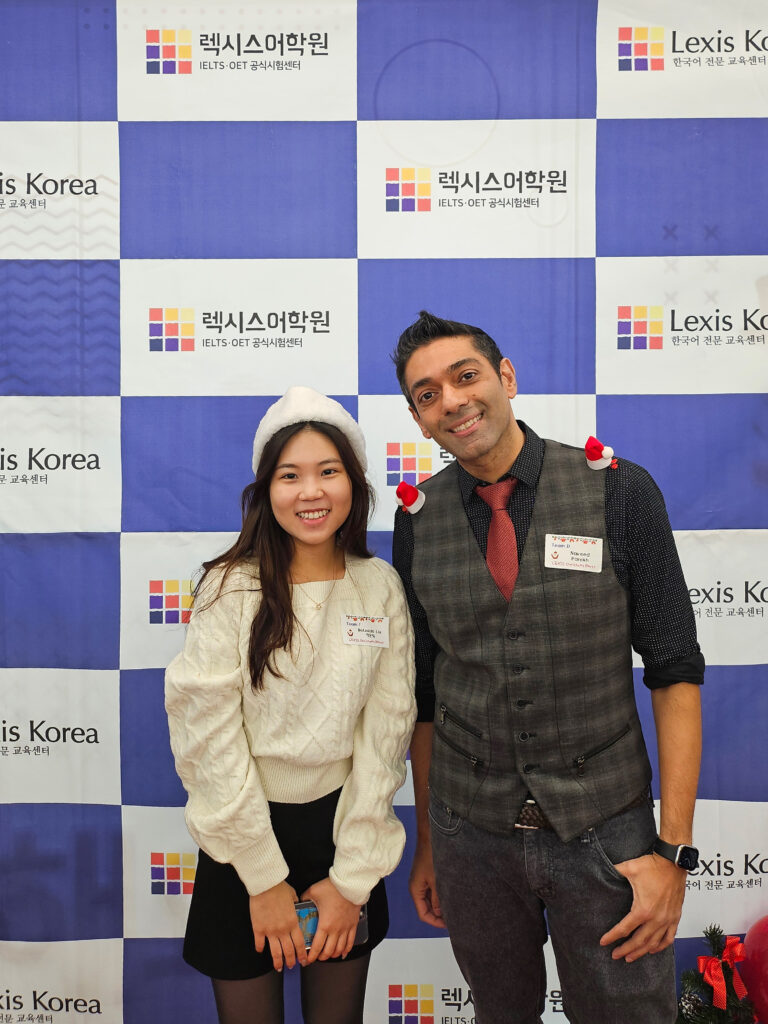
안무 선생님과 기념사진도 찰칵! 찍은 후, 오늘 수업을 마무리했어요 🙂

정말 즐거운 시간이었어요!

Hello!

On Friday, we learned a K-pop dance routine.
The choreography we learned this time was “Love Me More” by Apink!

Before learning the routine, we warmed up and loosened our stiff bodies with some stretching.
Now, shall we start learning the choreography?

We followed the dance instructor and learned the moves one by one.

First, we practiced the moves at a slow tempo,
and then we tried them again at the original speed 🙂
Everyone stayed focused and followed the instructor closely.

It was a little difficult at first,
but the more we practiced, the better we became.

We took a short break in the middle,
but the students kept practicing.
Their passion is truly amazing!

Lastly, everyone recorded a video on their phones.
I think it will become a fun and happy memory!

After taking a group photo with the instructor,
we wrapped up today’s class.

It was such a fun time!
Making New Year’s Cards – 연하장 만들기

안녕하세요! 오늘은 학생들과 함께 새해를 맞아 연하장을 직접 만들어 보았어요.

연하장은 새해 인사 카드예요. 한국에서는 새해가 되면 가족, 친구, 선생님, 직장 동료에게 “새해 복 많이 받으세요”라는 말을 전하는데요, 이때 연하장을 보내면 더 따뜻한 마음을 나눌 수 있어요.

한국에서 연하장이 어떤 의미를 갖는지 설명해 주었더니, 학생들은 곧 누구에게 쓸지 즐겁게 고민하기 시작했어요.

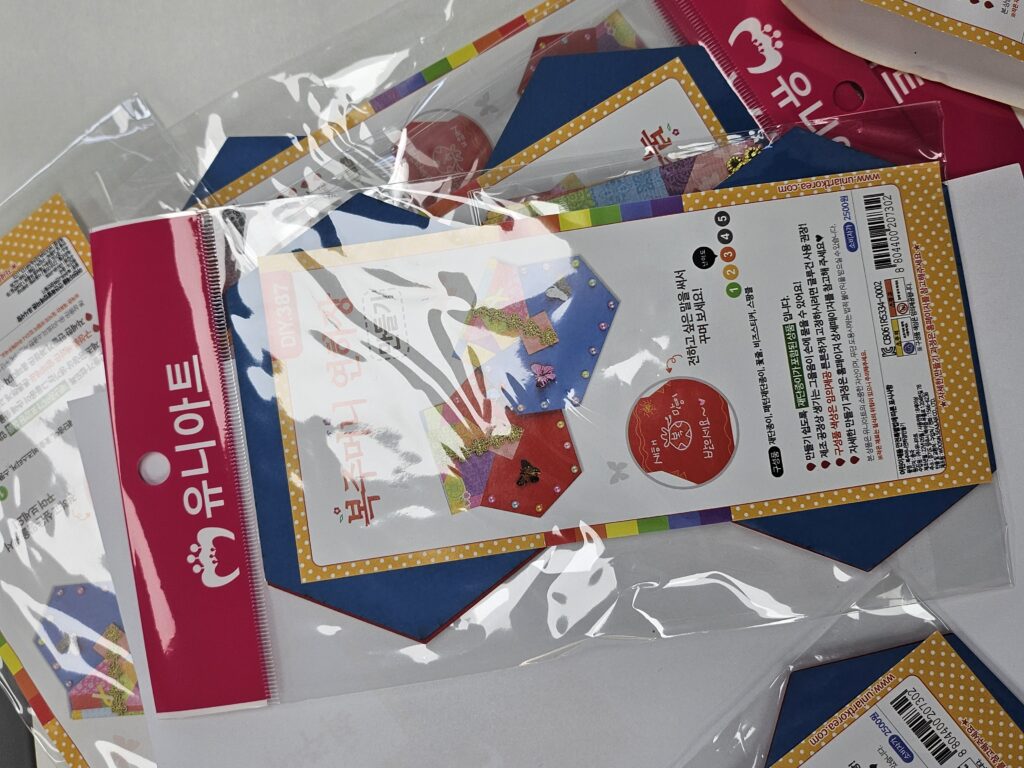
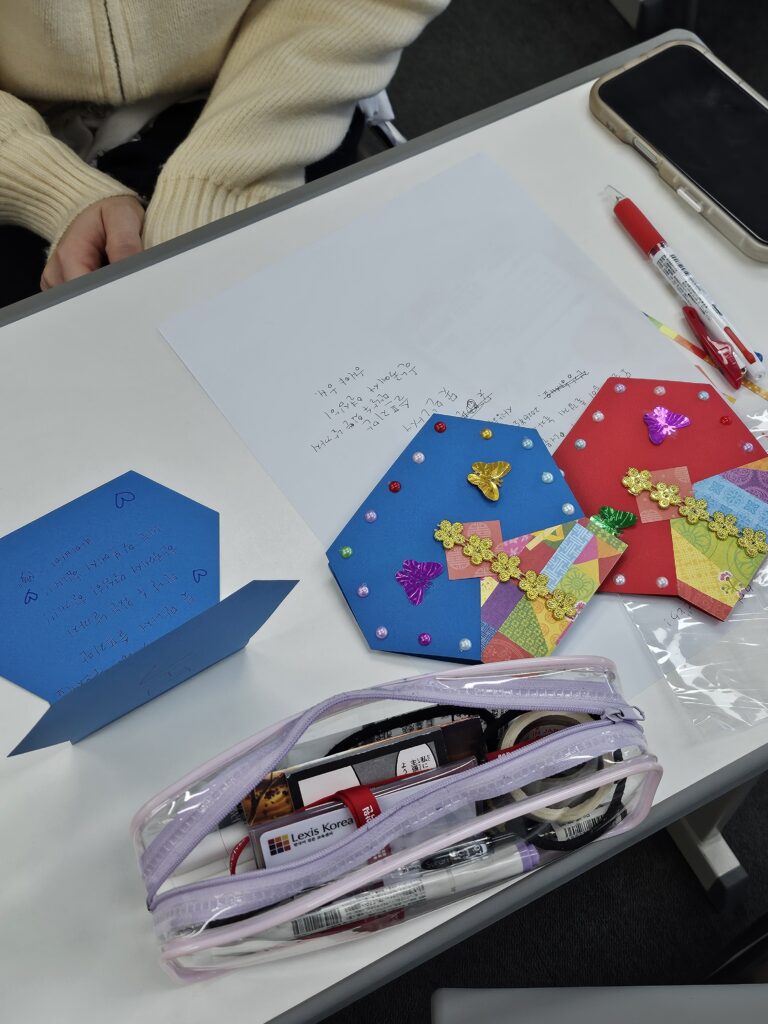
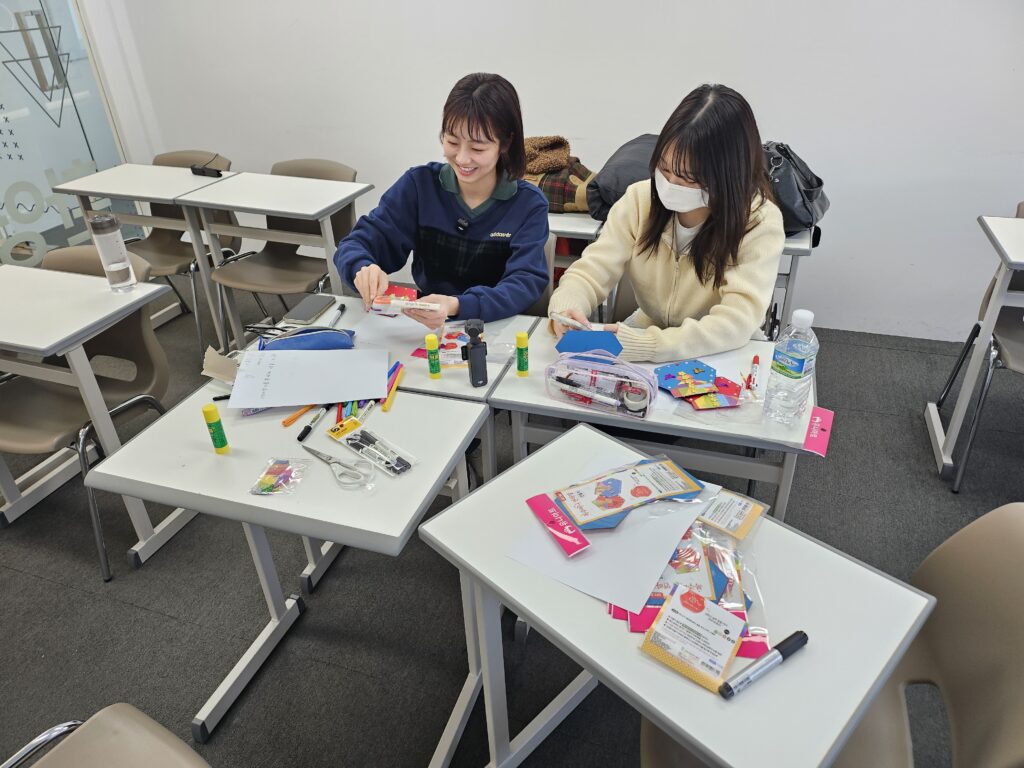
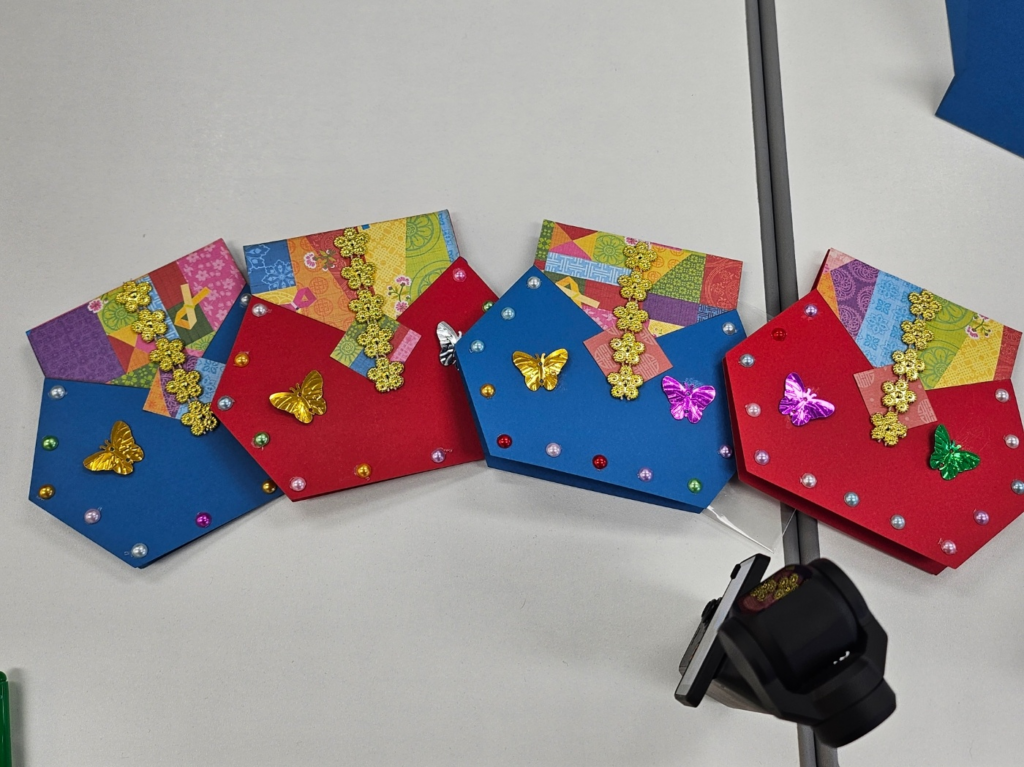
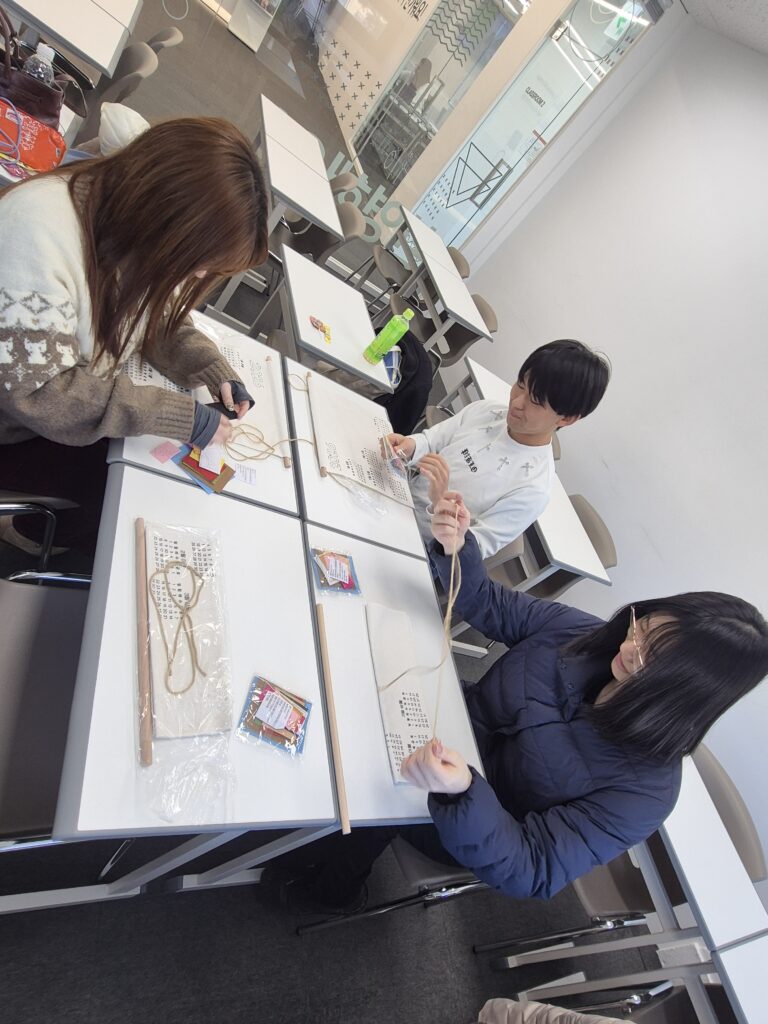
준비된 재료로 연하장을 만들기 시작했어요. 모양은 한국의 전통 복주머니를 닮아 정말 귀여웠답니다. 학생들은 하나하나 정성을 담아 열심히 연하장을 꾸몄어요.

연하장을 다 만든 후, 학생들은 편지를 바로 쓰지 않고 종이에 미리 연습한 뒤 차근차근 연하장에 편지를 써 내려갔습니다.

여태까지 배운 한국어를 열심히 사용해 편지를 쓰기 시작했어요.
배운 한국어로 편지를 쓰니 학생들 스스로 뿌듯함을 느끼기도 하고, 선생님도 학생들이 한국어를 열심히 사용하는 모습을 보며 정말 기뻤답니다.

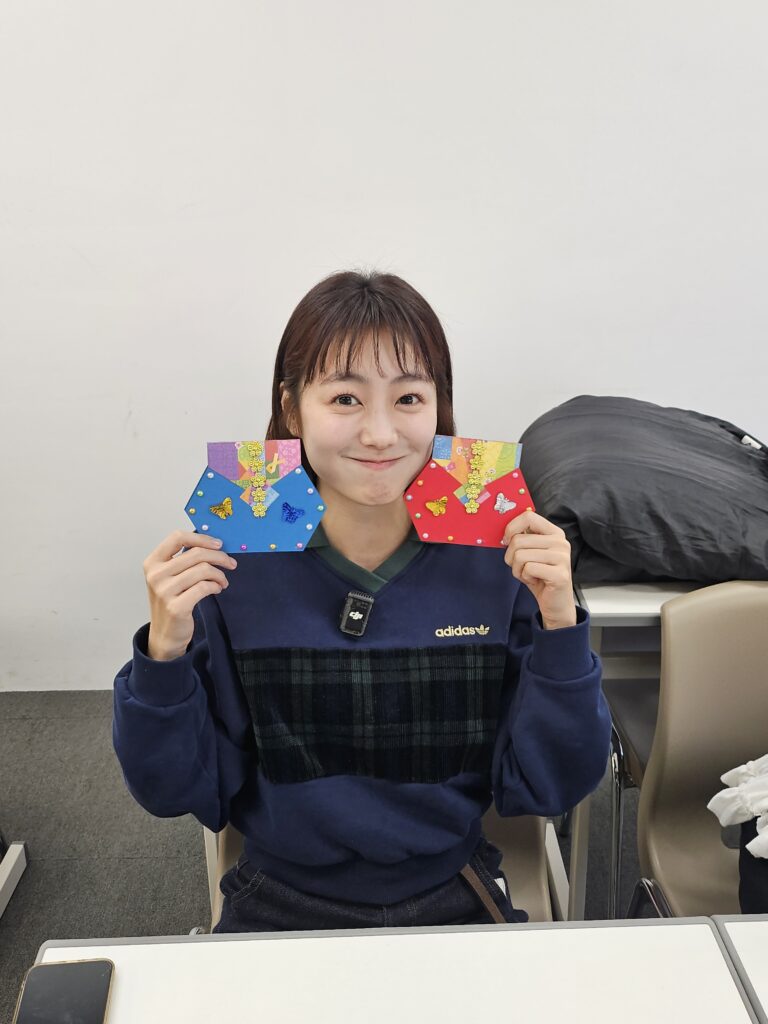
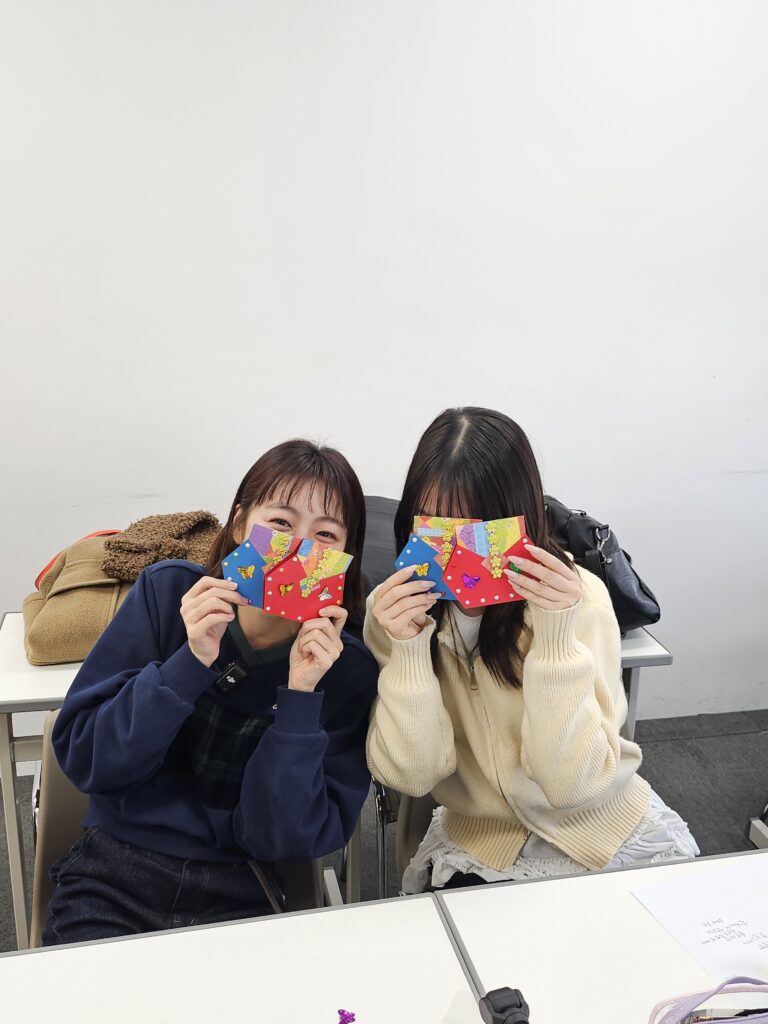
다 만들고 나서 인증샷 찰칵!

완성! 색깔이 정말 예쁘지 않나요?
연하장을 다 만든 뒤에는 각자의 나라에도 연하장이 있는지, 또 누구에게 보낼 건지 이야기하며 활동을 마무리했답니다.
우리 다음에도 재미있는 프로그램으로 다시 만나요!

Making New Year’s Cards

Hello! 🎉
Today, we welcomed the New Year by making New Year’s greeting cards together with the students.
In Korea, it’s common to say “Saehae bok mani badeuseyo” (“Happy New Year, wishing you lots of blessings”) to family, friends, teachers, and colleagues. Sending a greeting card makes that message feel even warmer.
We started crafting with the prepared materials, and the design looked just like a traditional Korean lucky pouch (bokjumeoni)—so cute! Each student decorated their card with care and creativity.
Before writing directly on the card, they practiced their messages on paper first, then carefully wrote them inside the greeting card. Using the Korean they’ve learned so far, they poured their effort into writing heartfelt letters. The students felt proud of themselves, and as a teacher, I was truly happy to see them using Korean so diligently.
And of course—click! We took a photo to capture the moment.
The finished cards turned out beautifully, don’t you think?
Afterward, we talked about whether similar greeting cards exist in each of their countries and who they would send theirs to.
We wrapped up the activity with big smiles, and I can’t wait to meet again with another fun program next time!
National Museum of Korea – 국립중앙박물관

이번 주에는 국립중앙박물관에 다녀왔어요. 전 세계적으로 한국 문화에 대한 관심이 높아지면서 국립중앙박물관을 찾는 관람객들도 많이 증가했다고 해요. 특히 외국인 방문객이 2024년 상반기에 9.5만 명이었고 2025년에는 20만 명을 넘어섰다고 해요.

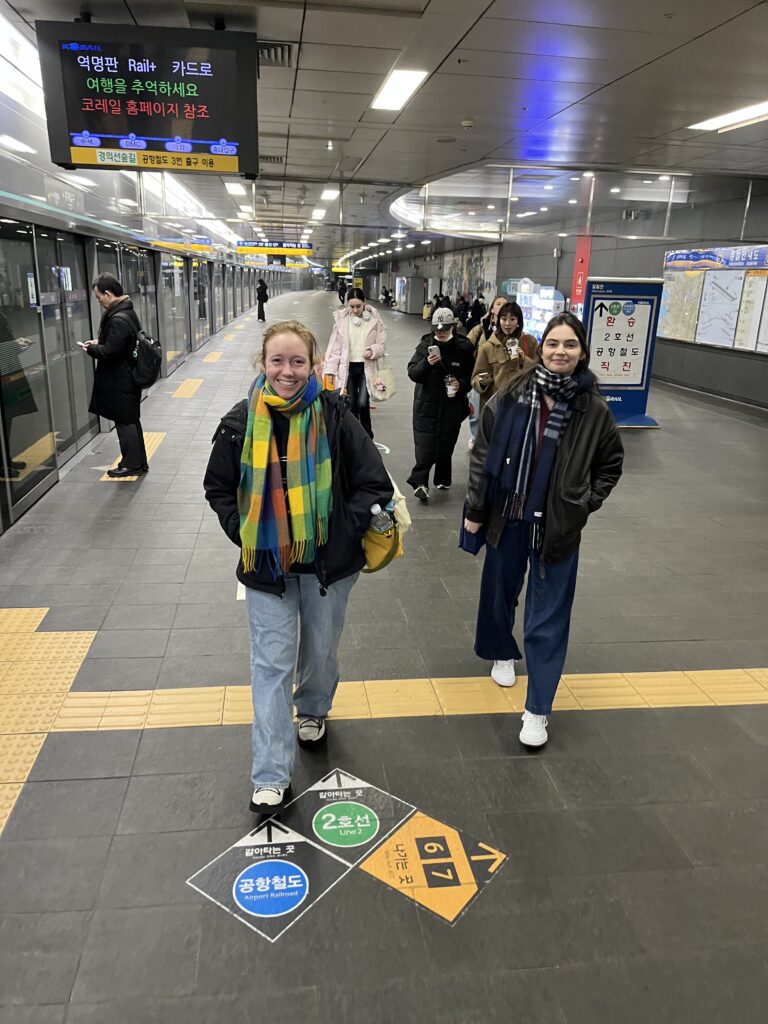
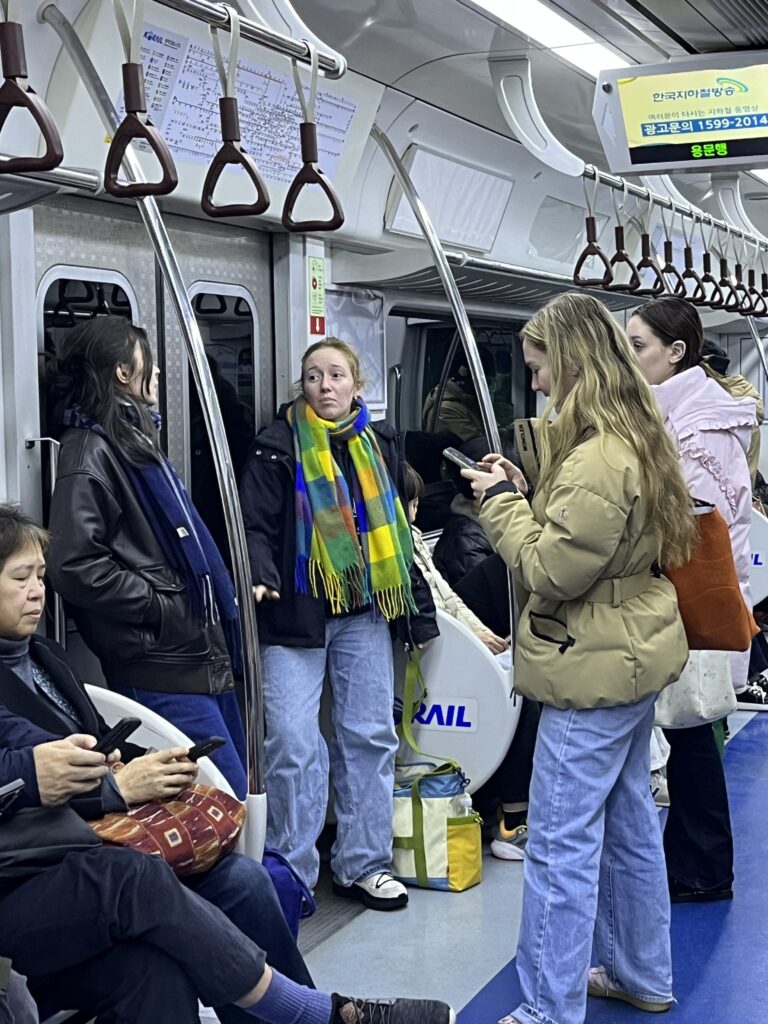
우리는 지하철을 타고 박물관으로 향했어요. 이촌역에 도착한 후에 표지판을 따라서 박물관으로 쉽게 갈 수 있었어요. 가는 통로 벽은 주요 전시품들로 장식되어 있었는데 실루엣만 볼 수 있어서 실제 전시품은 어떻게 생겼을까 궁금했어요.

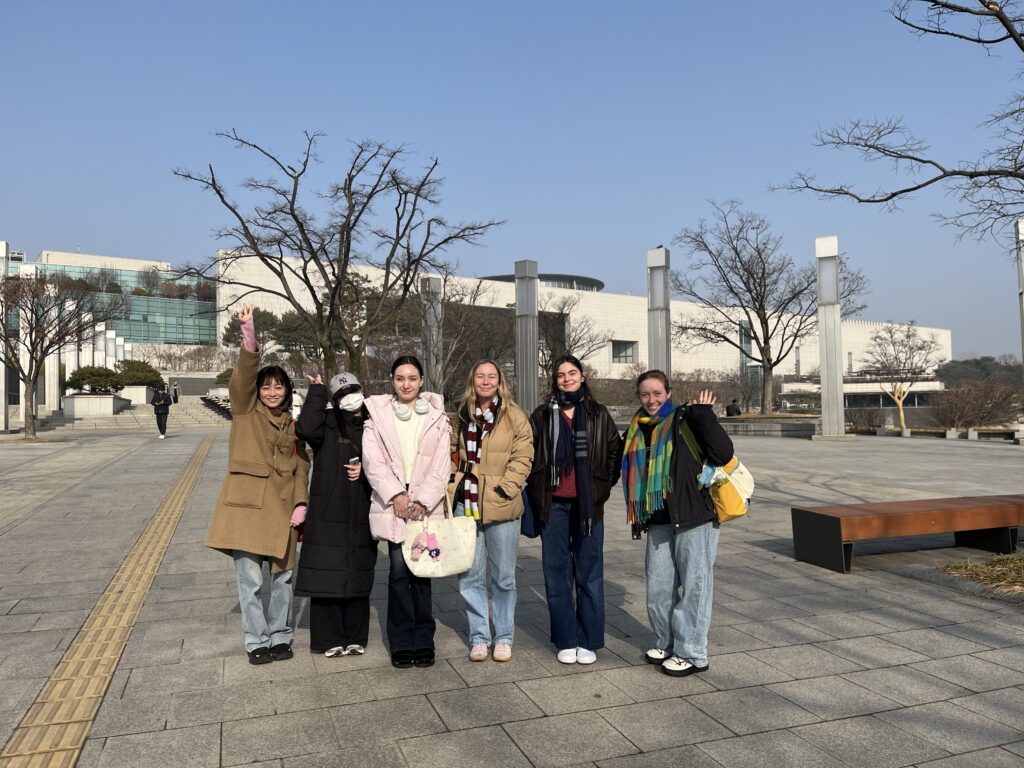
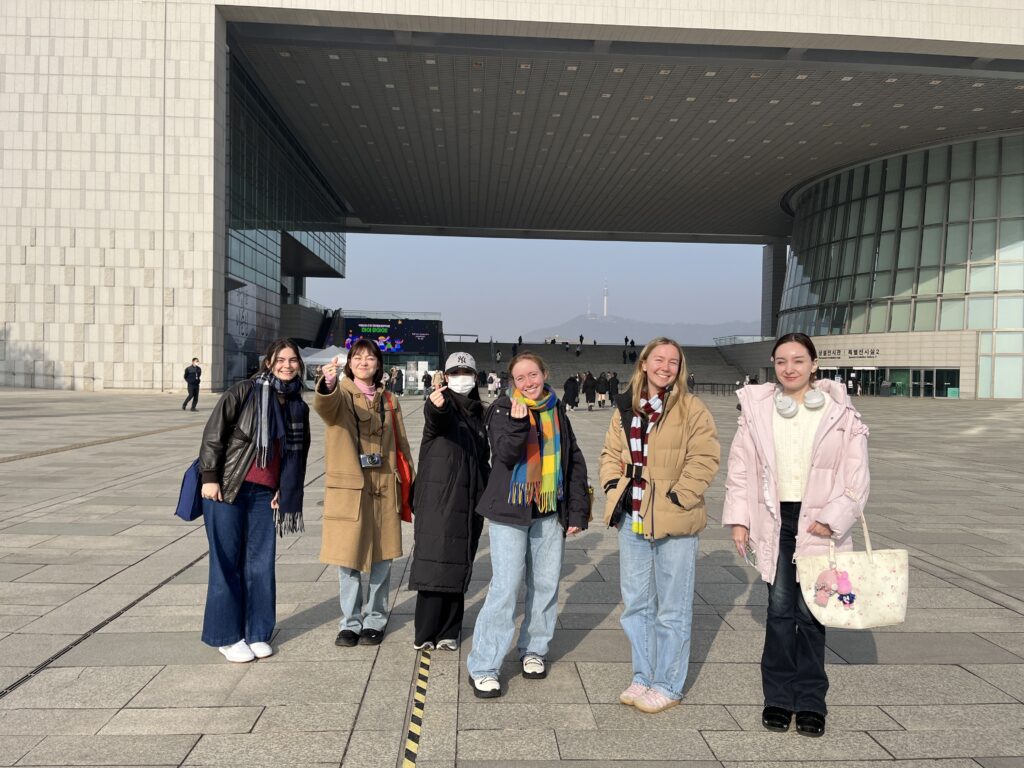
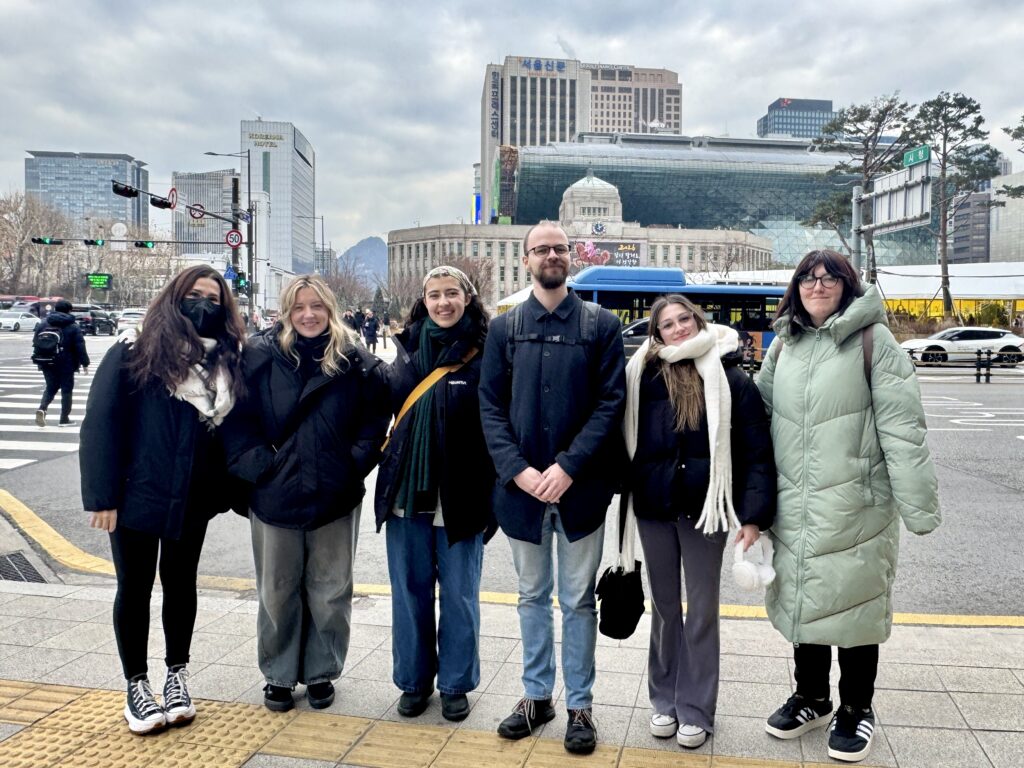
지하철역에서 나오니 박물관 앞에는 넓게 탁 트인 정원이 펼쳐져 있었어요. 기념 사진을 놓칠 수 없죠.

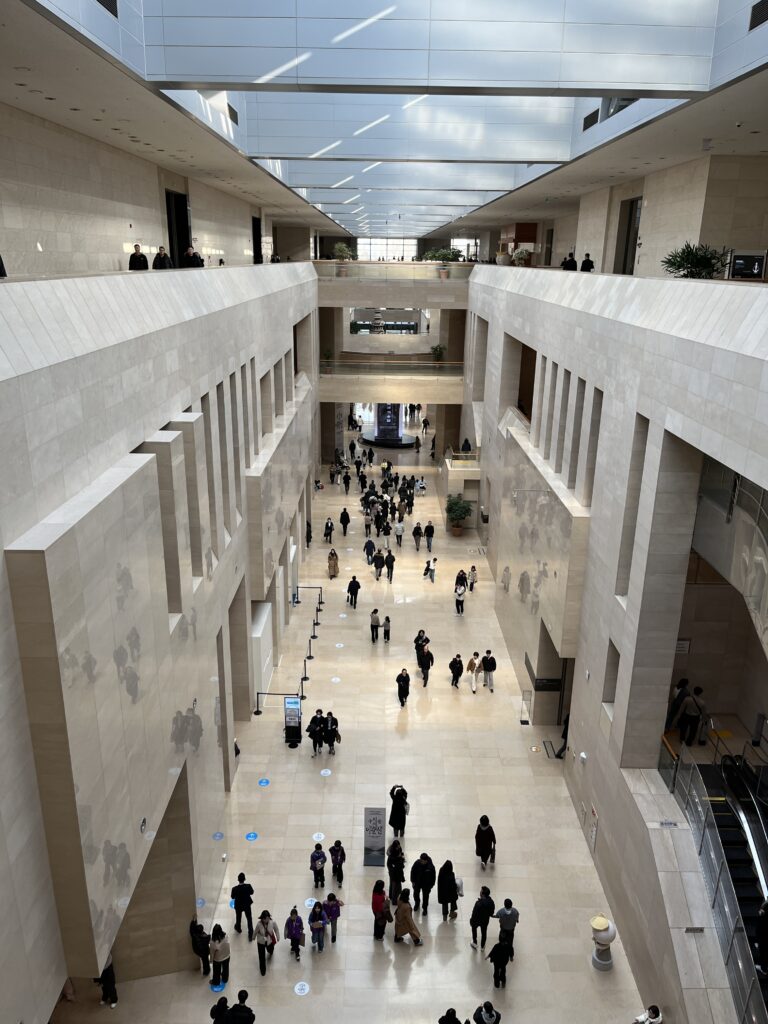
박물관 건물 가운데에는 뻥 뚫린 공간이 있는데 한옥의 대청마루를 형상화한 것이라고 해요. 박물관 건물이 액자처럼 저 멀리에 있는 남산과 남산타워를 보여주고 있었어요.

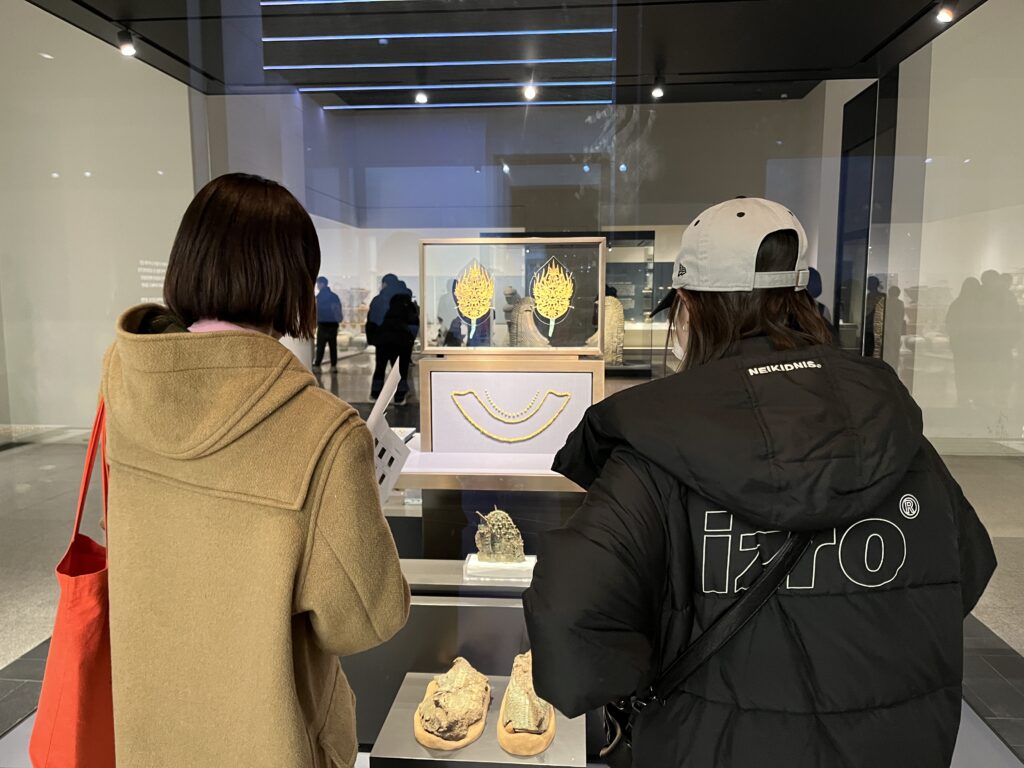
박물관에 들어서자마자 지도를 하나씩 받아 들고 자신이 관심있는 곳을 찾아 갔어요. 박물관으로 떠나기 전에 박물관 사이트에서 ‘명품 30선’을 미리 봤기 때문에 뭘 보고 싶은지 이미 알고 있었거든요.

박물관은 정말 넓었고 유물들도 너무 많아서 정신을 차릴 수가 없었어요. 박물관 사이트를 미리 보지 않았다면 아마 길을 잃고 말았을 거예요. 여러분들도 국립중앙박물관에 가기 전에는 미리 사이트를 보고 내가 보고 싶은 전시품이 어디에 있는지를 찾아본 후에 가세요.

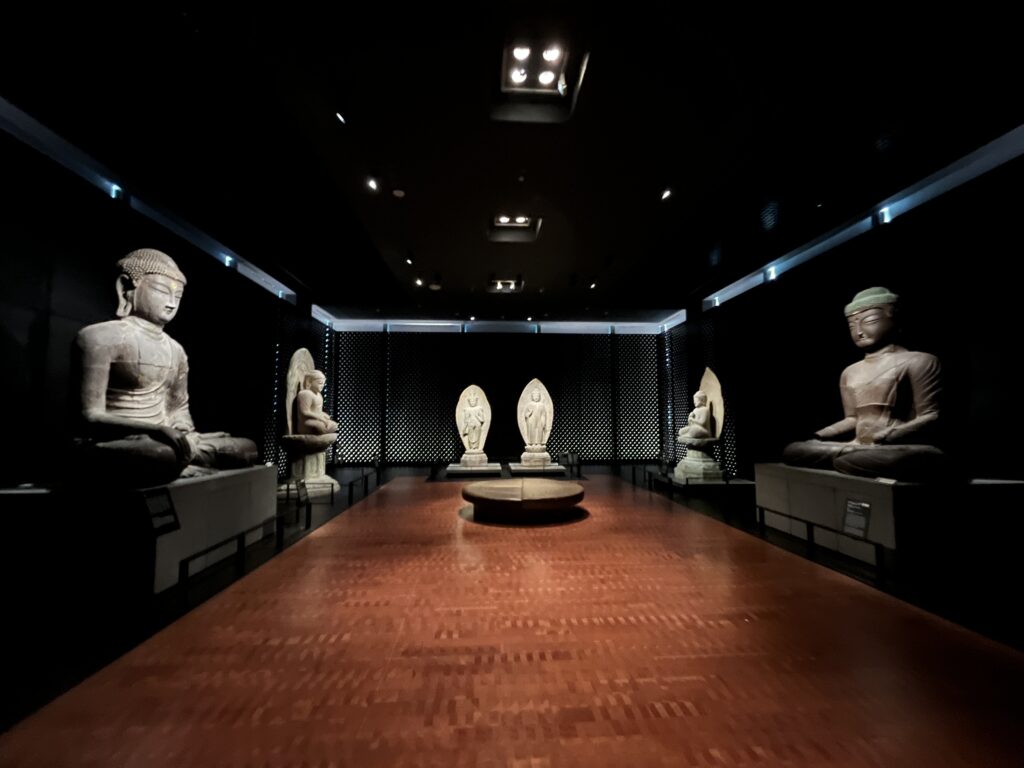
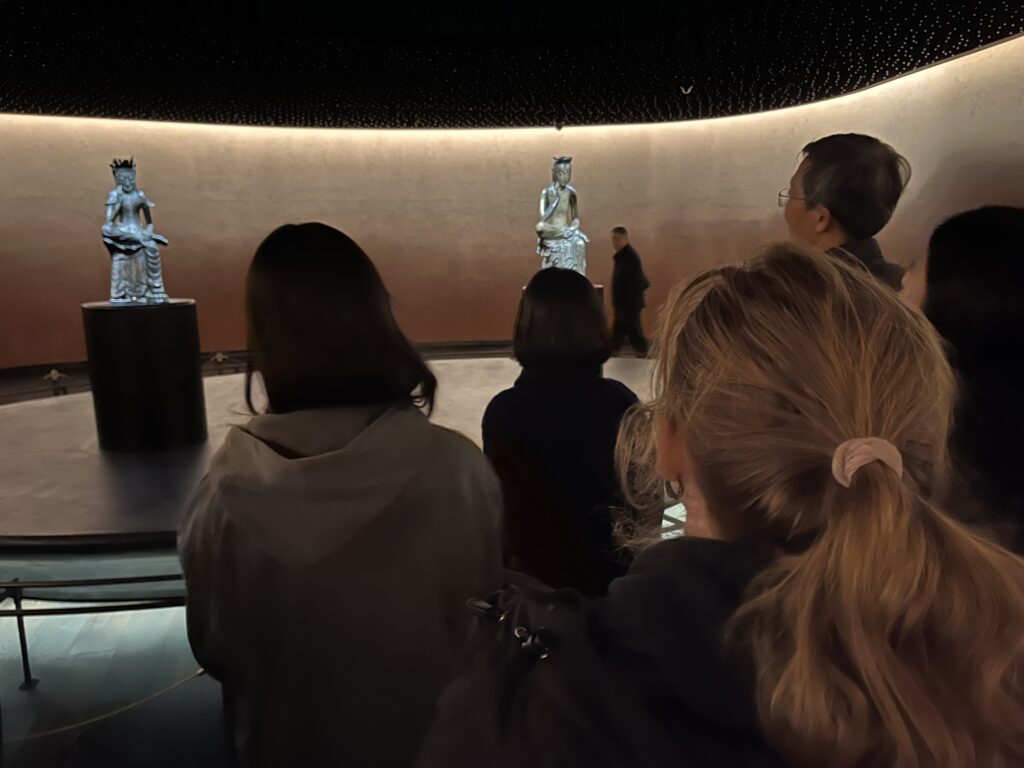
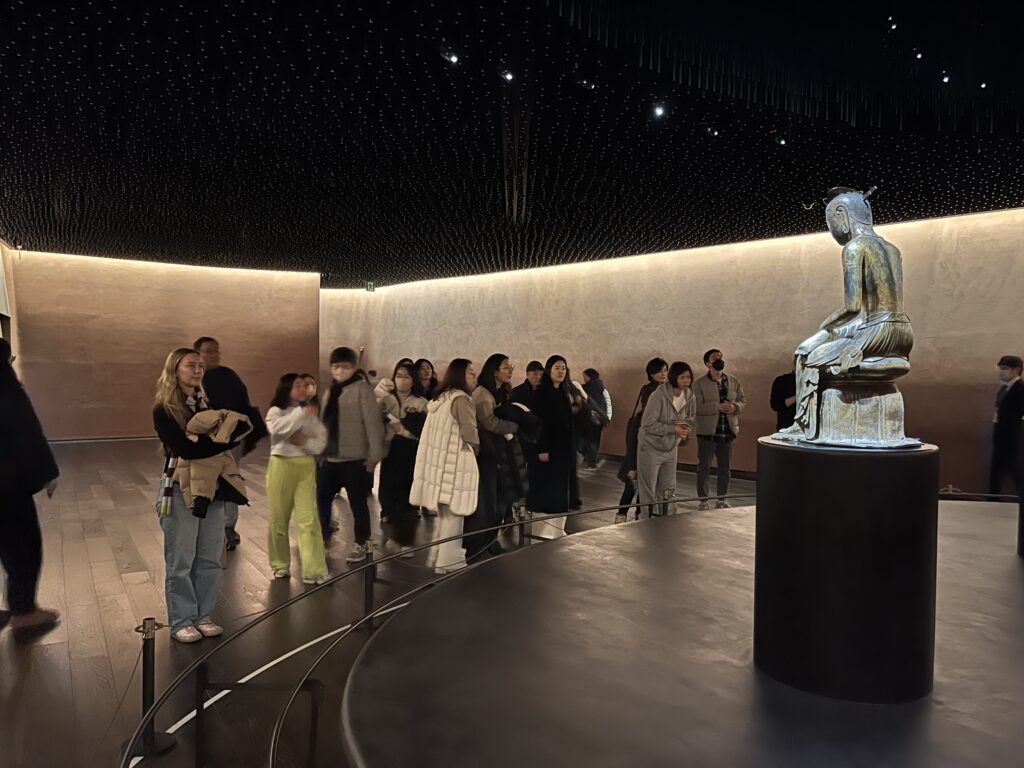
가장 인상 깊었던 곳은 ‘사유의 방’이었어요. ‘사유의 방’에는 반가사유상이 두 개 있는데 조용하고 어두운 방에 조명을 받고 있는 두 불상을 보니 나도 모르게 마음이 평온해지고 바빴던 일상이 정리가 되는 느낌이었어요.

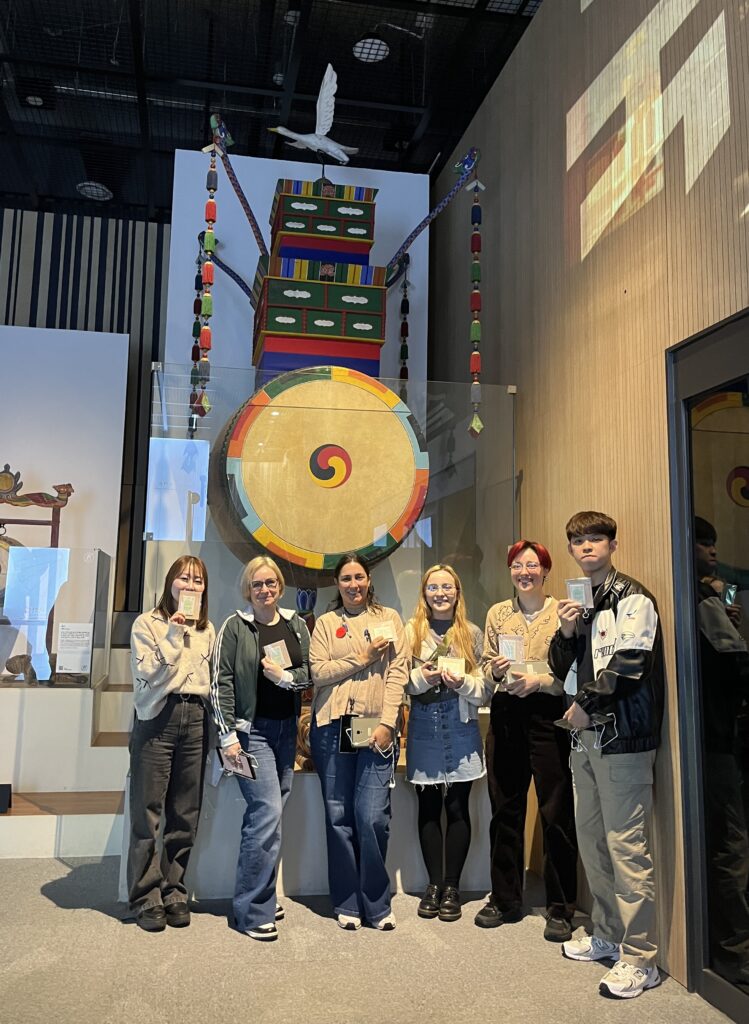
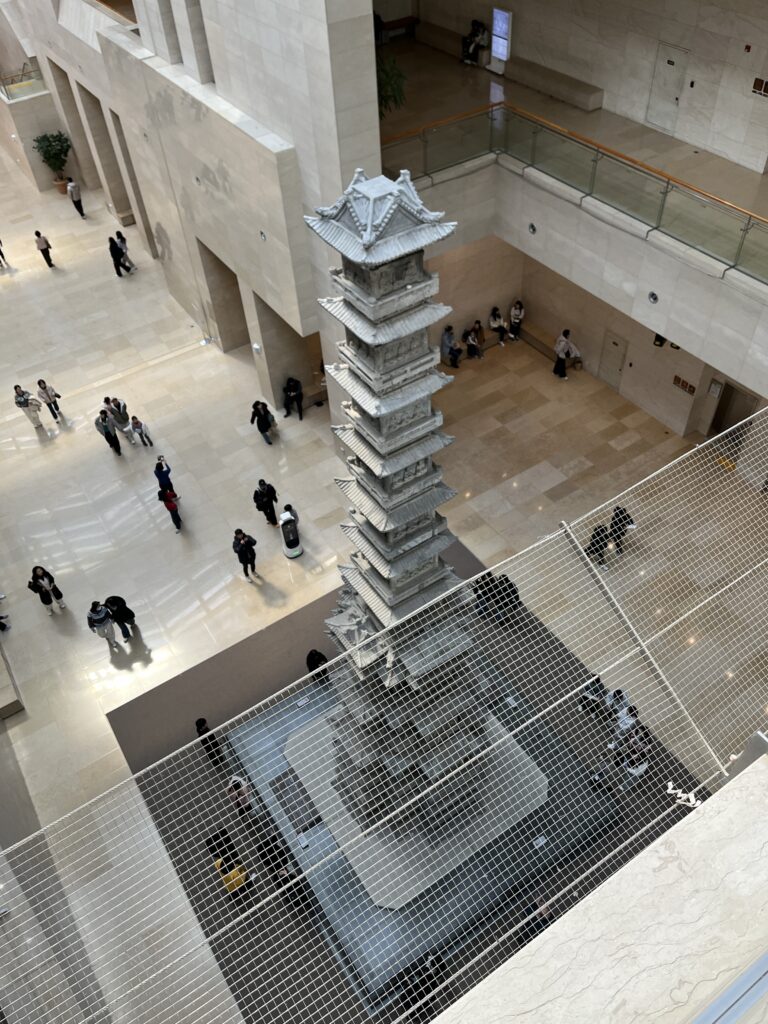
박물관에서 신기한 것을 발견했는데요. 하나는 바로 이 탑이에요. 이렇게 큰 탑이 어떻게 건물 안에 들어와 있을 수 있는지 모르겠어요. 목이 아프도록 한참 올려다 봤어요.

그리고 또 하나는 바로!

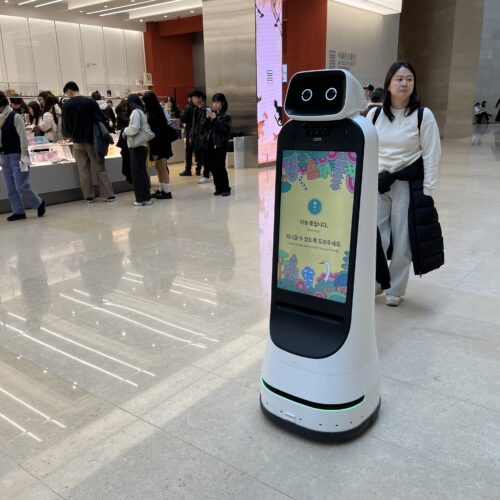
짜잔! 관람객들을 안내하는 이 로봇이었어요. 이 로봇의 이름은 ‘큐아이’라고 하는데 음성인식과 자율주행 기능을 기반으로 관람객에게 전시실 및 전시품 등 문화 정보를 제공한다고 해요. ‘하이 큐아이’라고 말을 걸면 ‘안녕하세요. 무엇을 도와드릴까요?’라고 대답을 해요. 박물관에 소장된 유물과 전시에 대해서 해설을 해주고 안내를 하는 똑똑한 로봇이었어요. 수 천 년 전 유물을 최신식 로봇이 안내해주는 박물관! 정말 재미있지 않나요?

박물관에 정말 많은 사람들이 있었어요. 게다가 학교가 겨울 방학을 해서 학생들도 아주 많이 있었어요. 특히 선생님과 바닥에 앉아서 전시품에 대해 열심히 이야기하던 아이들이 참 귀여웠어요. 아쉽게도 그림이 전시된 서화관이 2월 25일까지 문을 닫아서 못 보고 왔어요. 다음에 다시 가서 보려고 해요. 그 때에는 오늘 보지 못한 유물도 다시 차근차근 볼 거예요. 같이 가실래요?

This week, we took a trip to the National Museum of Korea. As Korean culture gains more love worldwide, the number of visitors here has skyrocketed! In fact, the number of foreign visitors jumped from 95,000 in early 2024 to over 200,000 in 2025. Isn’t that amazing?

We headed to the museum by subway. After arriving at Ichon Station, it was super easy to find our way by following the signs. The walls of the connecting tunnel were decorated with silhouettes of major exhibits, which really made us curious about what they would look like in person!

Stepping out from the station, we were greeted by a vast, beautiful garden. We couldn’t miss the chance to take some commemorative photos!

Did you know the open space in the middle of the museum building is inspired by the ‘Daecheongmaru’ (the main open-floor hall) of a traditional Hanok? The building itself acts like a giant picture frame, capturing a stunning view of Namsan Mountain and Namsan Tower in the distance.

As soon as we entered, we grabbed maps and headed toward the exhibits we were interested in. We had already checked out the “30 Masterpieces” on the museum’s website beforehand, so we knew exactly what we wanted to see!

The museum is truly massive with so many artifacts that it can be a bit overwhelming. If we hadn’t checked the website in advance, we might have gotten lost! I highly recommend checking the website before your visit to see where your favorite pieces are located.

The most memorable spot for me was the ‘Room of Quiet Contemplation.’ It houses two Pensive Bodhisattva statues. Looking at these two statues under the soft lights in a quiet, dark room made me feel so peaceful, as if all the busyness of daily life was just fading away.

We also found some really cool things! First was this huge pagoda. I have no idea how such a massive stone structure fits inside a building! I stared up at it for so long that my neck actually started to hurt.

And the second thing was… Ta-da!

It’s ‘QI’, the guide robot! QI uses voice recognition and autonomous driving to provide cultural info and directions. If you say, “Hi QI,” it replies, “Hello! How can I help you?” It’s a brilliant robot that explains the history of the artifacts. A museum where a high-tech robot guides you through thousands of years of history—don’t you think that’s fascinating?

The museum was buzzing with people, especially since schools are on winter break. It was so cute to see children sitting on the floor with their teachers, chatting away about the history. Unfortunately, the Calligraphy and Painting Gallery is closed until February 25th, so we missed that part.

I’m definitely planning to go back to see what I missed this time. Would you like to join me next time? 😊

ICE SKATING RINK – 아이스링크(서울광장 스케이트장)

안녕하세요.
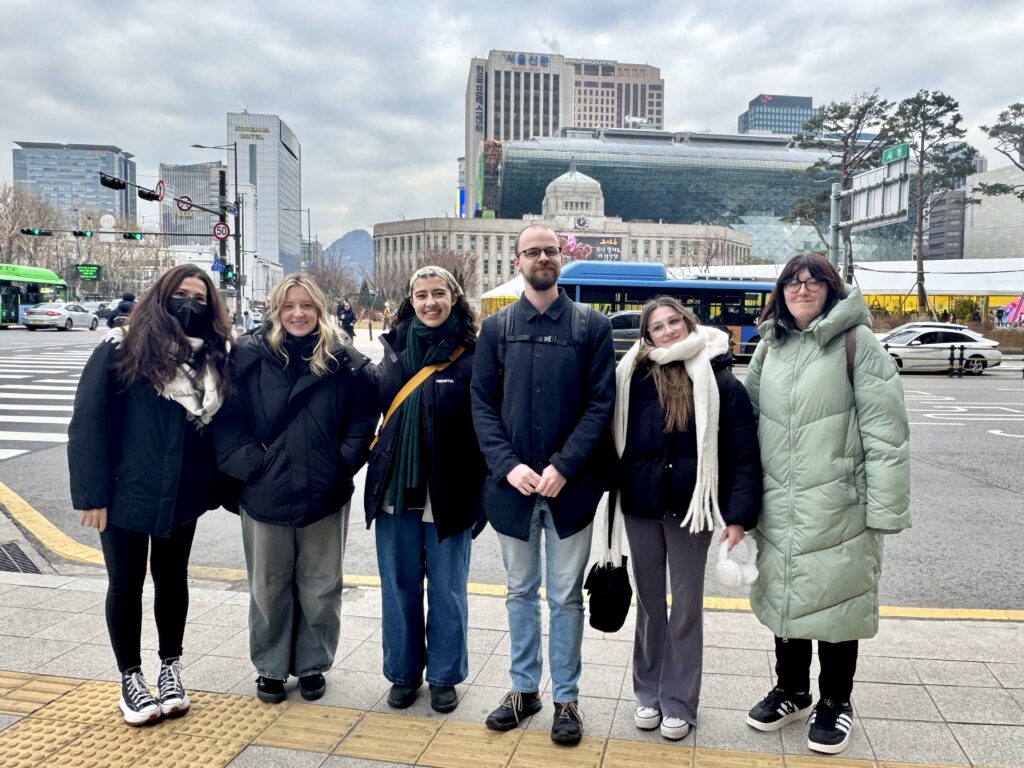
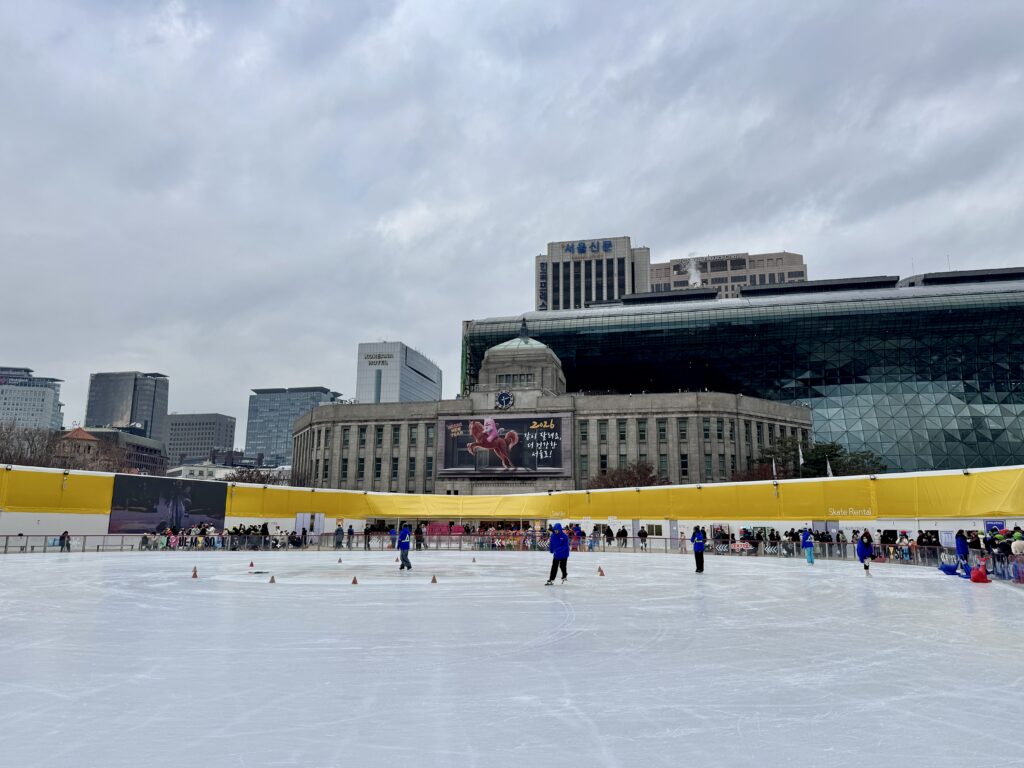
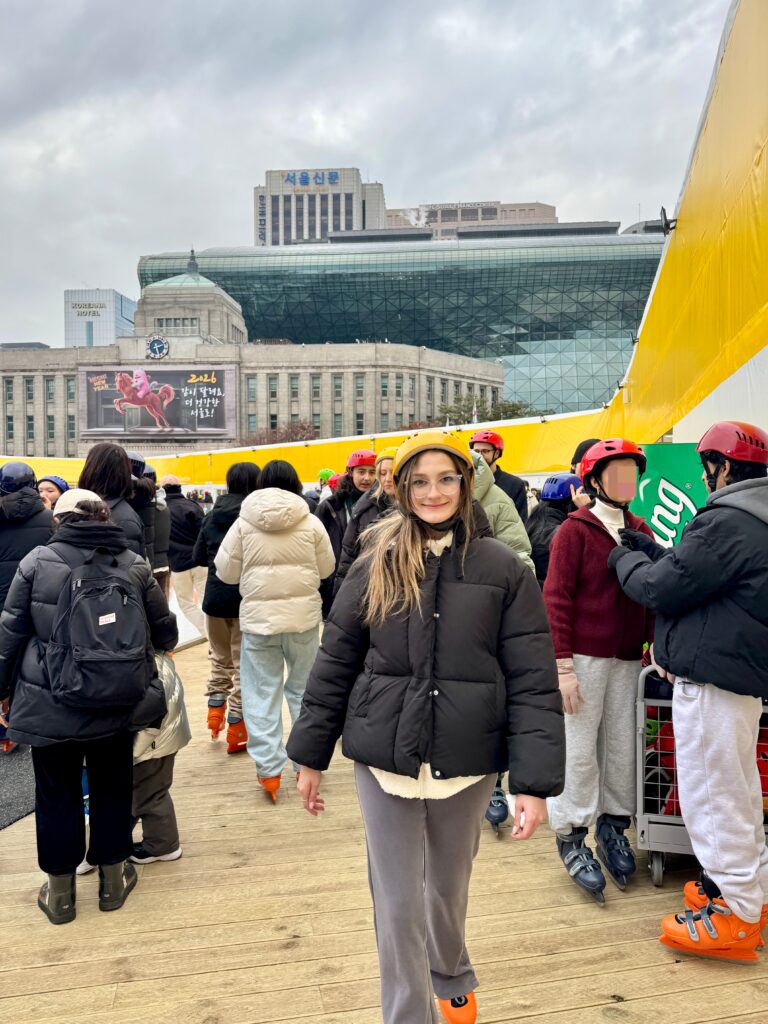
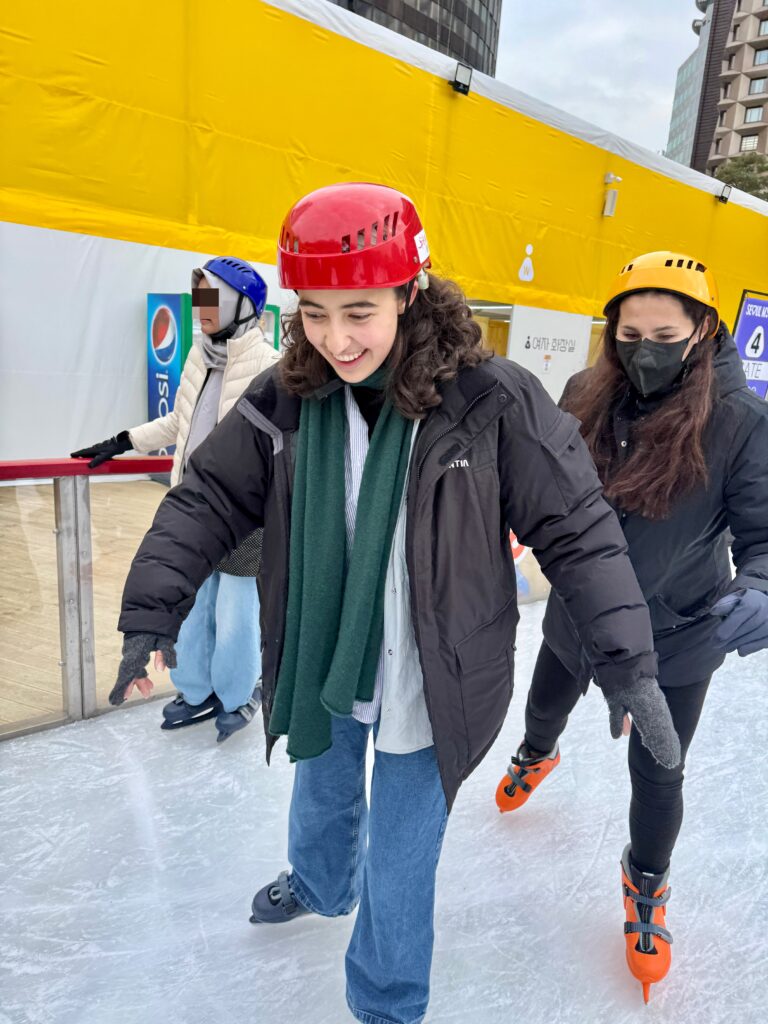
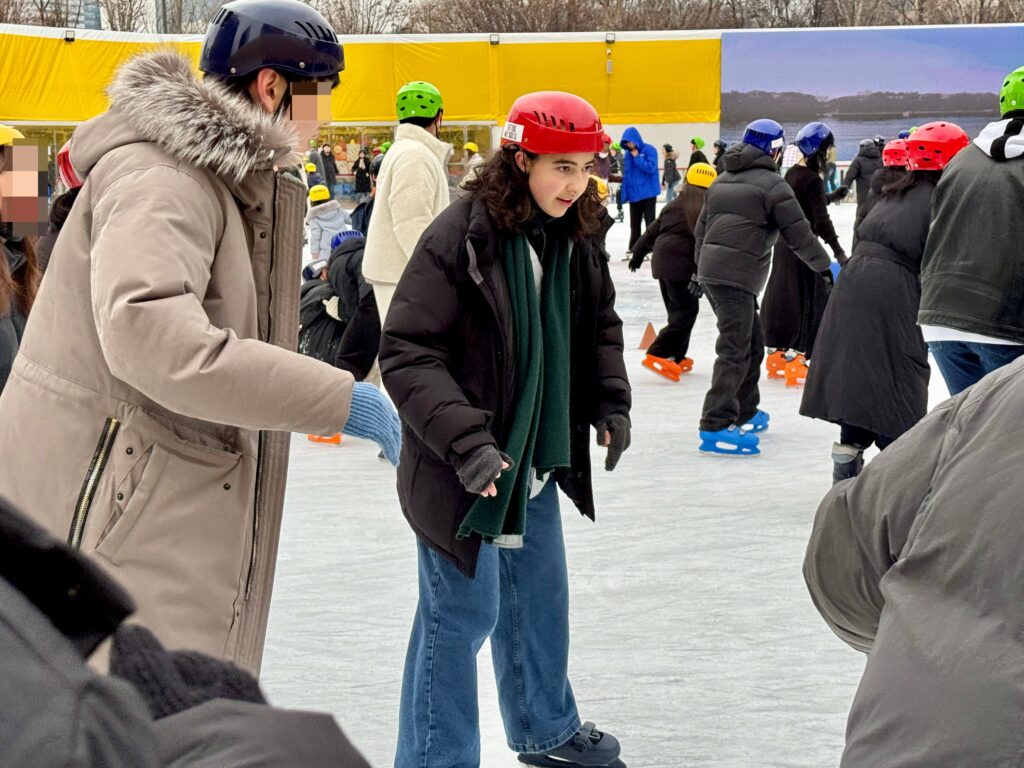
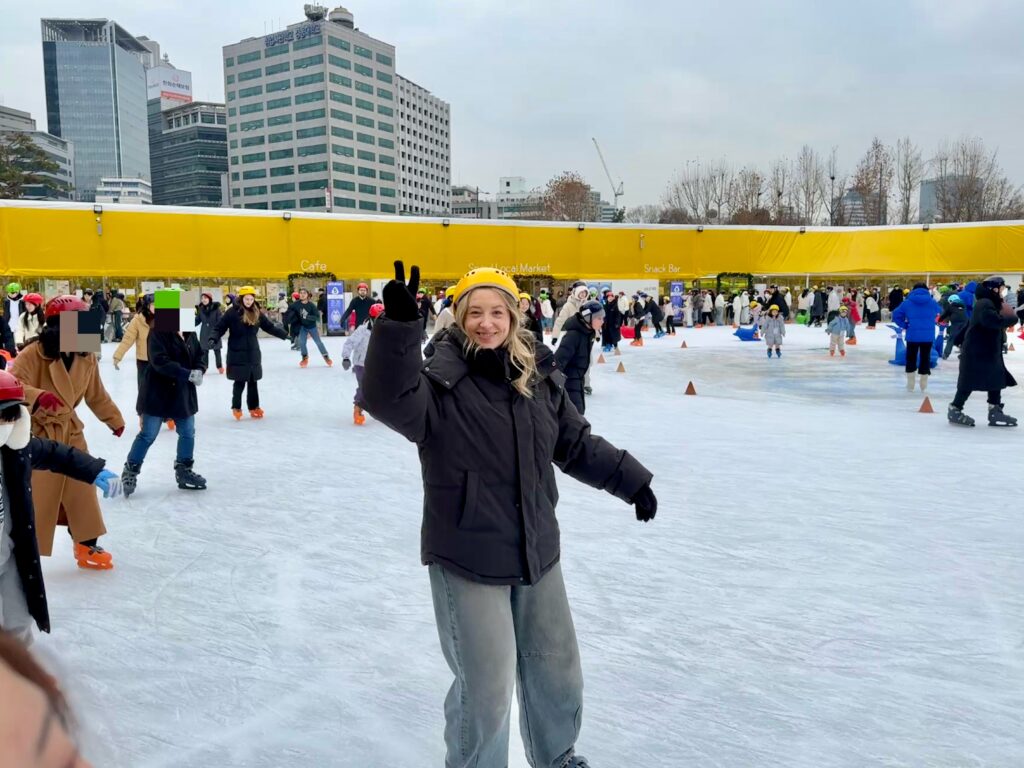
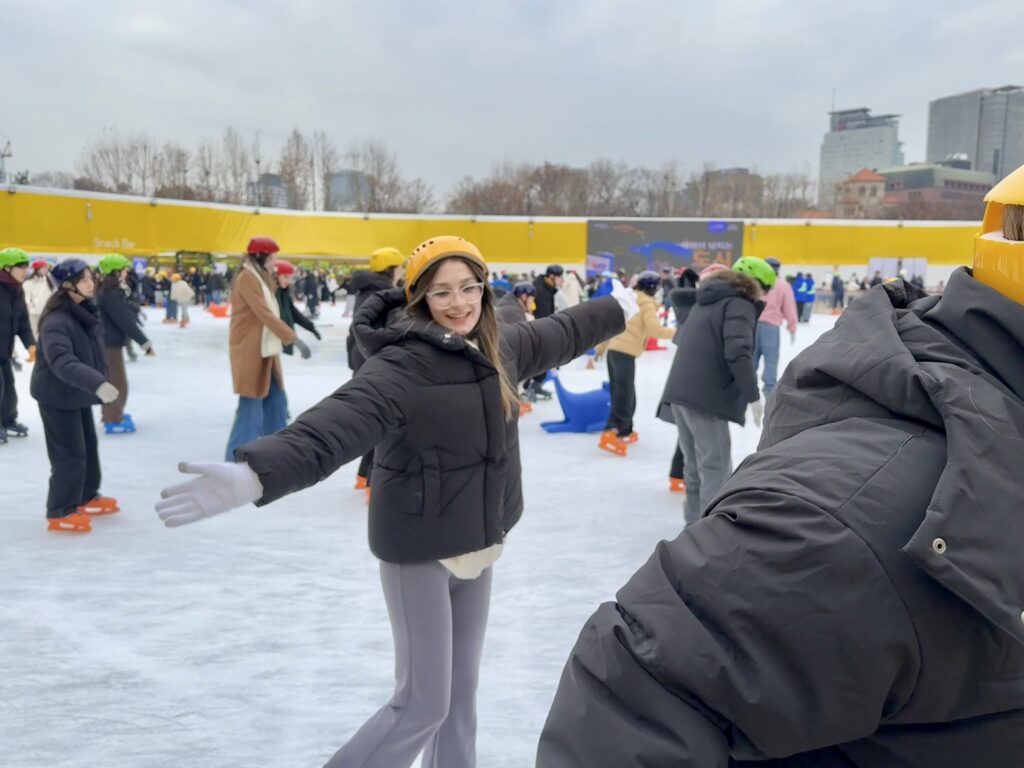
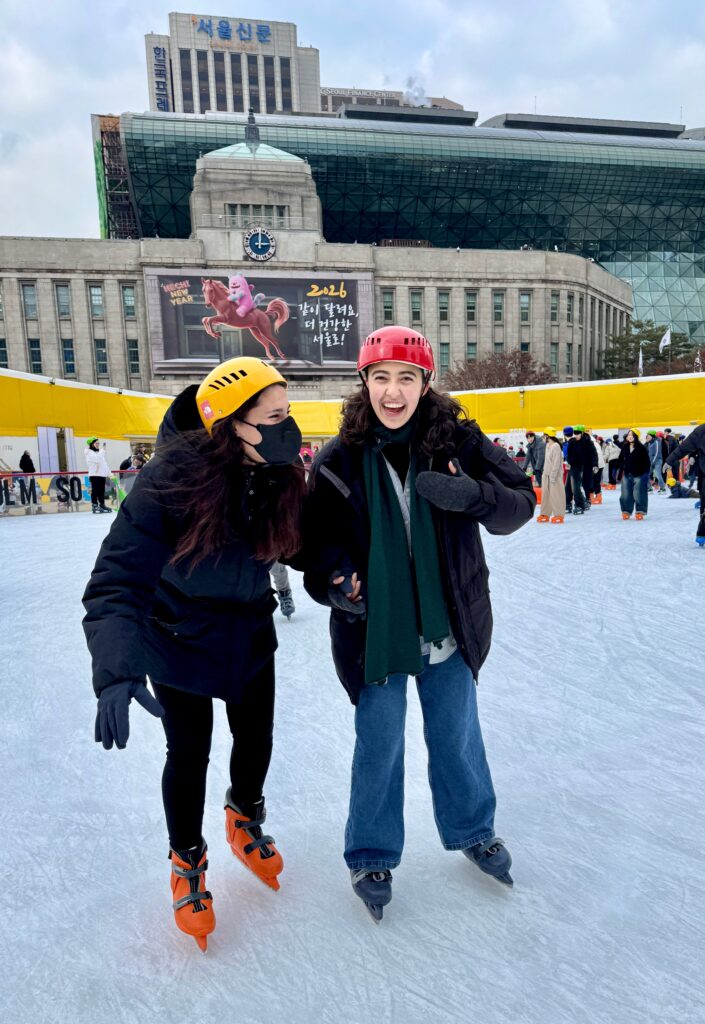
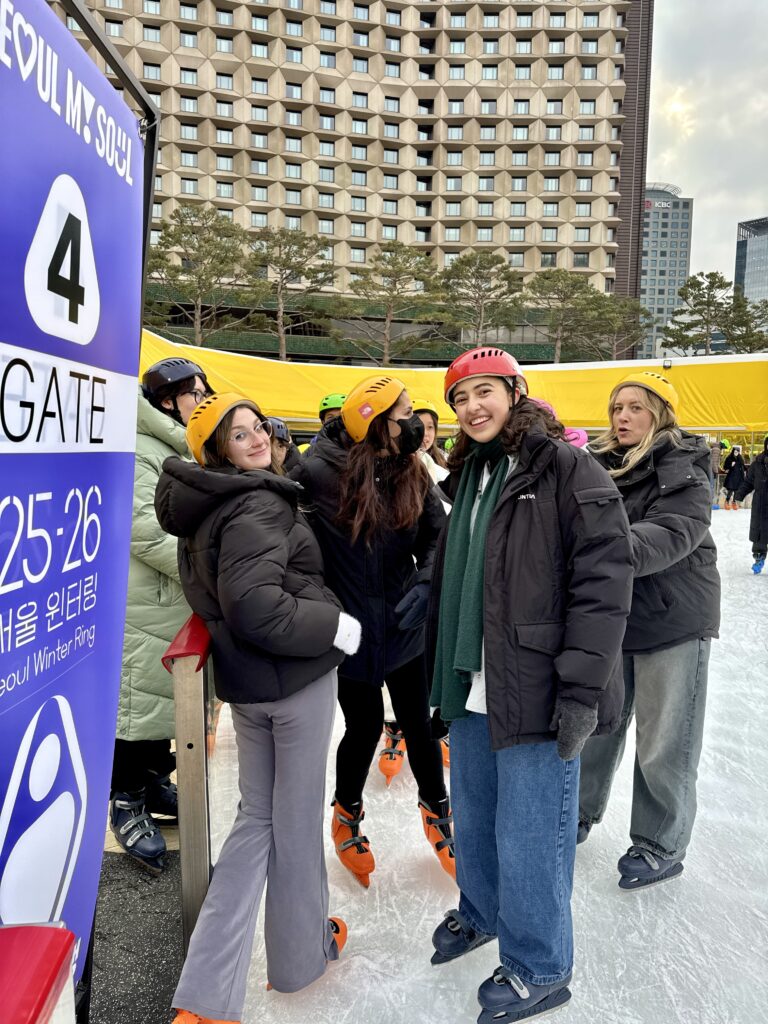
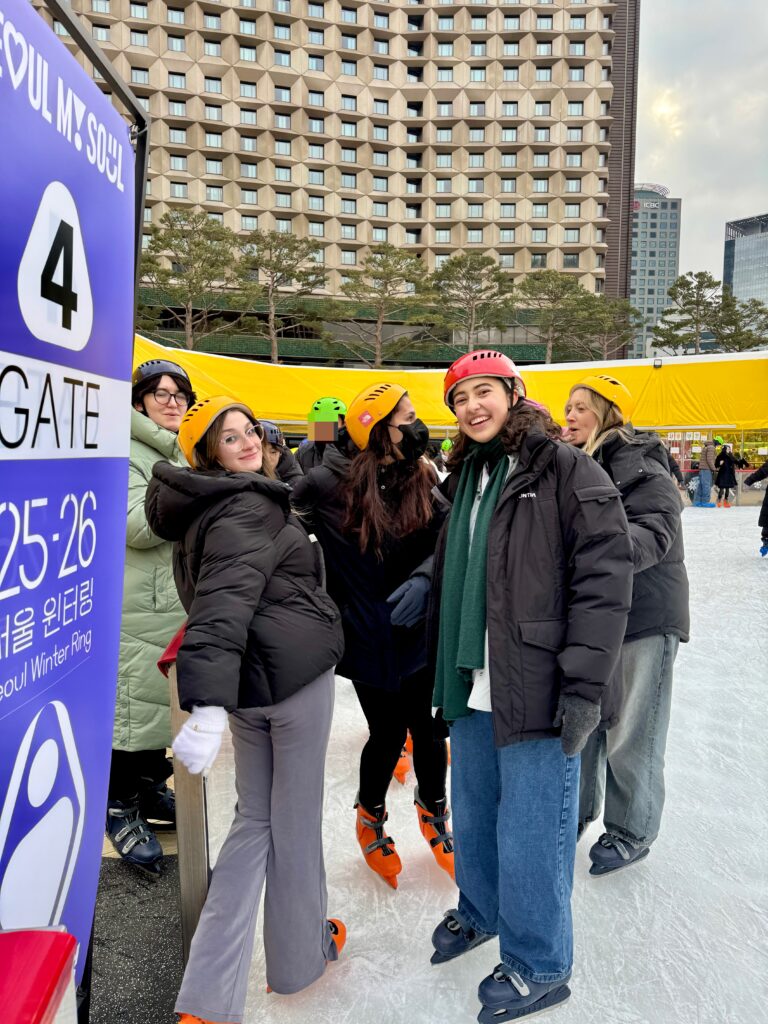
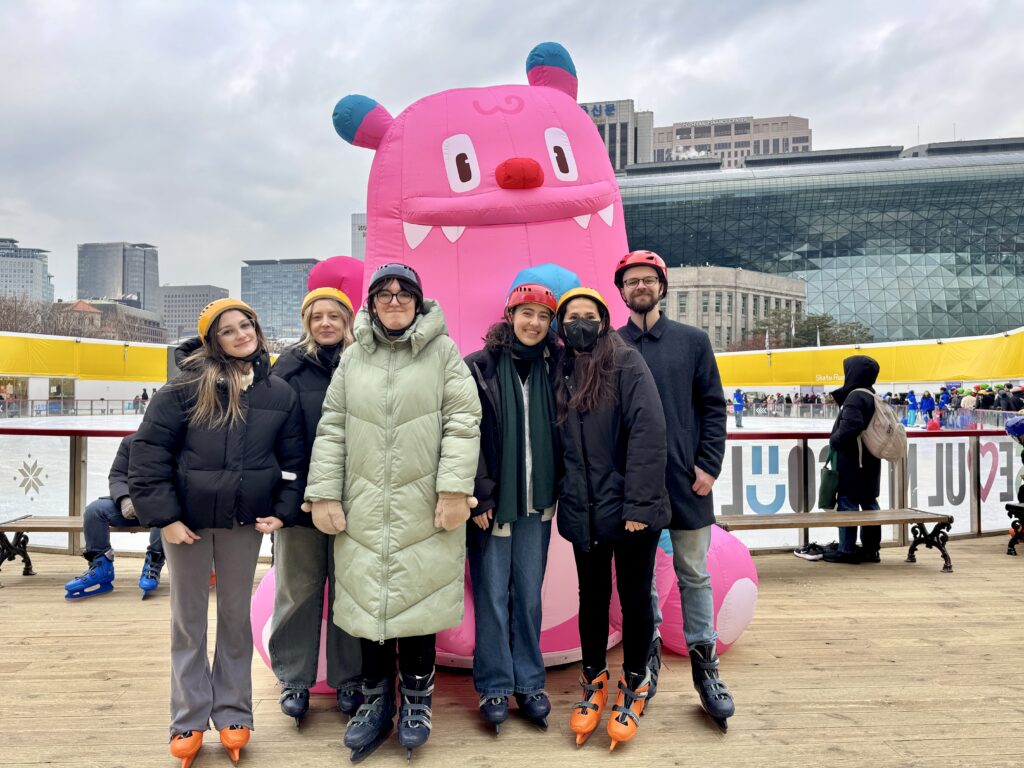
금요일에 우리는 <서울광장 스케이트장>에 갔어요!

서울광장 스케이트장은 겨울 시즌에만 열리기 때문에
이 시기에만 즐길 수 있는 특별한 체험이에요 🙂

먼저 출발 전에 서울광장 스케이트장의 시설과
자신의 한국 신발 사이즈에 대해 알아보는 시간을 가졌어요.

그리고 우리는 지하철을 타고 시청역에 도착했어요 🙂

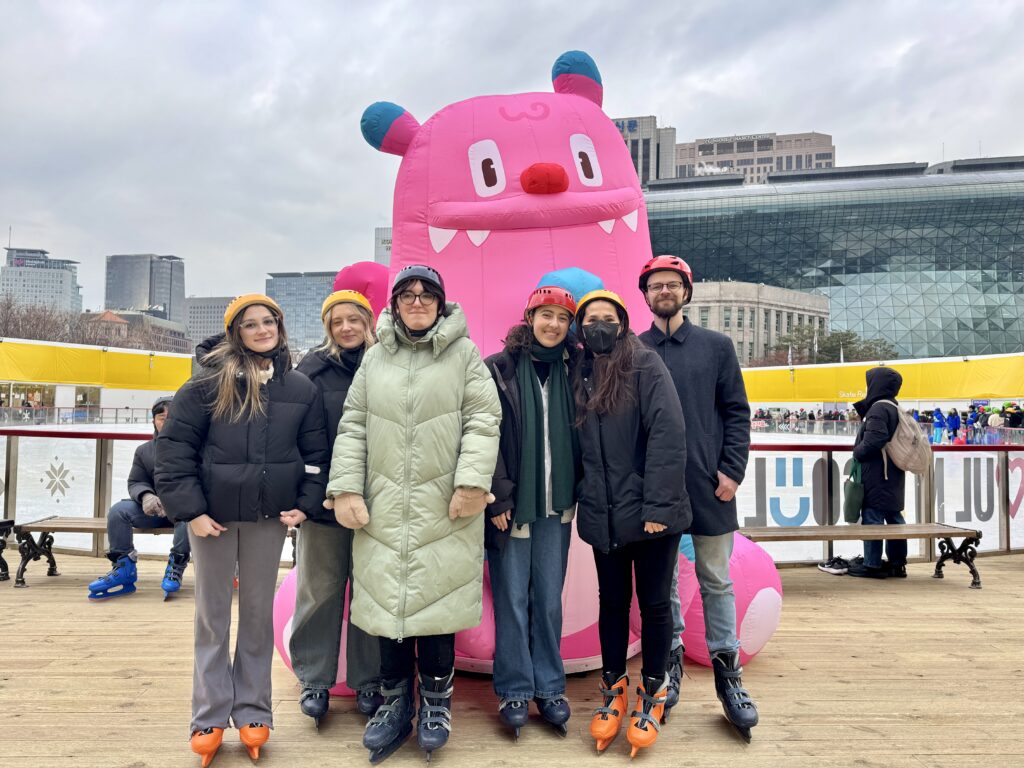
이곳이 서울광장 스케이트장이에요.
와, 사람들이 정말 많았어요!

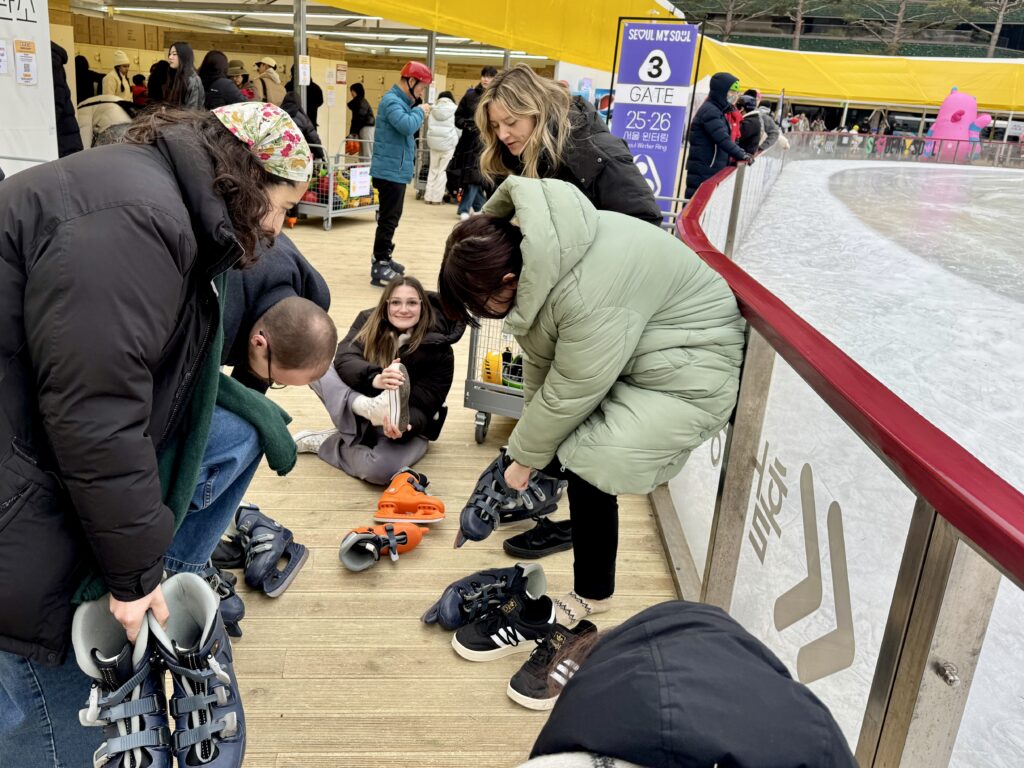
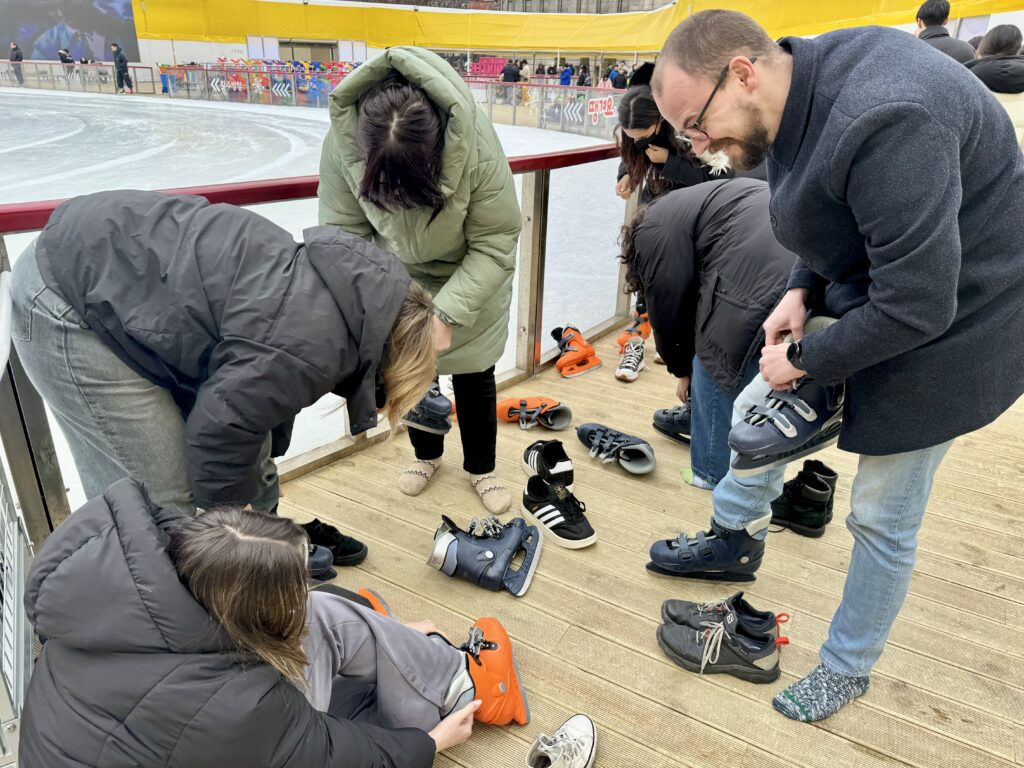
우리는 미리 알아본 한국 신발 사이즈를 말하고 스케이트를 대여했어요.
가방은 물품 보관소에 넣어 두었어요.

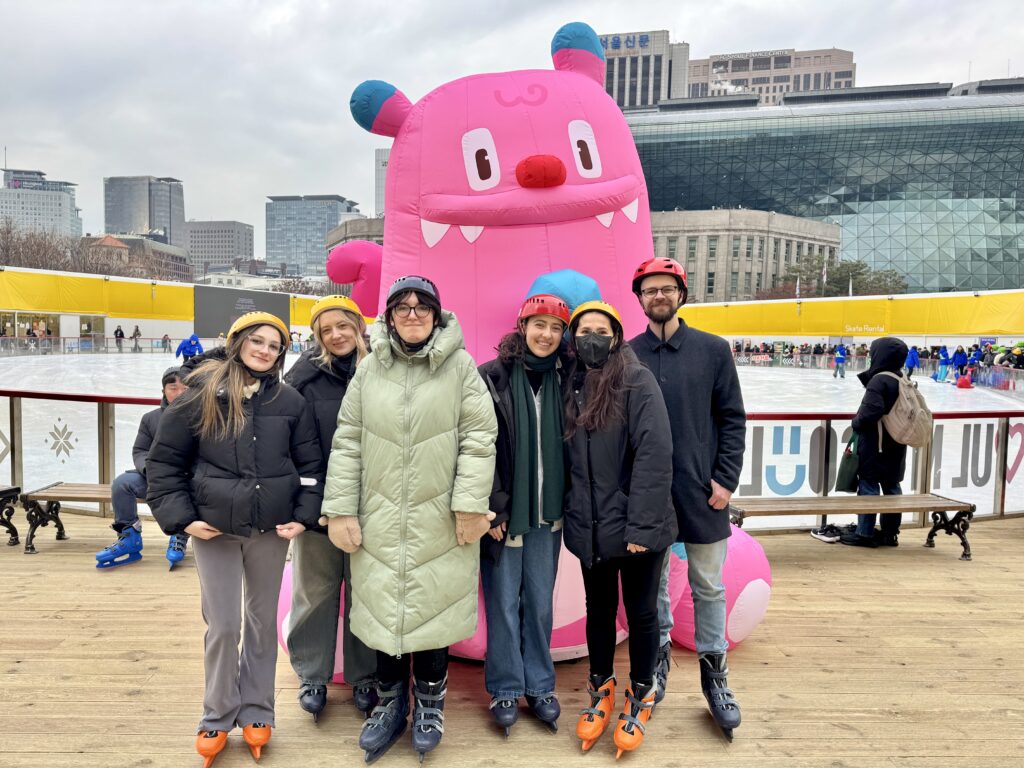
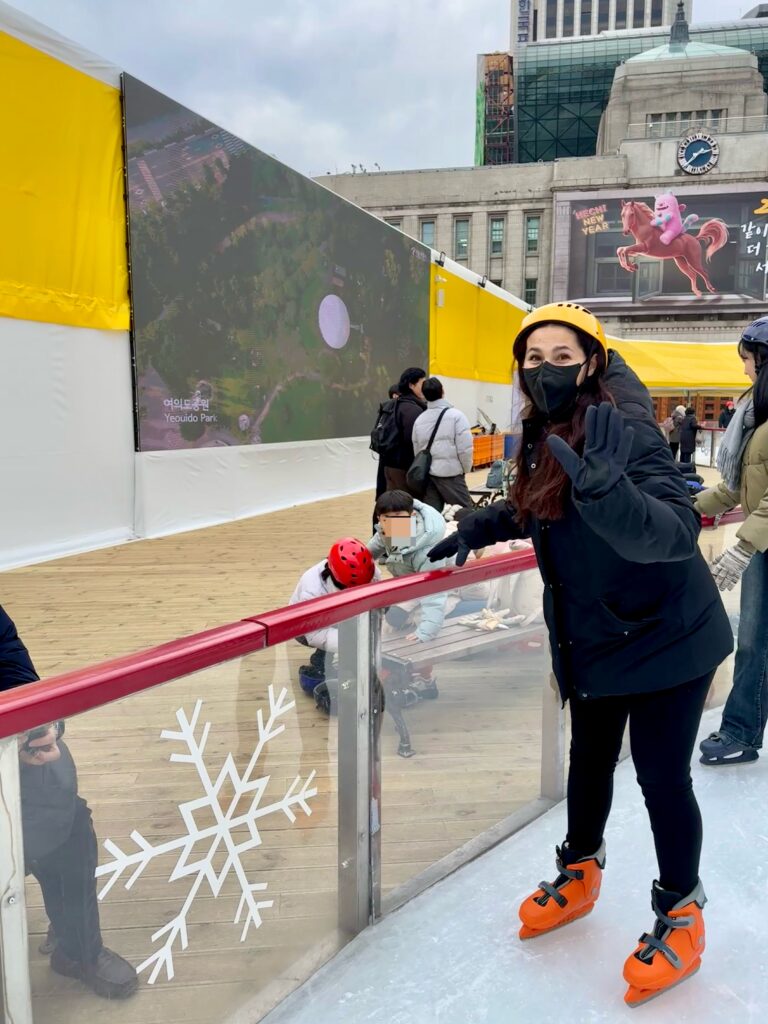
스케이트를 신고 헬멧도 썼어요 🙂

모든 준비가 끝났어요! 이제 스케이트를 타러 가 볼까요~?

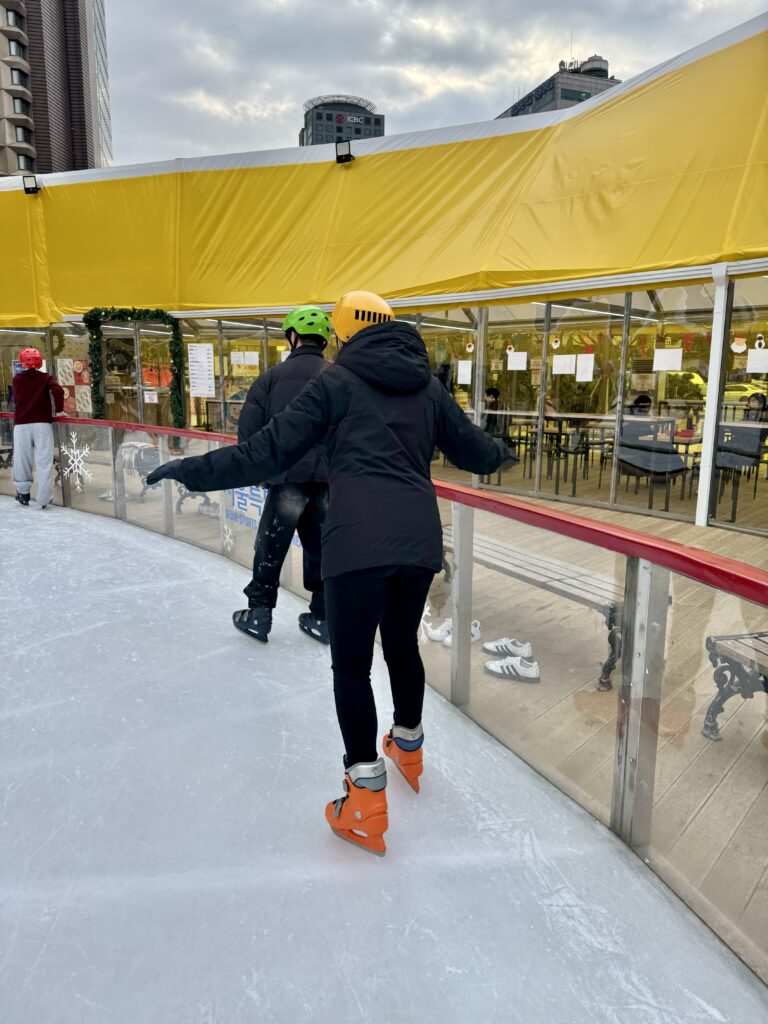
처음에는 조금 무서웠지만 점점 익숙해졌고, 정말 재미있었어요!

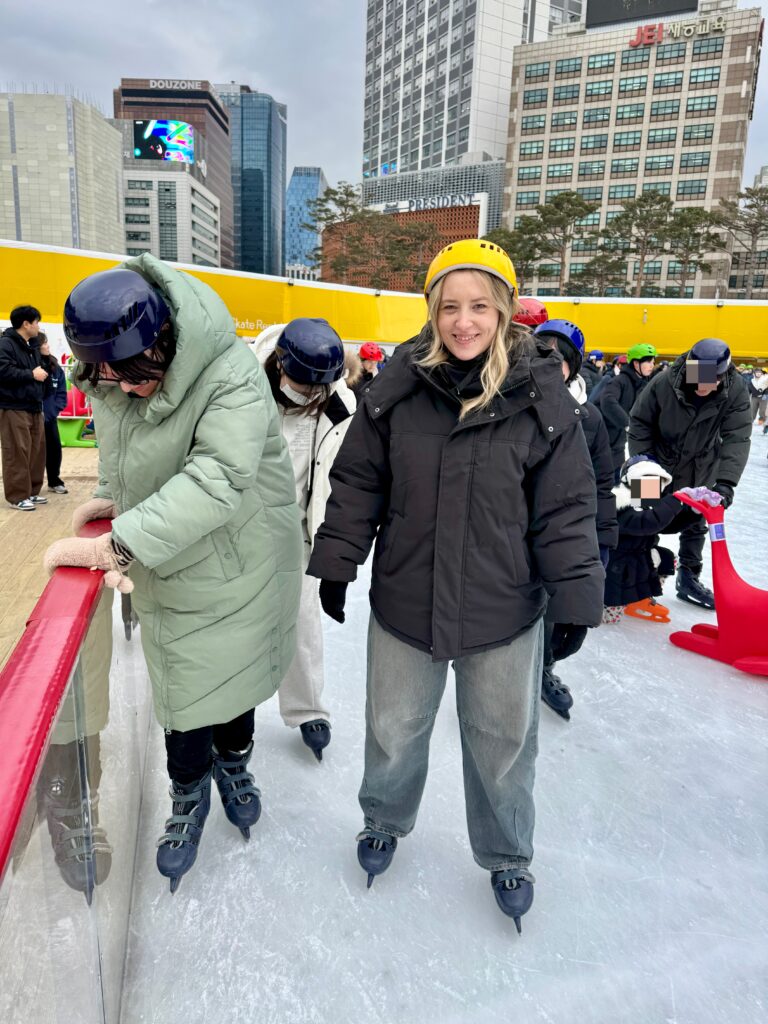
아주 잘 타는 친구도 있었고, 무서워하는 친구도 있었지만
서로 도와주고 응원하며 즐거운 시간을 보냈어요!

열심히 타다 보니 춥지도 않았어요 🙂

서울 도심에서 겨울을 즐기고 싶다면, 서울광장 스케이트장을 추천해요!

Hello!
On Friday, we went to Seoul Plaza Ice Rink!

Seoul Plaza Ice Rink is only open during the winter season,
so it’s a special experience you can enjoy only at this time of year 🙂

Before leaving, we took some time to learn about the facilities at the rink
and check everyone’s Korean shoe size.

Then we took the subway and arrived at City Hall Station 🙂
This is where Seoul Plaza Ice Rink is located.

Wow, there were so many people!
We told the staff our shoe sizes that we had checked in advance
and rented our skates.

We put our bags in the lockers,
put on our skates, and wore our helmets 🙂
Everything was ready!

Shall we go skating now~?

At first, it was a little scary, but we gradually got used to it,
and it was really fun!

Some students were very good at skating,
and some were a little scared,
but we helped and encouraged each other
and had a wonderful time together!

After skating for a while, we didn’t even feel cold 🙂

If you want to enjoy winter in the heart of Seoul,
I highly recommend Seoul Plaza Ice Rink!

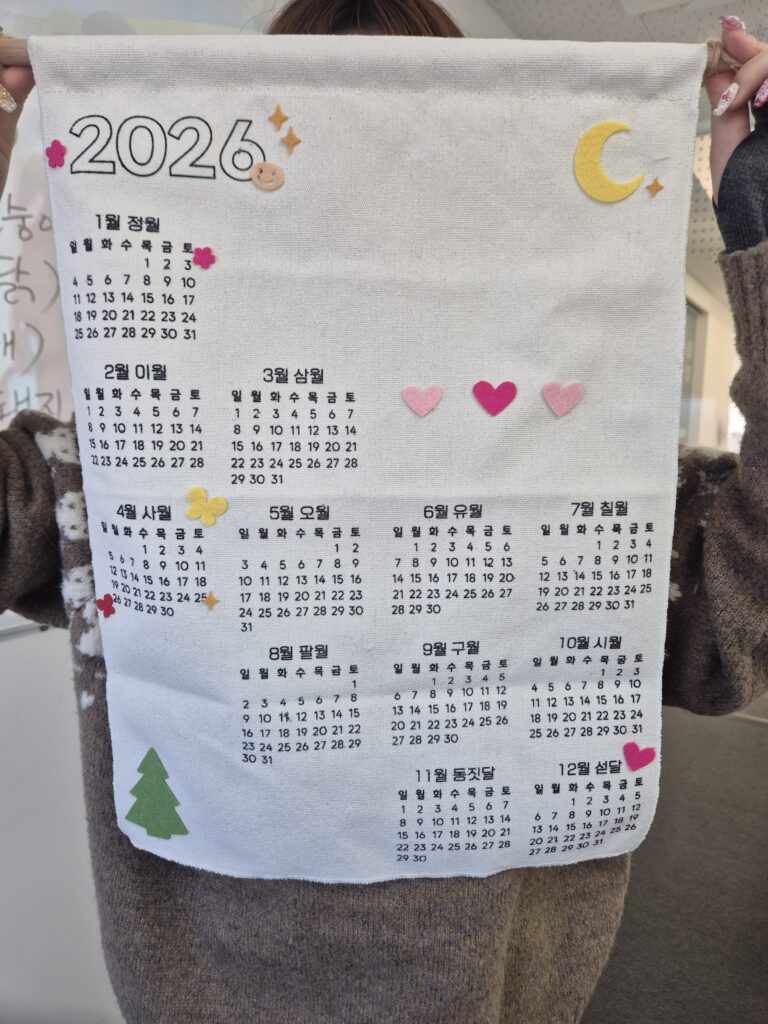
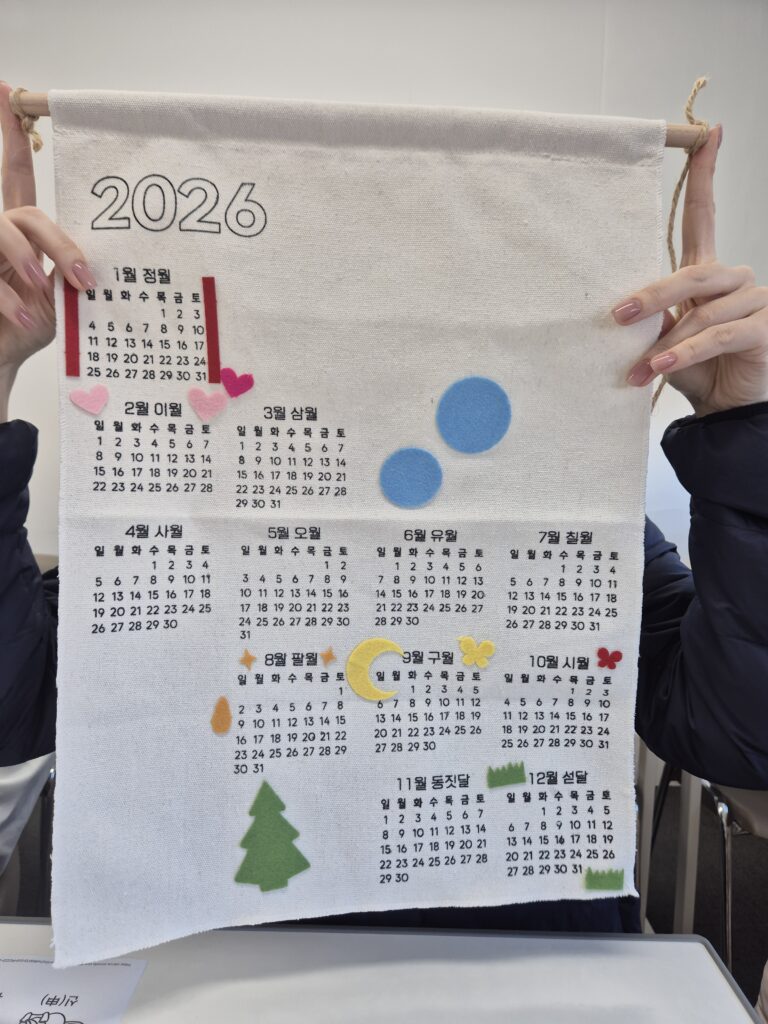
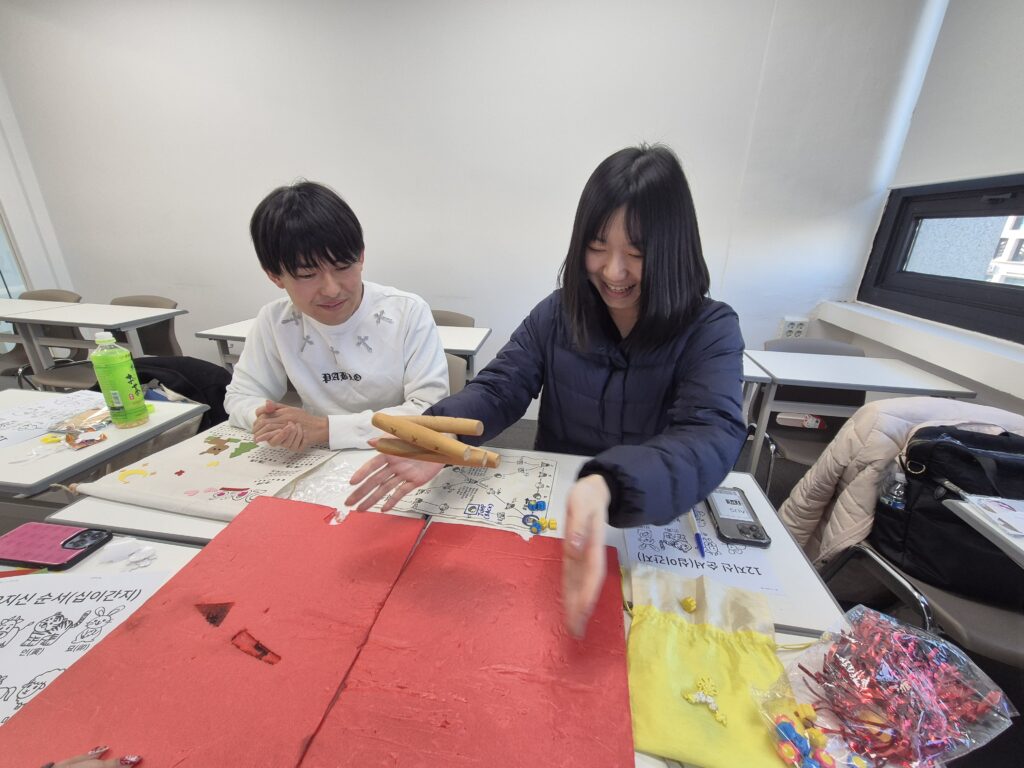
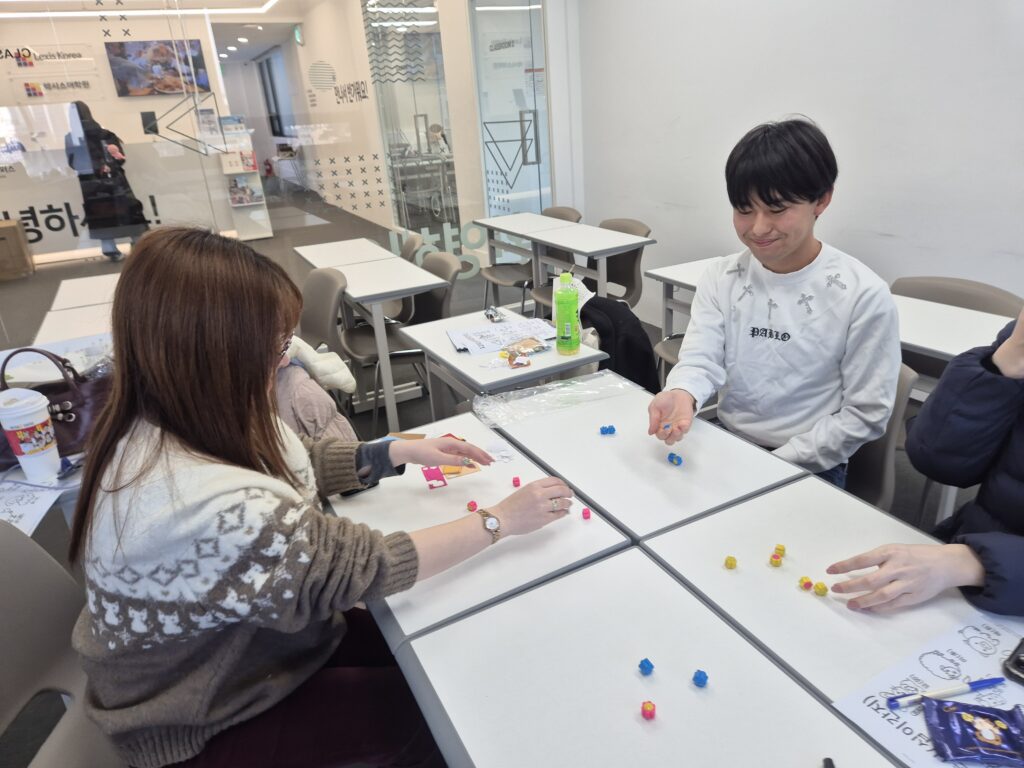
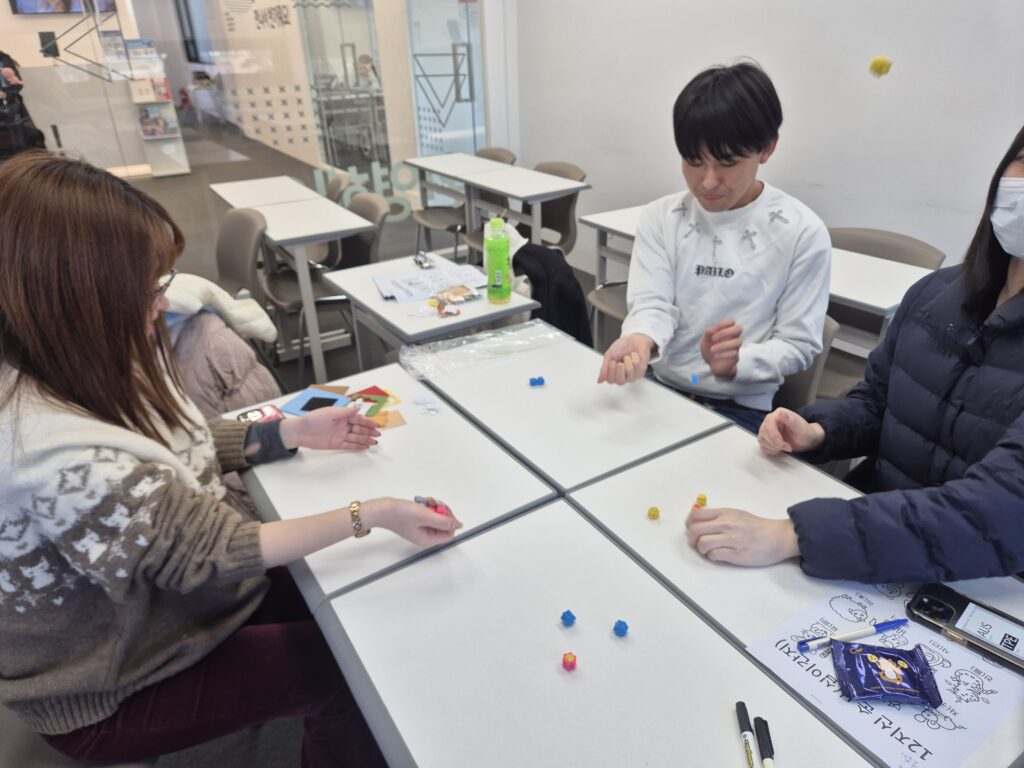
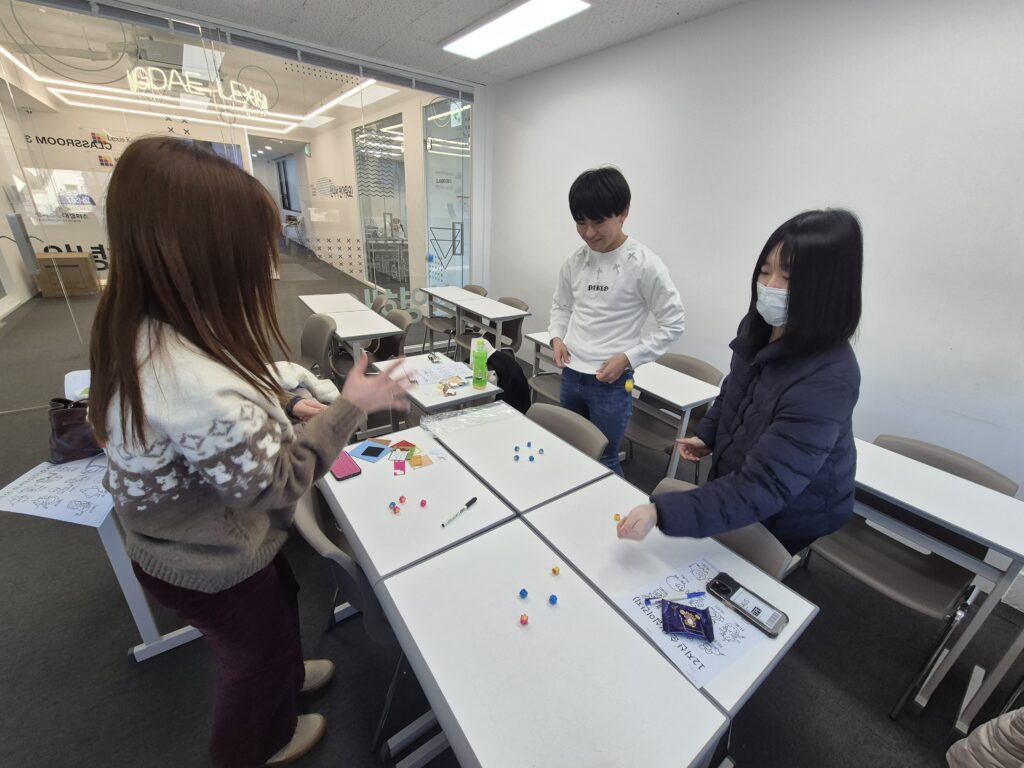
Making (12-Year Animal) Zodiac Calendar – 십이간지 달력 만들기

안녕하세요. 오늘은 새해를 맞아 2026년 십이간지 달력을 만들어 봤어요.

‘십이간지’, 무슨 뜻일까요?

바로 땅의 시간과 방향을 나누는 ‘십이지’와 하늘의 기운을 나타내는 ‘십간’을 합친 말이에요.

여기에서 퀴즈! 십이간지의 열 두 동물은 무엇이 있을까요? 초성으로 힌트를 드릴게요.

ㅈ, ㅅ, ㅎㄹㅇ, ㅌㄲ, ㅇ, ㅂ, ㅁ, ㅇ, ㅇㅅㅇ, ㄷ, ㄱ, ㄷㅈ

.

.

.

.

자, 바로 정답 나갑니다!

쥐, 소, 호랑이, 토끼, 용, 뱀, 말, 양, 원숭이, 닭, 개, 돼지

다 맞추셨나요? 🙂

태어난 년도에 해당하는 동물이 바로 본인의 ‘띠’ 입니다.

예를 들어, 2026년은 말의 해이므로 올해 태어난 사람들은 ‘말’ 띠가 되는 것이지요.

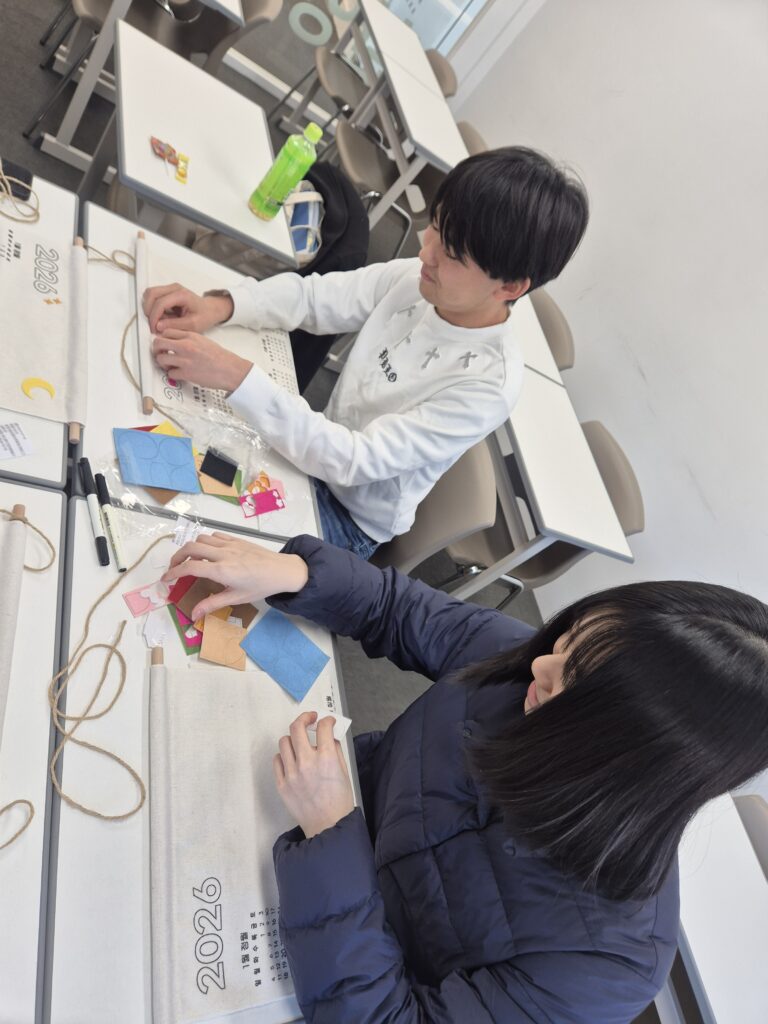
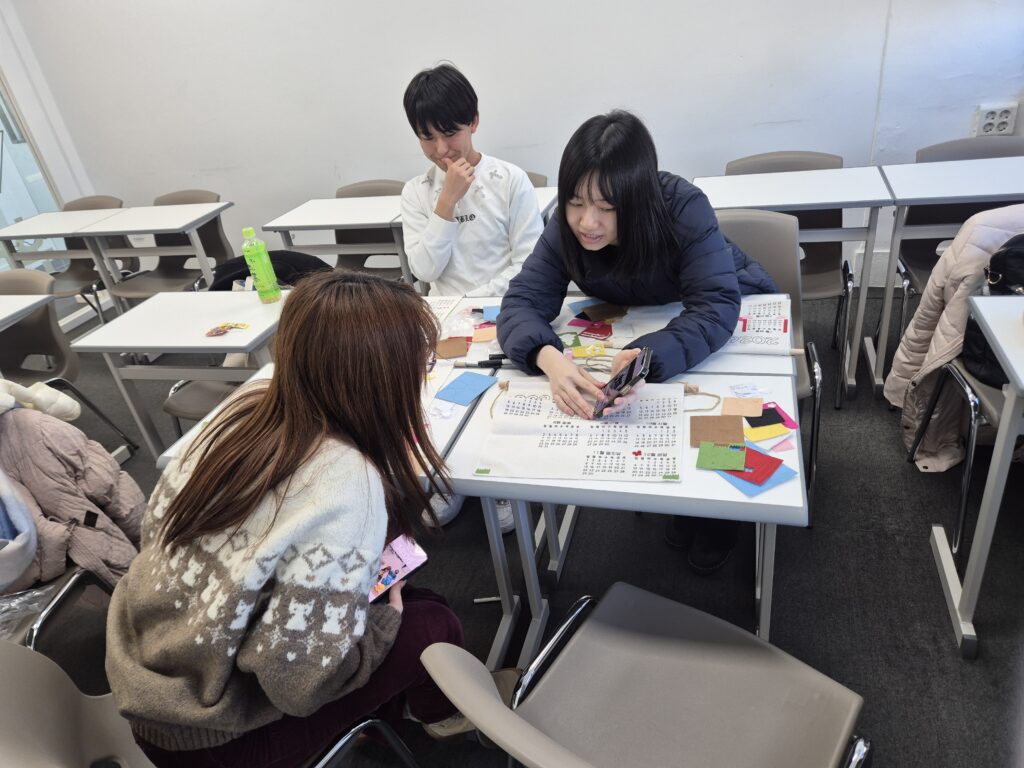
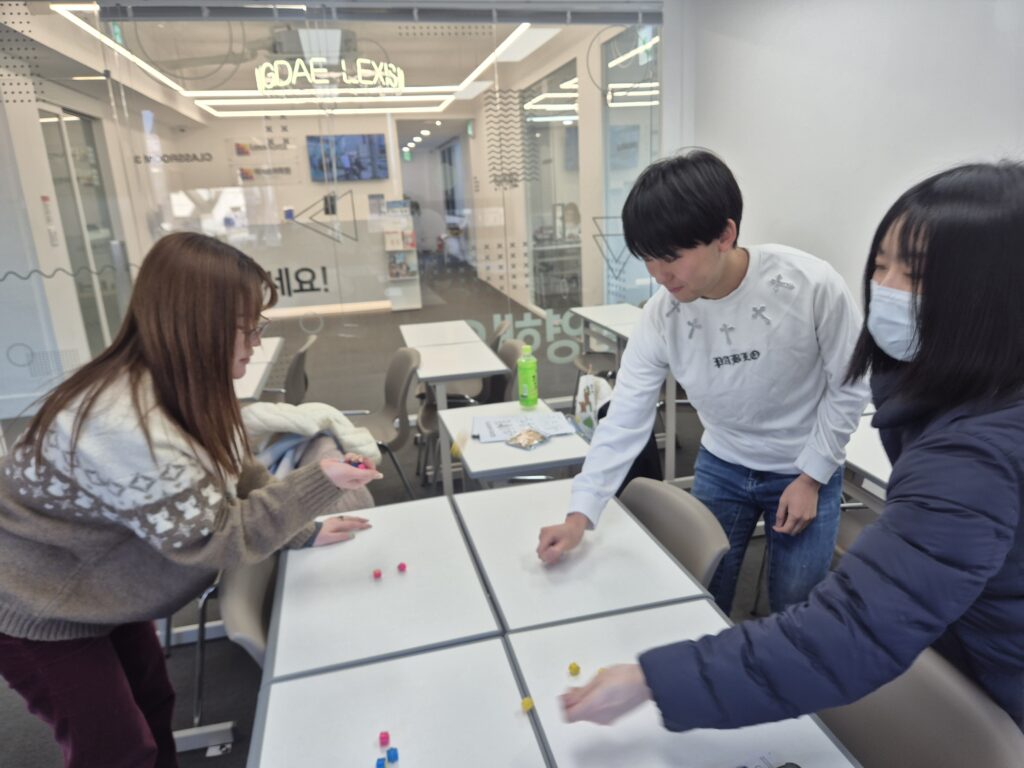
십이간지 동물들에 대해 배우고 초성퀴즈도 하며 상품으로 받은 간식도 먹으면서 2026년 달력을 만들기 시작했어요.

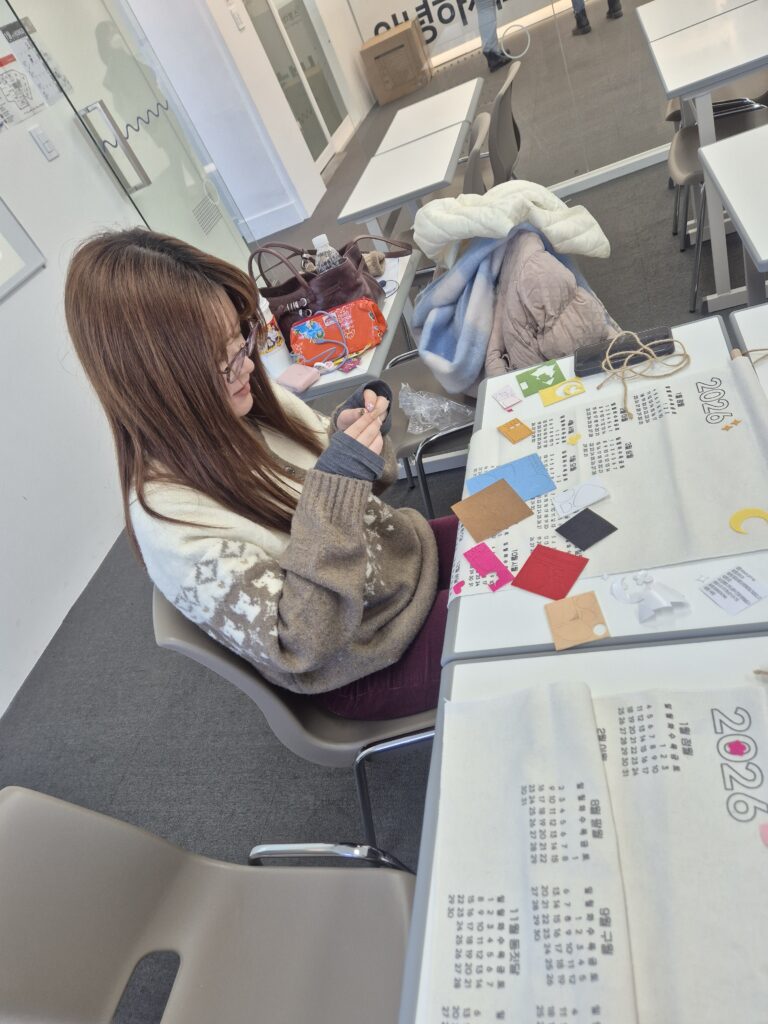
재료들을 풀어 각자 어떤 디자인으로 만들지 상의도 하고 의견도 나누며 만들었어요.

그리고….짜잔!

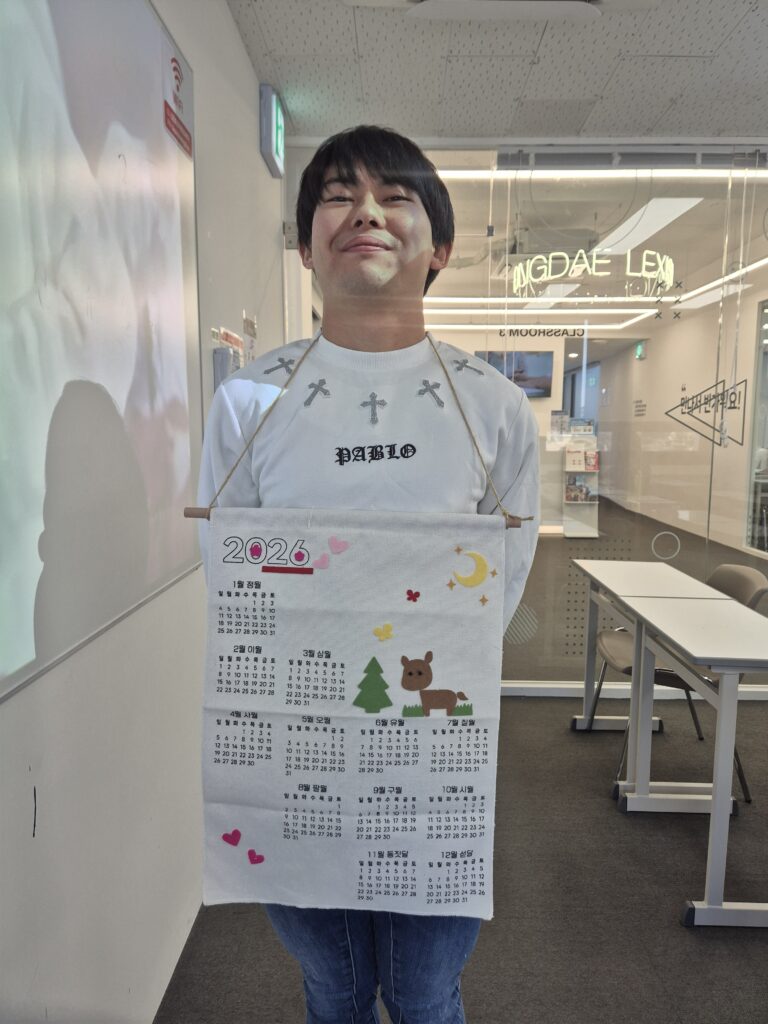
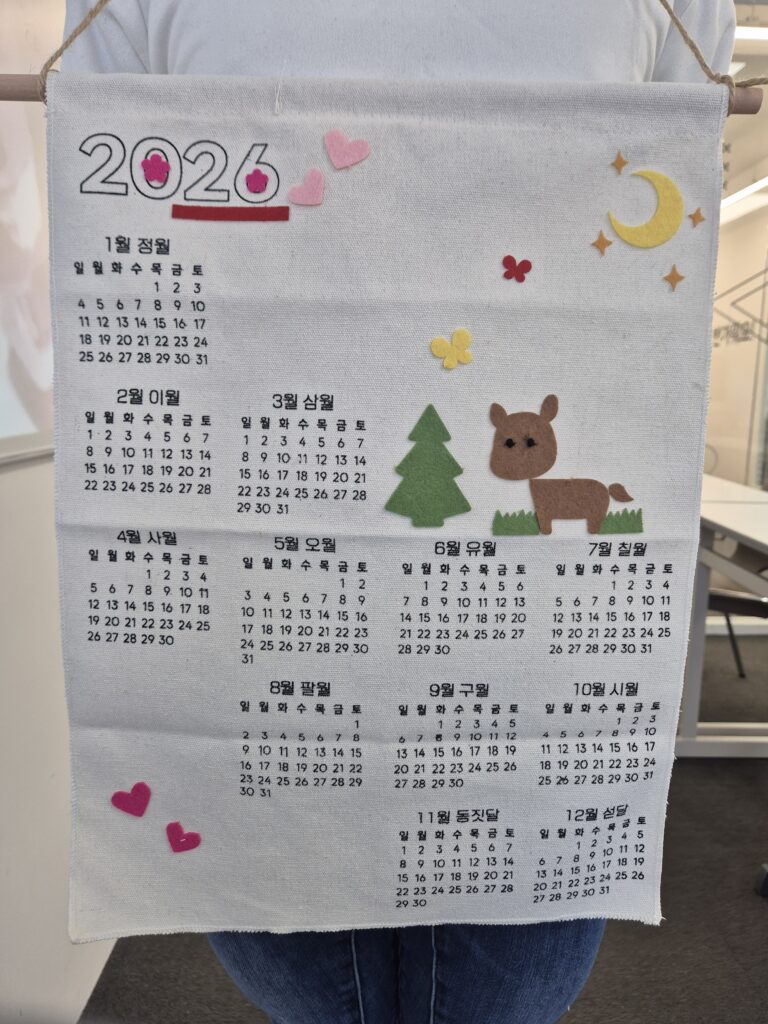
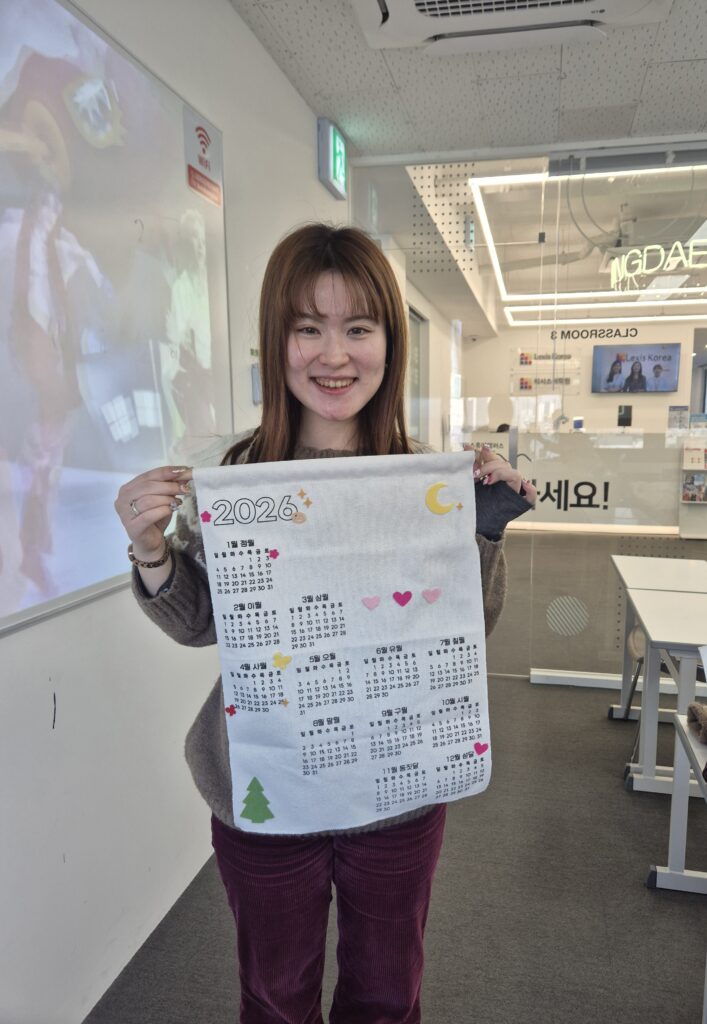
각자의 개성이 돋보이는 아주 귀엽고 멋있는 달력들이 완성 되었어요!

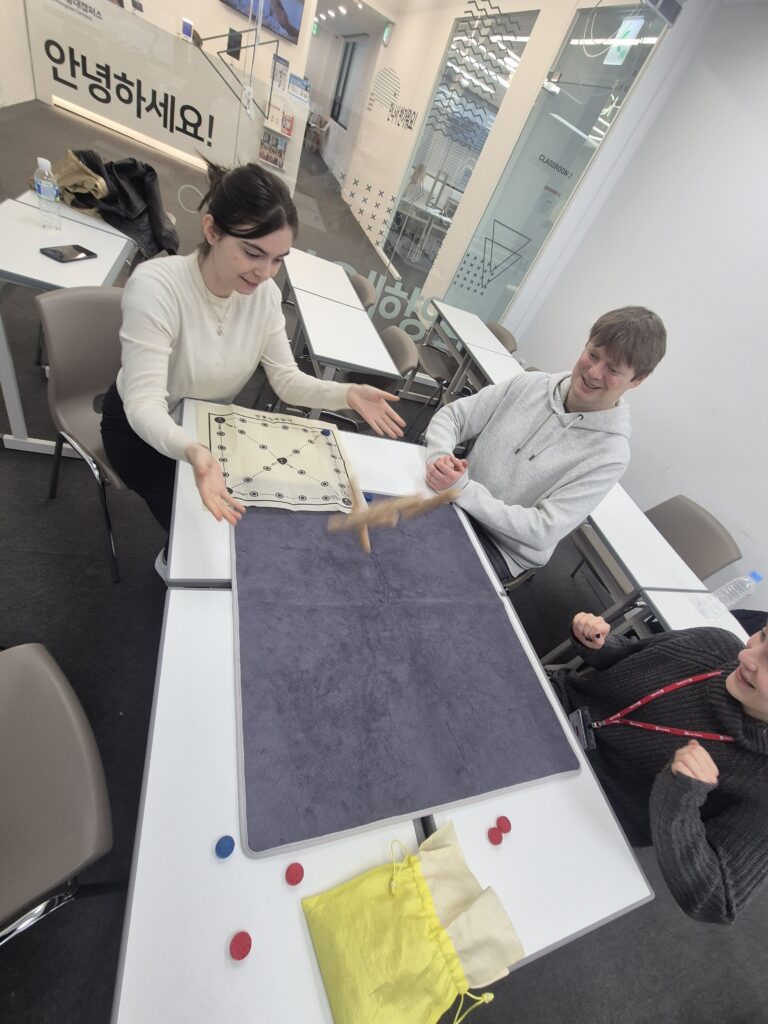
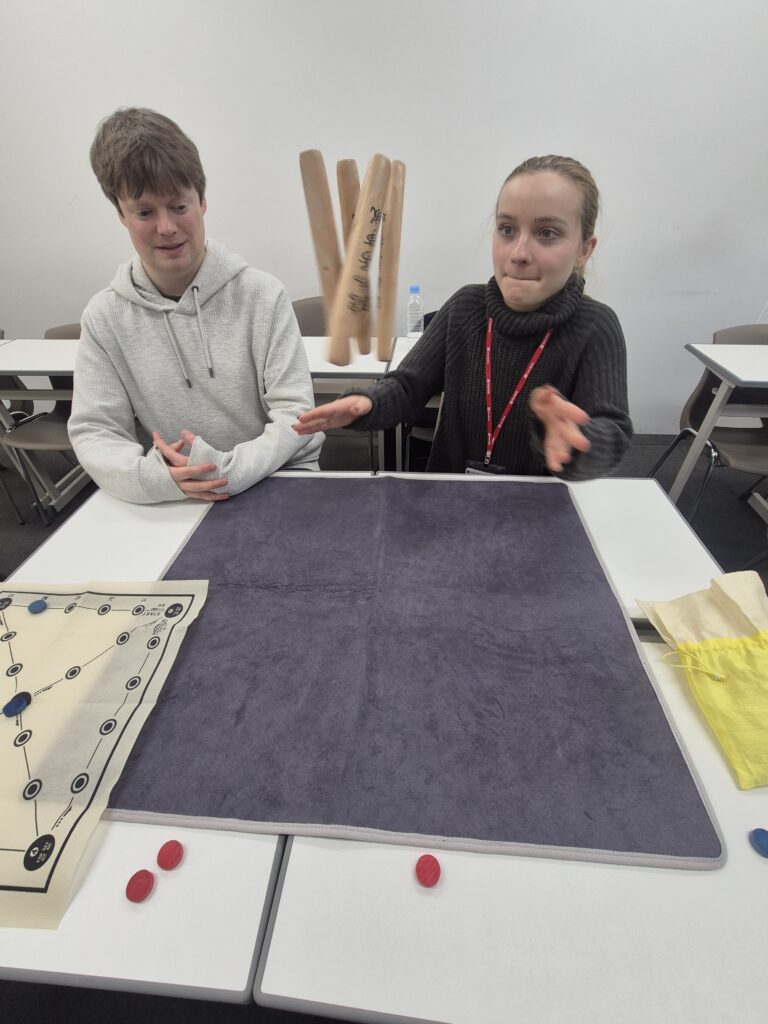
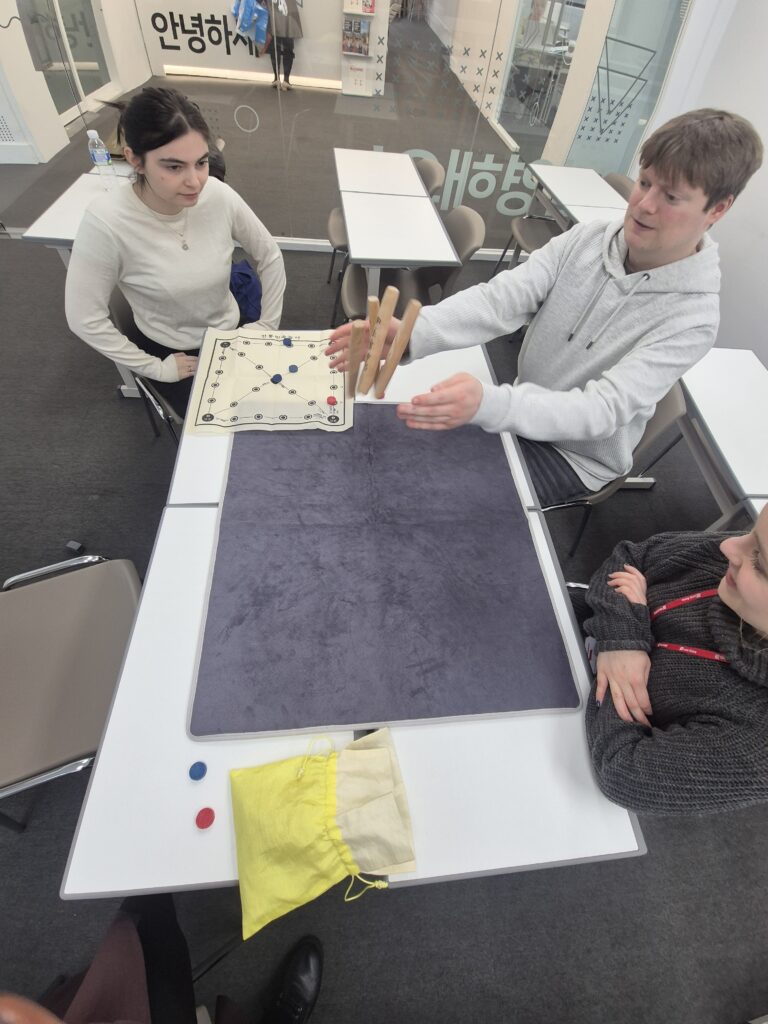
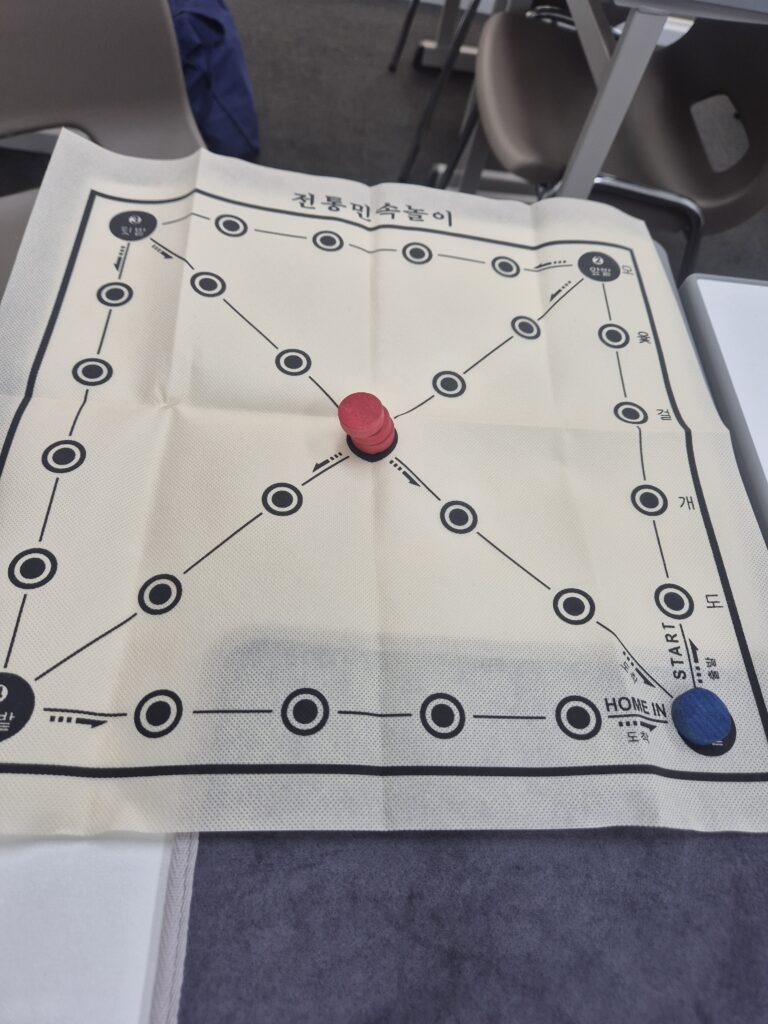
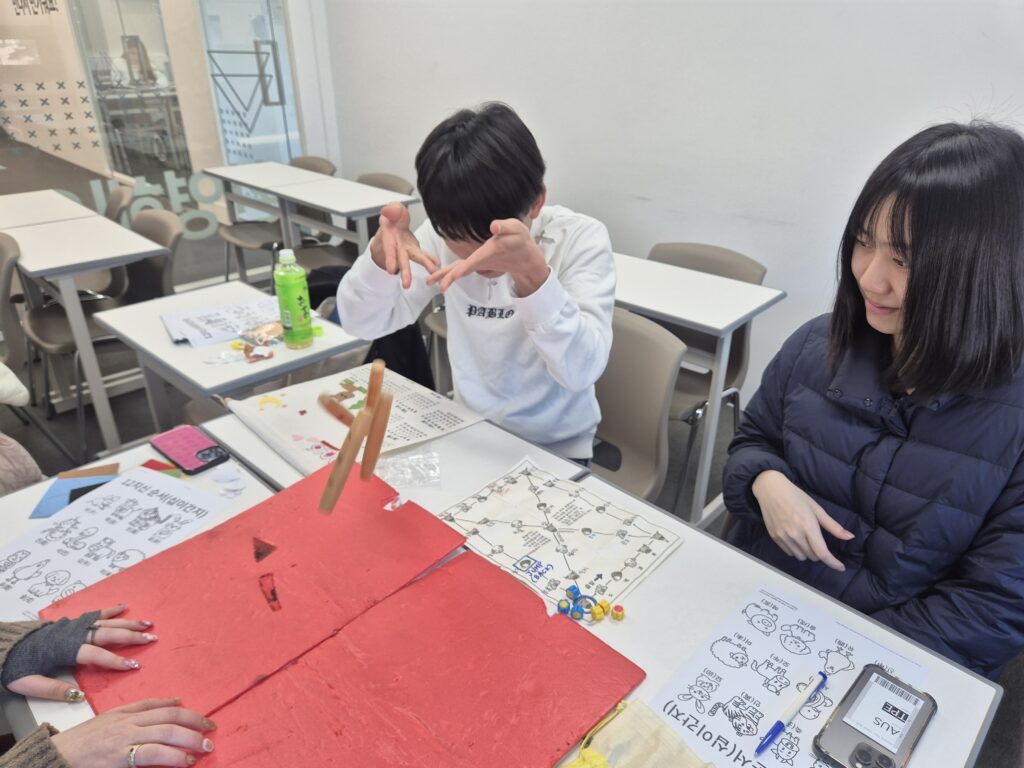
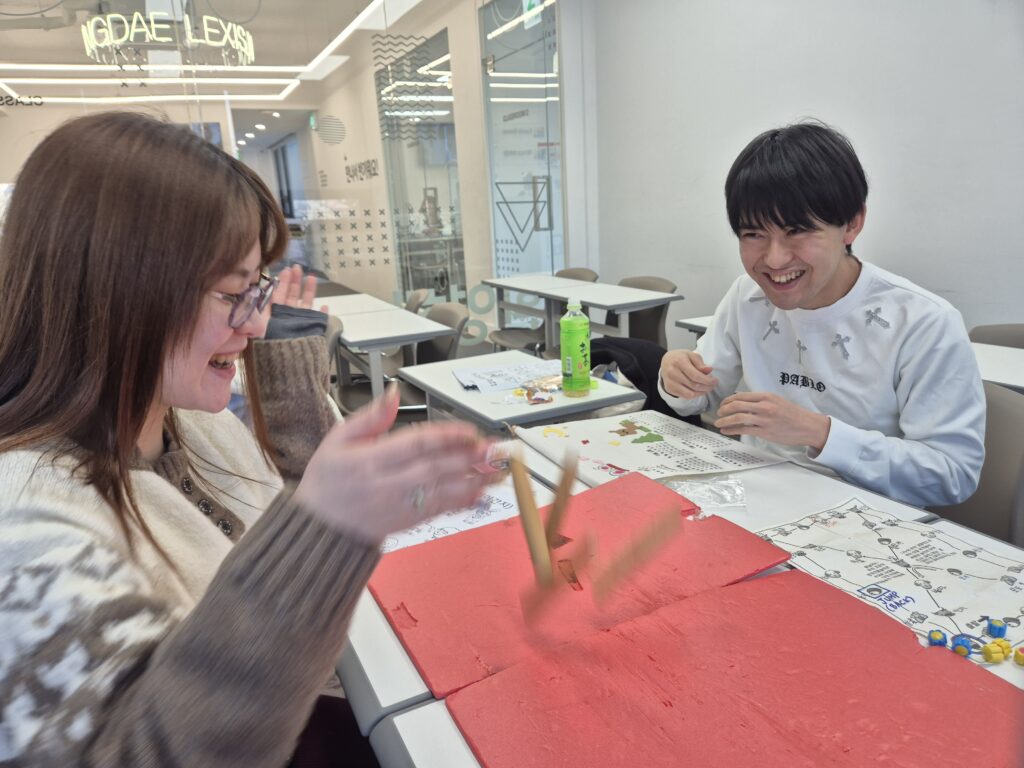
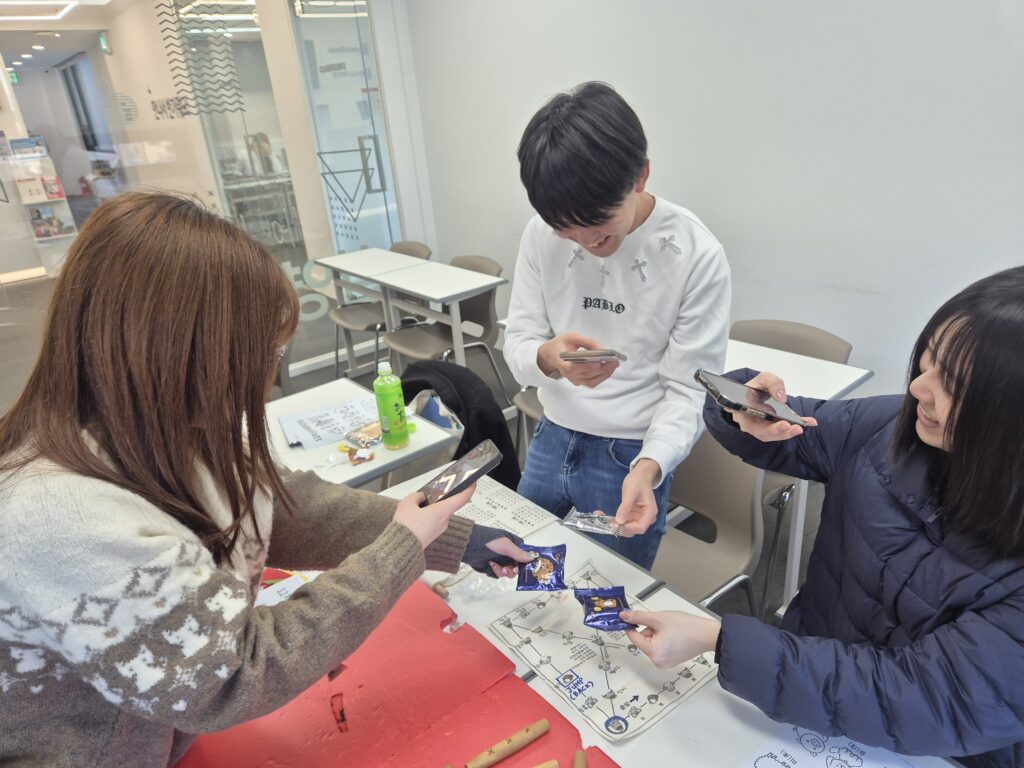
달력을 만들고 전통놀이인 윷놀이와 공기놀이도 같이 해 보며 아주 즐거운 시간을 보냈습니다. 🙂

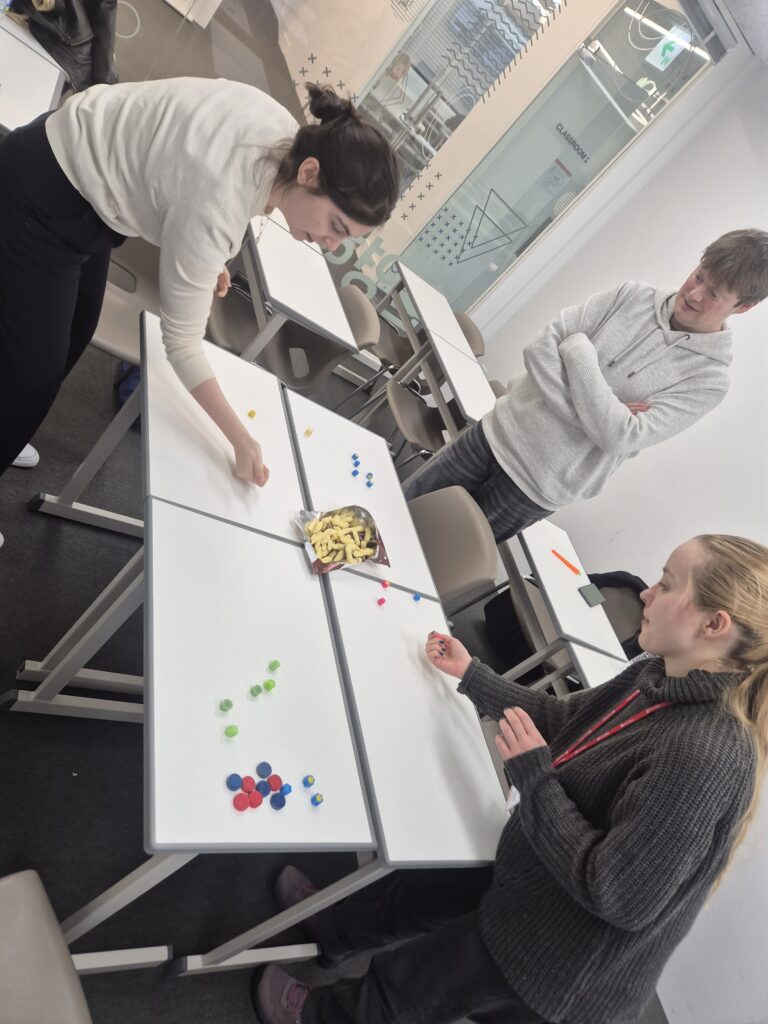
마지막으로 간식 인증샷도 찍어 보며 즐겁게 마무리를 했어요.

여러분도 한 번 십이간지 달력 만들기에 도전해 보세요!

————————————————————————————————————————–

Hello! To celebrate the New Year, today we made a 2026 Twelve Zodiac Animals Calendar.

What does “Twelve Zodiac Animals” mean?

It is a term that combines the Ten Heavenly Stems, which represent the energy of the sky, and the Twelve Earthly Branches, which divide time and directions on earth.

Now, here’s a quiz!
Can you name the twelve zodiac animals?
I’ll give you a hint using the first letters!

R, O, T, R, D, S, H, S, M, R, D, P

.

.

.

.

Alright, here are the answers!

Rat, Ox, Tiger, Rabbit, Dragon, Snake, Horse, Sheep, Monkey, Rooster, Dog, Pig

Did you get them all? 🙂

The animal that corresponds to the year you were born is called your zodiac sign.
For example, 2026 is the Year of the Horse, so people born this year will be born under the sign of the Horse.

After learning about the twelve zodiac animals, playing a fun initial-letter quiz, and enjoying the snacks we received as prizes, we began making our 2026 calendar together.

We spread out the materials, discussed what kind of designs we wanted to make, and shared ideas while creating our calendars.

And then… ta-da!
Adorable and wonderful calendars, each showing everyone’s unique personality, were finally completed!

After making the calendars, we had a great time playing traditional Korean games such as Yutnori and Gonggi together. 🙂
To wrap up the day, we even took fun photos with our snacks and ended the activity on a happy note.

Why don’t you try making your own Twelve Zodiac Animals Calendar too?

KBS Seoul – 서울 KBS

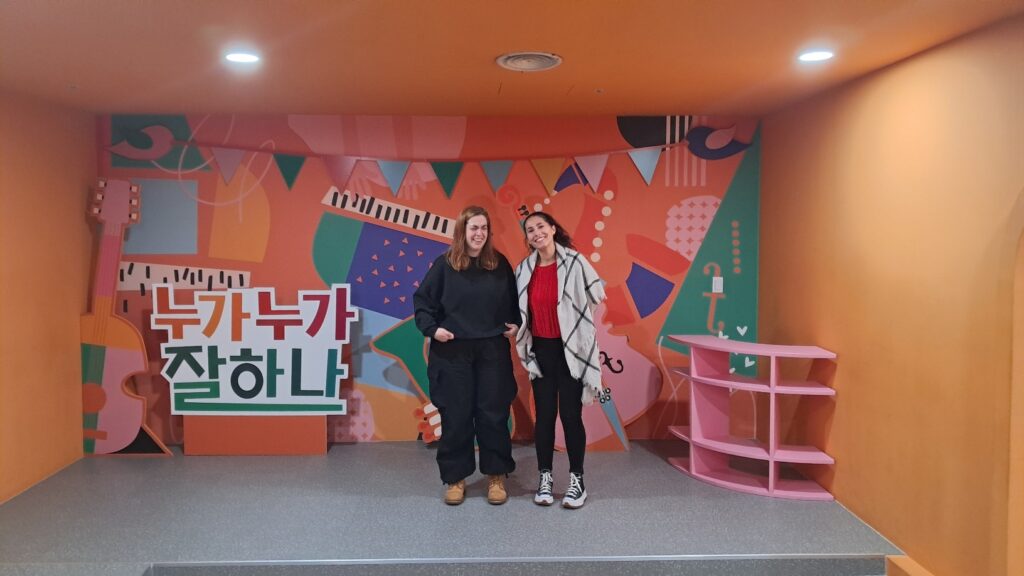
안녕하세요? 지난 금요일에는 서울 KBS에 다녀왔어요! KBS 견학홀을 둘러보며 방송국의 역사와 현황 그리고 다양한 방송 프로그램들을 보고 체험해볼 수 있었습니다!!

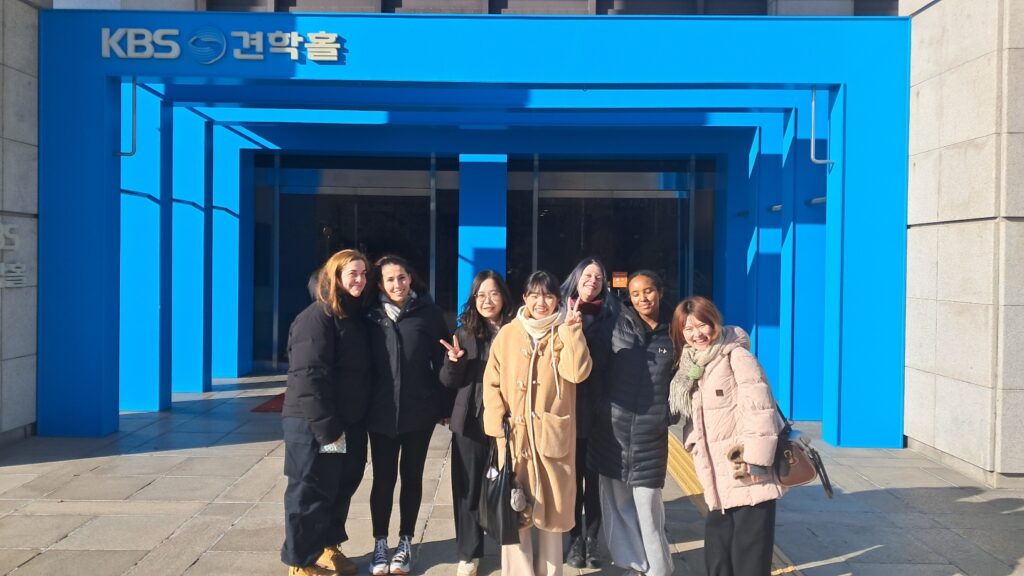
먼저 전시관에 입장 전 입구 앞에서 단체 사진을 한 컷 찍었습니다!! 이날 날씨가 너무 추웠는데 ㅠㅠ 학생들이 씩씩하게 잘 따라와줘서 너무 감사했어요!!

가이드 분의 안내와 설명을 들으며 KBS의 역사와 현재 담당하고 있는 여러 방송 업무들을 찬찬히 살펴볼 수 있었습니다!!

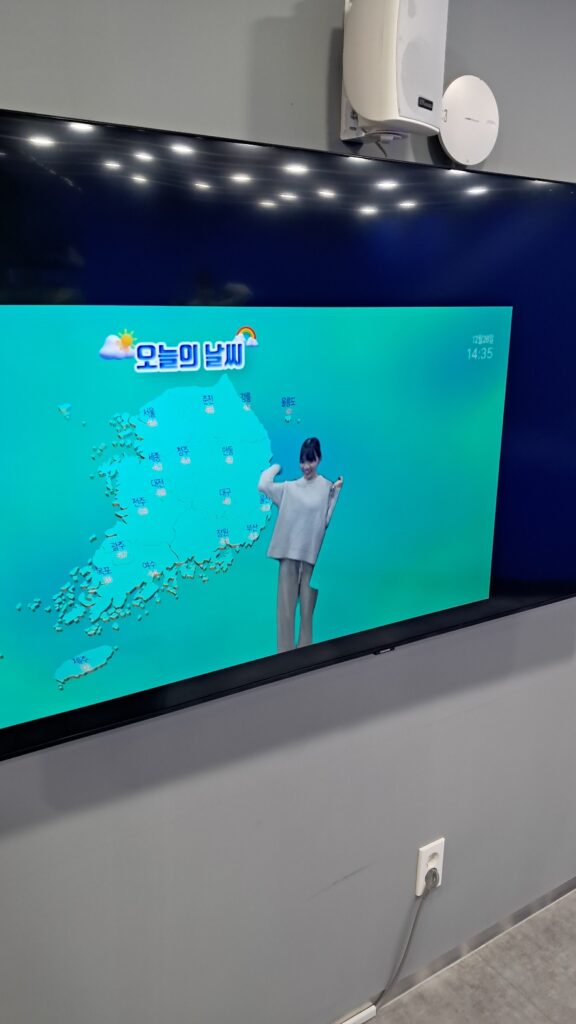
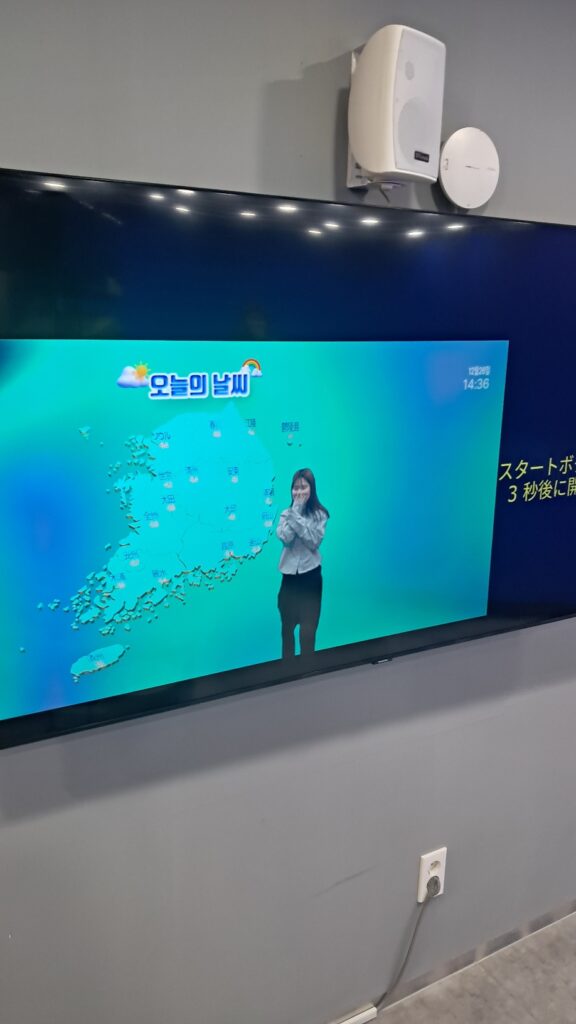
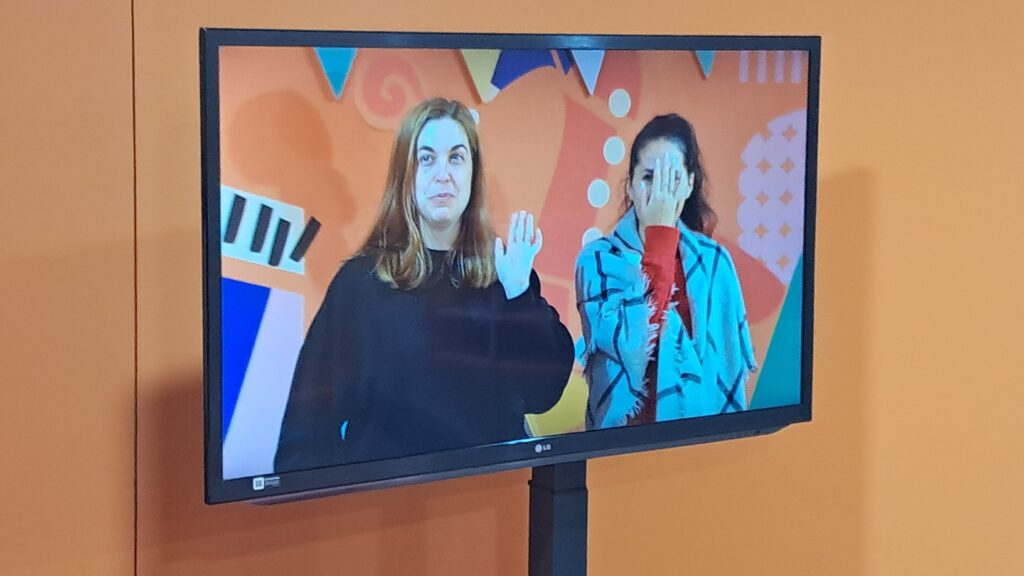
또 여러 가지 체험도 해 볼 수 있었는데요! 여기 이렇게 크로마키를 사용한 기상 캐스터 체험도 해 보았습니다!! 각자 친숙한 언어로 일기 예보를 진행해보는 경험을 해 봤어요!

다들 정확한 발음으로 침착하게 잘하더라고요!!!

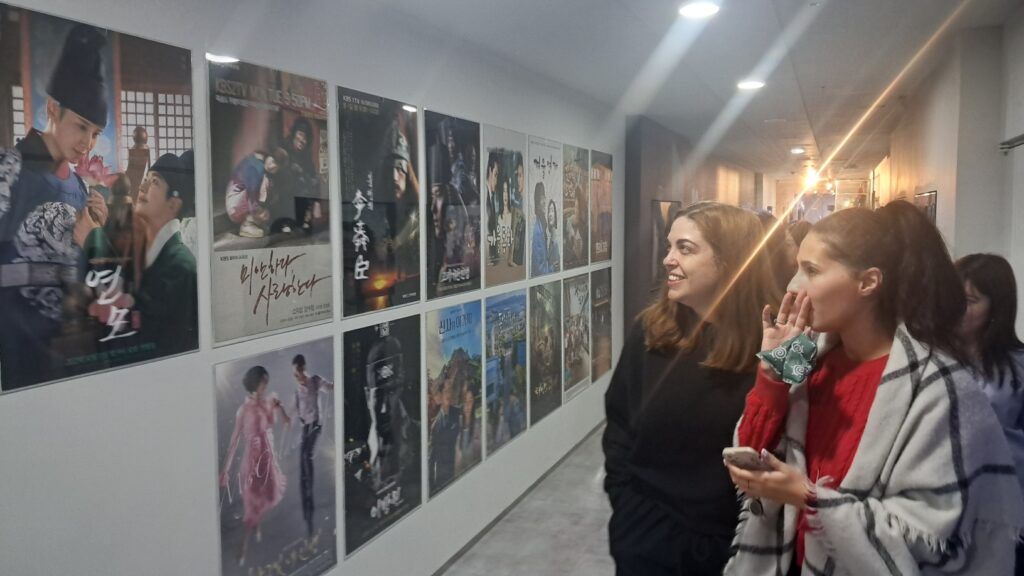
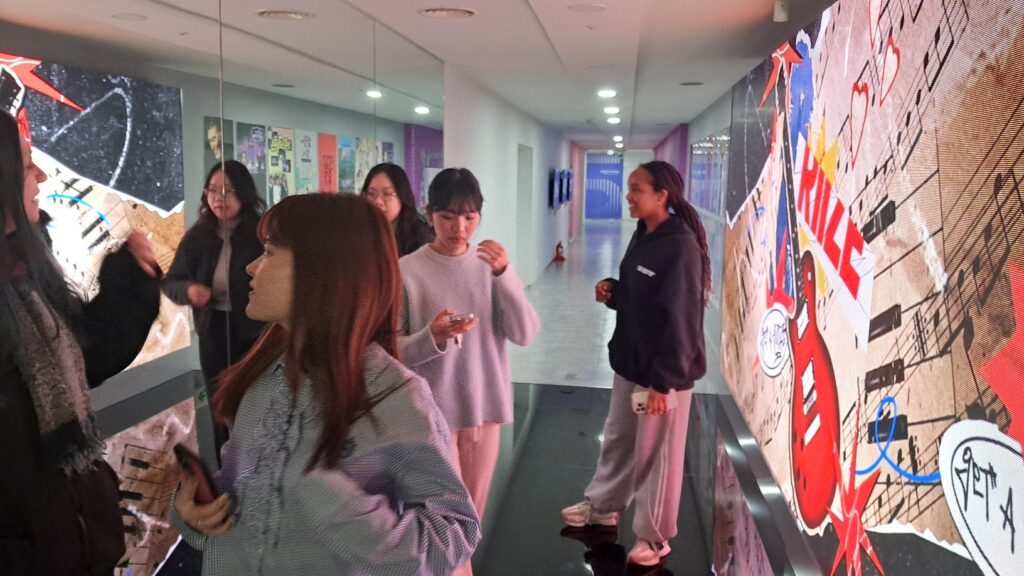
이후 KBS 드라마와 음악방송 프로그램 포스터들을 둘러보고 있는 우리 학생들! 다들 각자에게 친숙한 프로그램이 나올 때마다 즐거워 했어요!

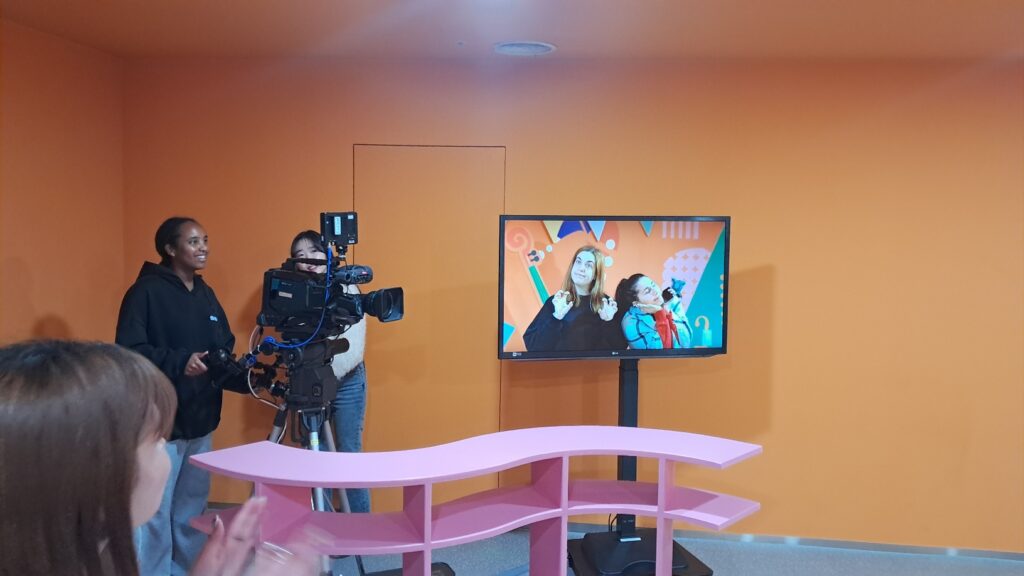
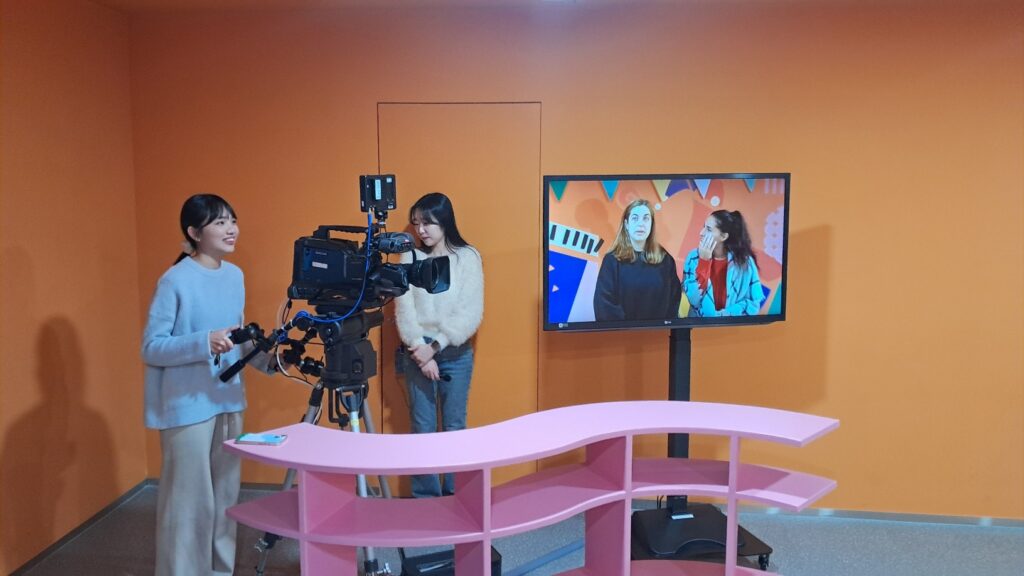
그 다음에는 카메라로 직접 학생들의 모습을 촬영해보는 시간을 가져보았어요! 다들 처음엔 쑥스러워했는데 조금씩 카메라에 적응해가는 모습을 보였답니다! 흐흐

요렇게 친구들의 모습을 카메라로 촬영하며 카메라 감독이 되어보는 체험을 하였습니다!

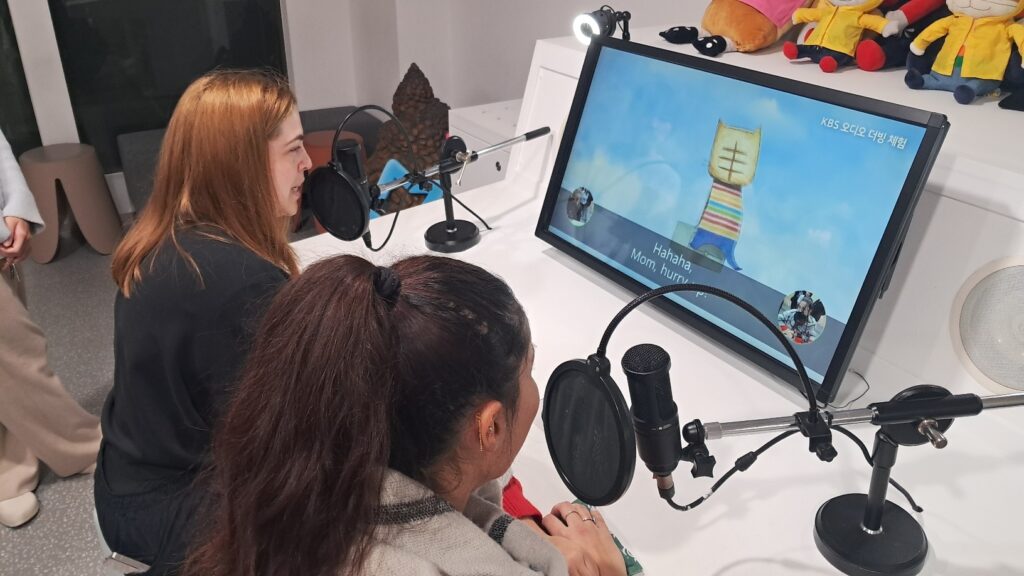
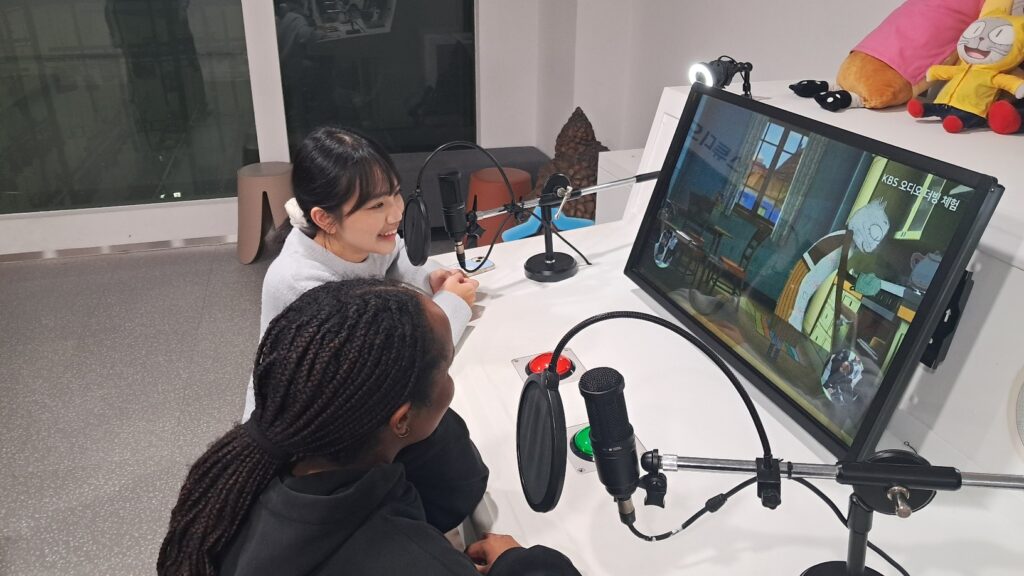
그러고 나서 한국 애니메이션 <구름빵>을 영어로 더빙해보는 시간을 가졌습니다. 두 명이 각각 인물을 맡고 성우처럼 더빙을 해보았어요! 이후 어떻게 녹음이 되었는지 결과를 확인해볼 때에는 다들 웃음이 멈추지 않았답니다!!

요렇게 해보았습니다!! ^^

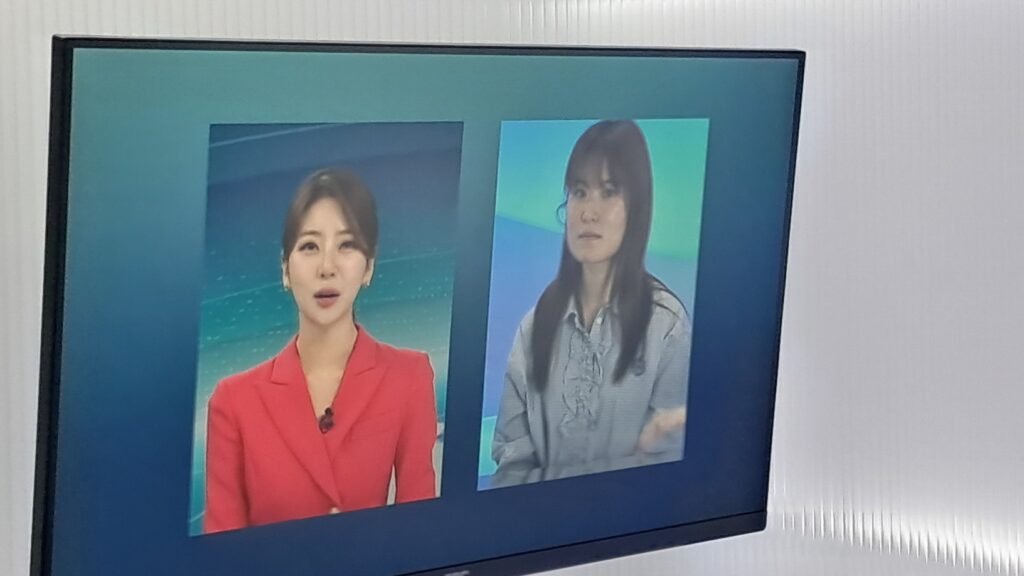
이후엔 아나운서처럼 직접 뉴스를 진행해보는 시간도 가졌습니다! 친숙한 언어로 프롬프터를 보며 뉴스를 진행하니 다들 흥미로워했어요!!

이렇게 뉴스를 진행해 보았습니다!

이외에도 KBS에서 과거에 쓰던 방송 장비들이나 사극 의상 등 다양한 방송 관련 물건들을 살펴볼 수 있었습니다! 한파를 뚫고 보러 간 보람이 있었답니다! 이렇게 한국의 방송 프로그램들이 어떻게 만들어지고, 어떻게 송출되는지 알아볼 수 있는 시간이었습니다!!!

Making Calendar – 캘린더 만들기

안녕하세요. 이번주에는 곧 다가올 새해를 기다리며 2026년 캘린더를 만들려고 했어요. 그런데 불행하게도 주문한 캘린더 자료가 도착하지 않았어요. 시간을 충분히 두고 주문을 했지만 아마 연말이라서 배송이 늦어졌나봐요. 그래서 계획했던 캘린더는 만들지 못했지만 덕분에 한국 문화에 대해 궁금했던 점에 대해서 많이 알게되는 좋은 기회가 되었답니다.

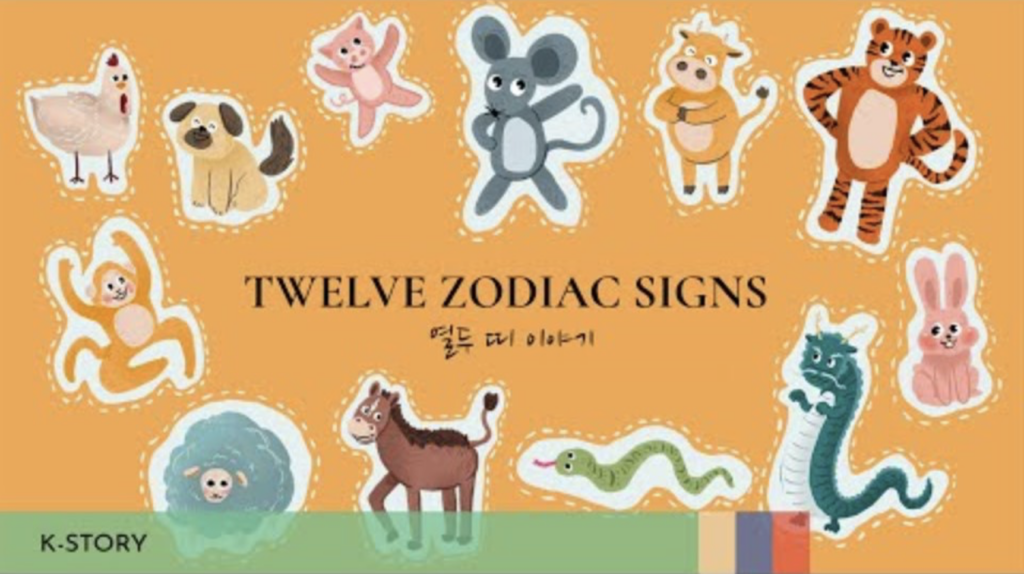
1교시에는 계획대로 십이간지에 대해서 배웠어요. 십이간지는 한국 전통 달력의 기본이 되는 개념이에요. 십간은 ‘하늘의 기운’이라는 의미가 있고 날짜를 세는 단위예요. 십이지는 ‘땅의 기운’이라는 의미가 있고 달을 세기 위해 사용됐어요. 그래서 태어난 해와 날짜를 알면 내 생일의 십이간지를 찾아서 ‘띠’를 알 수 있어요. 2025년은 을사년, 즉 뱀의 해였어요. 여러분은 어떤 ‘띠’예요?

십이간지에는 재미있는 이야기가 있어요. 옛날옛날에 옥황상제가 하늘 나라를 지킬 동물들을 정하기 위해 달리기 경주를 제안하며 열두 띠 이야기가 시작돼요. 가장 부지런한 소가 1등으로 도착하려는 순간, 소의 머리에 몰래 타고 있던 영리한 쥐가 먼저 뛰어내려 1등이 돼요. 그 뒤를 이어 호랑이, 토끼, 용 등 여러 동물이 차례대로 도착하며 오늘날의 열두 띠 순서가 정해지게 되었다고 해요.

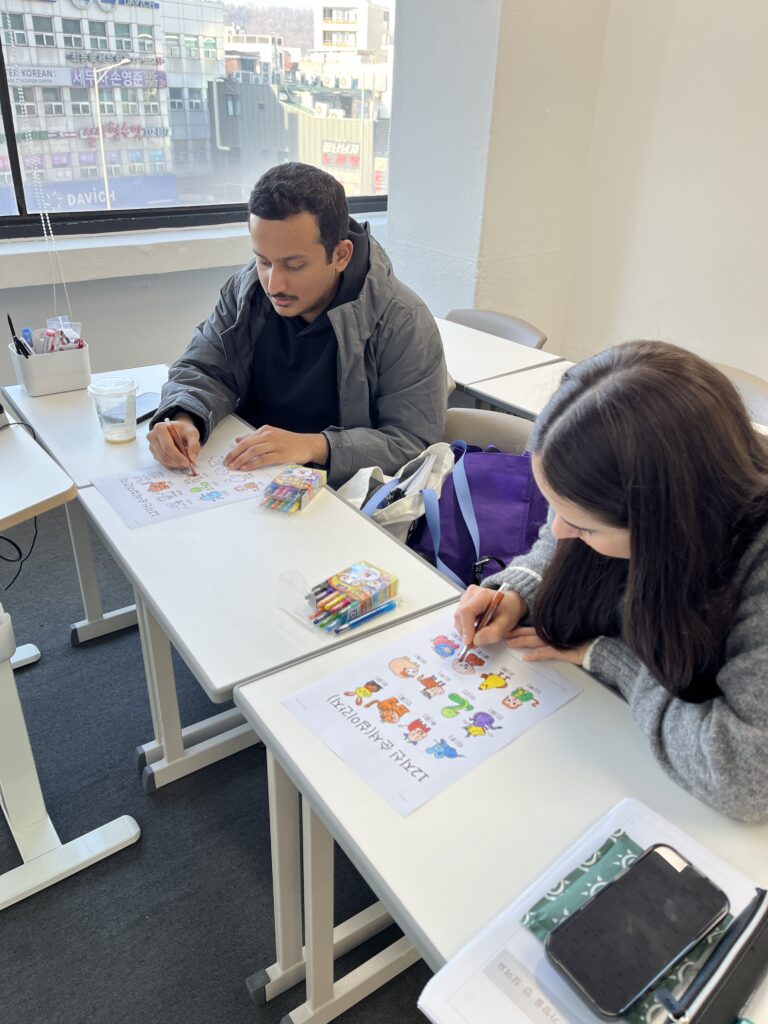
이렇게 십이간지에 대해서 배운 후에 열 두 동물을 예쁘게 색칠 했어요. 제일 먼저 자신의 띠를 찾아서 칠하고 가족, 친구들의 띠도 칠했어요.

2교시에는 한국 전통 놀이인 공기놀이와 제기차기를 해 보았어요. 너무 어려웠지만 모두들 최선을 다해서 했답니다.

오늘 수업에 참여한 학생들은 한국의 문화와 역사에 대해서 관심이 많은 친구들이었어요. 그래서 질문이 아주 많았는데요. 무슨 얘기를 했냐하면요…

  • 십이간지에 나오는 동물 이외에 한국 문화에서 중요하게 생각한 동물은 뭐예요?
  • 한국에서는 왜 중국 한자를 많이 써요?
  • 한국어를 잘 하려면 한자를 꼭 알아야 해요? 왜요?
  • 유교사상은 중국에서 시작했는데 왜 한국에서 더 잘 지키고 있어요?
  • 한국은 언제 시작했어요?
  • 한국, 중국, 일본의 관계는 어때요?
  • ‘대구 보이’가 무슨 뜻이에요?
  • 한국어를 얼마 동안 공부하면 한국 사람과 편하게 이야기할 수 있어요?

이외에도 여러가지 이야기를 하면서 친구들의 나라 문화와 비슷한 점, 다른 점에 대해서 이야기를 많이 했어요. 비록 캘린더는 만들지 못했지만 한국에 대해서 좀 더 잘 알게 된 기회가 되었어요. 사자성어에 ‘전화위복(轉禍爲福)’이라는 말이 있어요. 안 좋은 일이 있어도 그것을 잘 활용하면 오히려 좋은 기회가 된다는 뜻이에요. 오늘 수업이 바로 ‘전화위복’이었어요.

12월이 얼마 남지 않았네요. 여러분들 모두 2025년 마무리 잘 하시기 바라요.

Hello everyone! This week, we were planning to make 2026 calendars to get ready for the upcoming New Year. Unfortunately, the materials we ordered didn’t arrive in time. We ordered them well in advance, but it seems the end-of-year delivery rush was just too much!

Even though we couldn’t make the calendars as planned, it turned out to be a wonderful opportunity to dive deep into Korean culture.

🐭 Session 1: The Secret of the 12 Zodiac Animals (Sib-i-gan-ji)

During the first session, we learned about ‘Sib-i-gan-ji’, the foundation of the traditional Korean calendar.

  • Ship-gan (10 stems): Represents the ‘energy of the sky’ and is used to count days.
  • Sib-i-ji (12 branches): Represents the ‘energy of the earth’ and is used to count months.

By combining these, you can find your ‘Ddi’ (Zodiac animal) based on your birth year. 2025 was the Year of the Snake (Eul-sa-nyeon). What is your zodiac sign?

There’s a fun story behind the sequence! Long ago, the Jade Emperor held a running race to choose the animals that would protect the heavens. The diligent Ox was about to finish first, but the clever Rat—who had been hiding on the Ox’s head—jumped off at the last second to take 1st place! Then came the Tiger, Rabbit, Dragon, and so on, which is how the order we know today was decided.

After the story, we colored the twelve animals. Everyone started by coloring their own sign, followed by those of their family and friends. 🎨

👟 Session 2: Traditional Korean Games

In the second session, we tried Gonggi-nori (pebble tossing) and Jegichagi (Korean hacky sack). They were quite tricky, but everyone gave it their best shot!

💬 Curiosity Overflow: Q&A Time!
The students in today’s class were so passionate about Korean culture and history. We had a very lively Q&A session! Here are some of the interesting questions they asked:

  • Are there other important animals in Korean culture besides the zodiac?
  • Why does Korea use so many Chinese characters (Hanja)?
  • Do I have to learn Hanja to be good at Korean? Why?
  • Confucianism started in China, so why is it so strictly observed in Korea?
  • When did Korean history begin?
  • What is the relationship between Korea, China, and Japan like?
  • What does ‘Daegu Boy’ mean?
  • How long do I need to study to speak comfortably with Koreans?

We had a great time comparing these topics with the cultures of the students’ home countries.

✨ Today’s Lesson: Jeon-hwa-wi-bok (전화위복 轉禍爲福)

There is a Korean four-character idiom, ‘Jeon-hwa-wi-bok’ (전화위복 轉禍爲福). It means that even if something bad happens, if you use it wisely, it can turn into a great opportunity—basically, “a blessing in disguise.” Today’s class was exactly that!

December is flying by. I hope you all have a wonderful wrap-up to 2025!

National Museum of Korean Contemporary History- 대한민국 역사 박물관

안녕하세요! 오늘은 대한민국 역사 박물관에 견학을 다녀왔어요!

날씨가 많이 추워서 걱정했는데, 박물관 안에 들어서자 따뜻한 분위기와 흥미로운 전시물들이 우리를 반겨주었어요.

이곳은 우리나라 근현대사를 한눈에 볼 수 있는 공간이에요. 다양한 전시와 자료를 통해 한국 사회가 어떻게 변화하고 발전해 왔는지를 알 수 있었어요. 외국인 학생들에게는 한국을 더 깊이 이해할 수 있는 좋은 기회가 되었던 것 같아요.

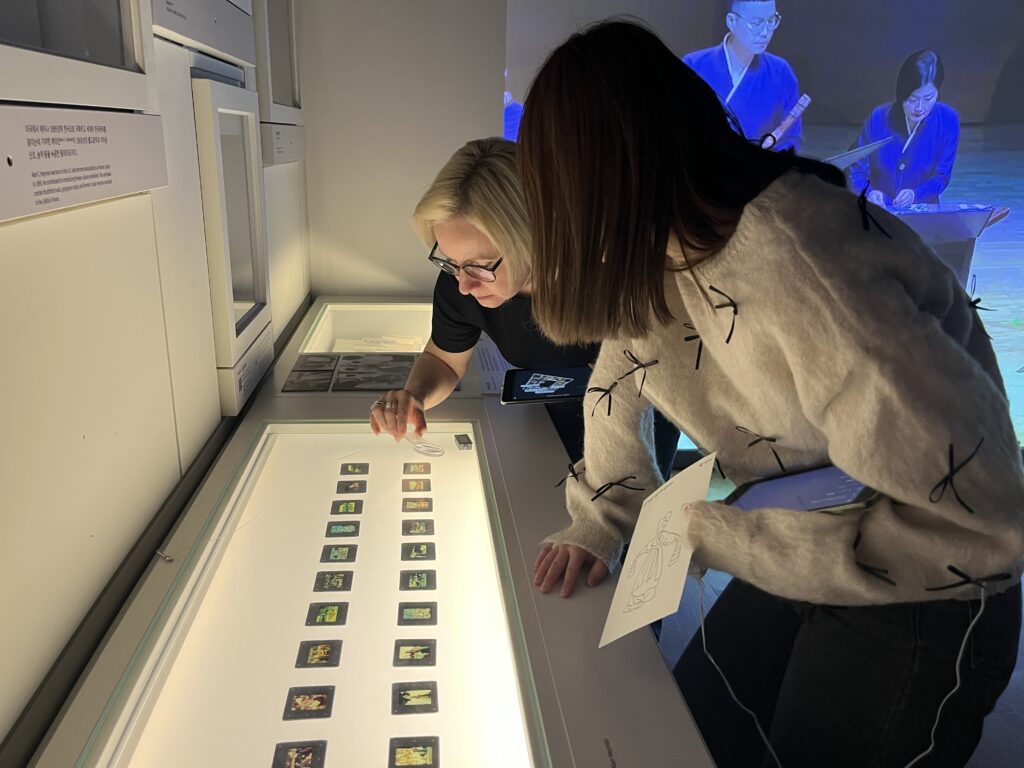
마침 박물관에서는 특별전 〈밤풍경〉이 열리고 있었어요. 조선시대의 고요한 밤부터 통금 시절의 긴장된 밤, 그리고 오늘날 자유롭고 화려한 밤까지 시대별로 달라진 한국의 밤을 한눈에 볼 수 있었어요. 외국인 학생들도 흥미롭게 관람하며 한국의 밤 문화가 어떻게 변해왔는지 많은 질문을 던졌어요

전시실은 전체적으로 어두운 분위기로 꾸며져 있었는데, 그 속에서 화려한 조명이 전시물들을 더욱 돋보이게 해주었어요. 덕분에 전시를 관람하는 내내 색다른 분위기를 느낄 수 있었고, 일반적인 전시와는 또 다른 매력을 발견할 수 있었어요.

대한민국 역사 박물관 4층에는 상설전시실 「말랑말랑 현대사 놀이터」가 마련되어 있었어요. 이름처럼 딱딱한 역사 공부가 아니라, 직접 체험하면서 즐길 수 있는 공간이라 학생들에게 큰 인기를 끌었어요.

이곳에서는 대한민국 민주 역사의 중요한 순간을 몸소 느껴볼 수 있었는데요. 학생들은 실제 투표소처럼 꾸며진 공간에서 투표 체험을 해보며 민주주의의 의미를 자연스럽게 배울 수 있었어요. 또, 인생네컷 포토존에서 사진을 찍으며 즐거운 추억을 남겼고, DDR 게임을 통해 90년대의 문화까지 경험할 수 있었어요.

가장 흥미로웠던 부분은 시험 체험이었어요. 8~90년대 학력고사 문제와 요즘 수능 문제를 간단히 풀어볼 수 있도록 준비되어 있었는데, 학생들이 직접 문제를 풀면서 시대별 교육 제도의 차이를 느낄 수 있었어요. 단순히 전시를 보는 것이 아니라, 직접 참여하고 체험하는 과정에서 한국 현대사의 다양한 모습을 이해할 수 있었던 시간이었어요.

「말랑말랑 현대사 놀이터」는 이름처럼 재미와 배움이 함께하는 공간이었고, 외국인 학생들에게도 한국 현대사를 친근하게 소개할 수 있는 좋은 기회였답니다.

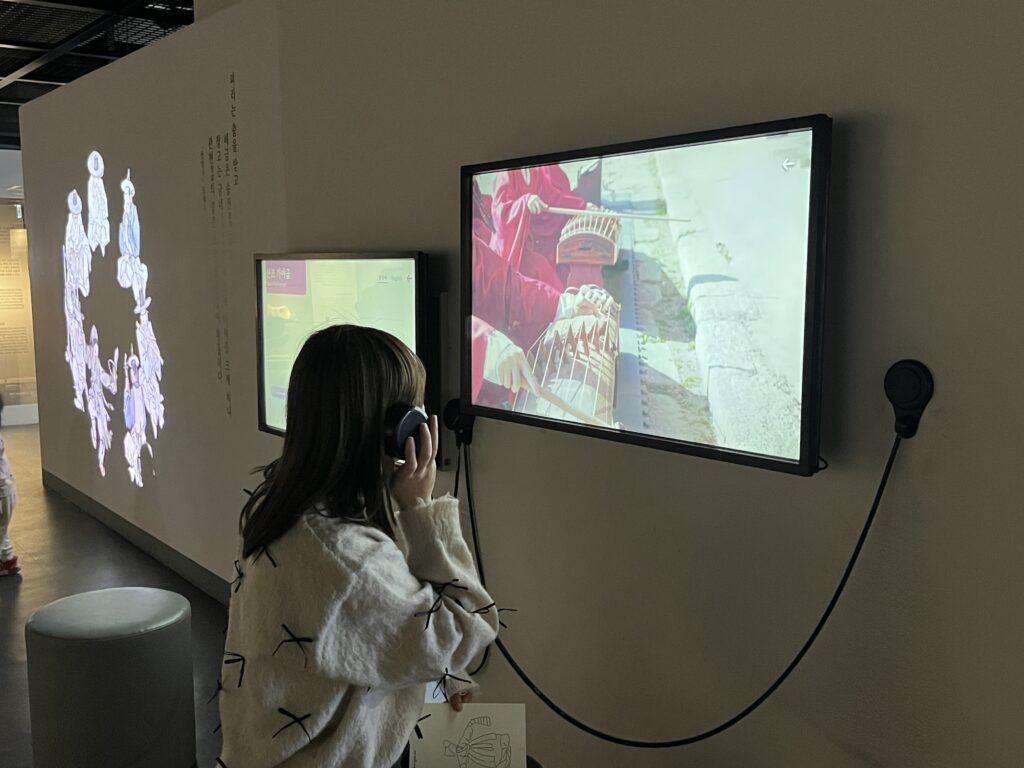
K-POP을 좋아하는 학생들은 한국 가요 역사의 흐름을 살펴볼 수 있는 전시를 관람했어요. 이곳에서는 한국에서 K-POP이 어떻게 발전해왔는지, 또 지난 시대에는 어떤 가수들이 큰 인기를 얻었는지를 영상과 음악을 통해 알아볼 수 있었어요.
학생들은 전시를 둘러보며 시대별로 변화해온 한국 대중음악의 모습을 흥미롭게 지켜보았고, 직접 노래를 들으며 그 흐름을 체감할 수 있었어요. 특히 학생들이 알고 있는 아이돌이 화면에 등장하자 모두가 더 신나게 관람하며 즐거운 시간을 보냈답니다.

마지막으로 향한 곳은 대한민국역사박물관의 하이라이트인 8층 옥상 정원이었어요. 이곳에서는 탁 트인 시야로 경복궁을 한눈에 내려다볼 수 있었는데, 웅장한 풍경이 정말 인상적이었어요. 학생들은 눈앞에 펼쳐진 경치를 보며 연신 감탄했고, 멋진 장면을 담기 위해 사진을 찍느라 바쁘게 움직였답니다.

관람을 마친 뒤에는 1층에 모여 각자 짧게 소감을 나누며 활동을 마무리했어요. 학생들은 오늘의 경험을 돌아보며 즐거웠던 순간들을 이야기했고, 서로 다른 시각에서 느낀 점을 공유하는 시간이 되었답니다.
마지막으로 “다음에는 또 어디로 함께 가볼까요?”라는 기대감을 남기며 이번 활동을 마쳤습니다.

다음 만남이 벌써 기다려지네요!


Today, we went on a field trip to the National Museum of Korean Contemporary History. Although the weather was quite cold, the moment we stepped inside, we were welcomed by a warm atmosphere and fascinating exhibits.
At the time of our visit, the museum was hosting a special exhibition titled Nightscape. It showcased the changing face of Korean nights—from the serene evenings of the Joseon Dynasty, to the tense nights during the curfew era, and finally to the vibrant and free nights of today. Foreign students were especially intrigued, asking many questions about how Korea’s night culture has evolved. The exhibition hall was kept dim overall, but the dazzling lights highlighted the displays beautifully, creating a unique mood that set it apart from ordinary exhibitions.
On the 4th floor, we explored the permanent exhibition hall called Soft and Playful Modern History Playground. True to its name, this wasn’t about stiff history lessons—it was an interactive space where students could learn while having fun.
Here, students experienced key moments in Korea’s democratic history. They tried out a mock voting booth, naturally learning the meaning of democracy. At the photo zone, they captured fun memories, and through the DDR game, they got a taste of 1990s culture. One of the most exciting activities was the exam experience corner, where students solved sample questions from the 1980s–90s college entrance exams alongside today’s CSAT questions. By doing so, they could feel the differences in Korea’s education system across generations. Rather than just observing, they actively participated, gaining a deeper understanding of modern Korean history. The Playground truly lived up to its name, blending fun and learning, and it became a great opportunity to introduce foreign students to Korea’s contemporary history in a friendly way.
For the K-POP fans among the group, the exhibition on Korean popular music was a highlight. They explored how K-POP developed over time and discovered which singers were most popular in past decades through videos and music. Students listened to songs from different eras, experiencing the evolution of Korean pop culture firsthand. When familiar idols appeared on screen, the excitement in the room grew, and everyone enjoyed the moment together.
Finally, we headed to the museum’s crown jewel—the rooftop garden on the 8th floor. From there, we had a breathtaking panoramic view of Gyeongbokgung Palace. The majestic scenery left everyone in awe, and students eagerly took photos to capture the unforgettable sight.
After the tour, we gathered on the 1st floor to share short reflections. Students talked about their favorite moments, exchanged perspectives, and relived the joy of the day. We wrapped up with the thought: “Where shall we go together next time?”—leaving us all with anticipation for future adventures.

K-POP DANCE – LE SSERAFIM – SPAGHETTI

안녕하세요!
금요일에 우리는 K-POP 안무를 배웠어요.
이번 시간에 배운 안무는 ‘LE SSERAFIM’의 ‘SPAGHETTI’예요!

안무를 배우기 전에 스트레칭으로 굳은 몸을 풀었어요.
이제 본격적으로 안무를 배워 볼까요?

이번 시간에는 곡의 후렴 부분을 연습할 거예요!
안무 선생님을 따라 한 동작씩 익혀 갔어요.

먼저 느린 음악 속도에 맞춰 동작을 연습하고,
그다음 원래 속도에 맞춰서도 해 보았어요 🙂

모두 집중해서 선생님을 따라 했어요.
노래가 빨라서 조금 어려웠지만, 연습할수록 점점 더 잘하게 되었어요.

중간에 잠시 쉬는 시간도 가졌지만,
학생들은 계속 연습했어요.

열정이 정말 대단해요!

열심히 연습해서 해내는 우리 친구들이 정말 멋졌어요!

마지막으로 각자 휴대폰으로 동영상을 촬영했어요.
나중에 즐거운 추억으로 남을 것 같아요!

안무 선생님과 기념사진도 찰칵 찍은 후,
오늘 수업을 마무리했어요!

아, 참! 전날 서울에 첫눈이 왔어요.
그래서 오고 가는 길에 사람들이 만들어 놓은 귀여운 눈사람도 구경했답니다.
정말 즐거운 시간이었어요! 🙂

Hello!

On Friday, we learned a K-pop dance routine.
The choreography we learned this time was “SPAGHETTI” by LE SSERAFIM!

Before learning the choreography, we loosened up our stiff bodies with some stretching.
Now, shall we start learning the routine?

In this class, we practiced the chorus part of the song.

We followed the dance instructor and learned the moves one by one.

First, we practiced the moves at a slow tempo,
and then we tried them again at the original speed 🙂
Everyone stayed focused and followed the instructor closely.

The song was fast, so it was a little difficult at first,
but the more we practiced, the better we became.

We took a short break in the middle,
but the students kept practicing.

Their passion is truly amazing!
Our students were so impressive as they worked hard and pulled it off!

Lastly, everyone recorded a video on their phones.
I think it will become a fun and happy memory!

After taking a group photo with the instructor,
we wrapped up today’s class.

Oh, and by the way!
It snowed for the first time in Seoul the day before.

So on the way there and back,
we also got to see some cute snowmen that people had made.

It was such a fun and lovely time! 🙂