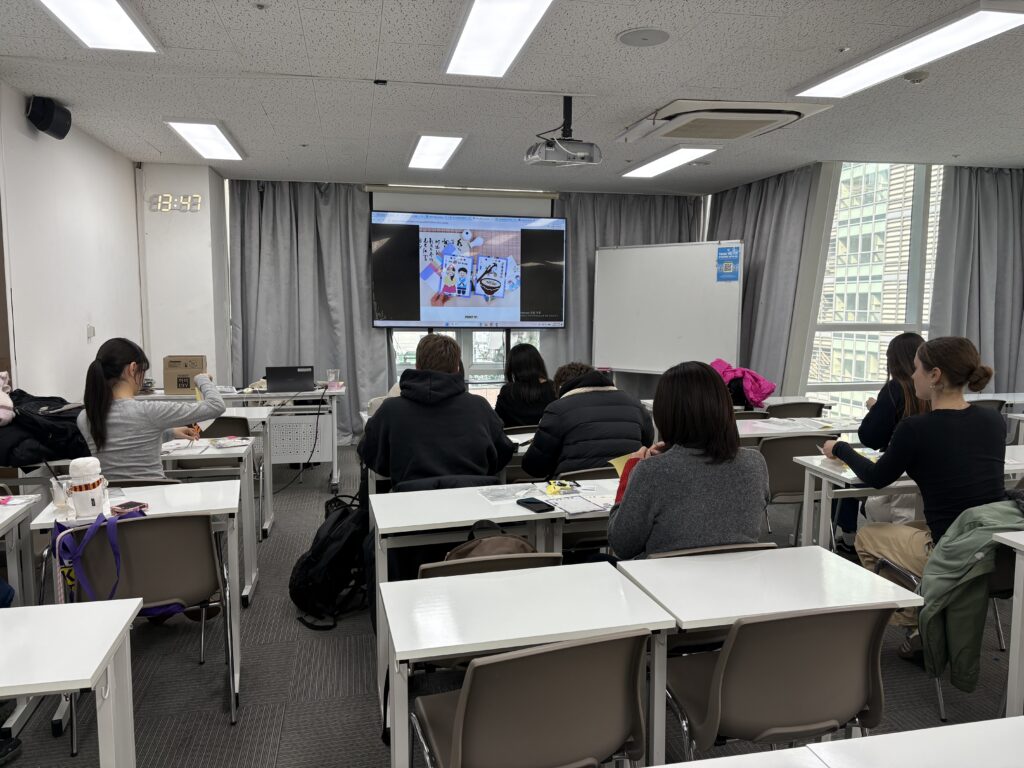
연하장은 새해 인사 카드예요. 한국에서는 새해가 되면 가족, 친구, 선생님, 직장 동료에게 “새해 복 많이 받으세요”라는 말을 전하는데요, 이때 연하장을 보내면 더 따뜻한 마음을 나눌 수 있어요.
한국에서 연하장이 어떤 의미를 갖는지 설명해 주었더니, 학생들은 곧 누구에게 쓸지 즐겁게 고민하기 시작했어요.
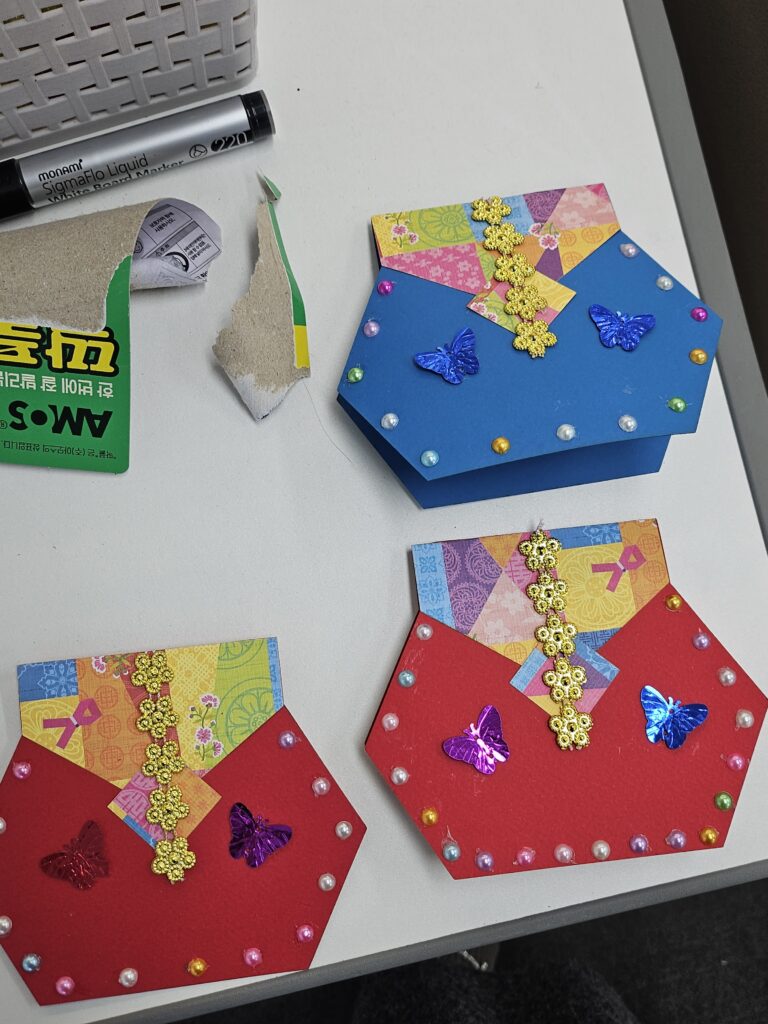
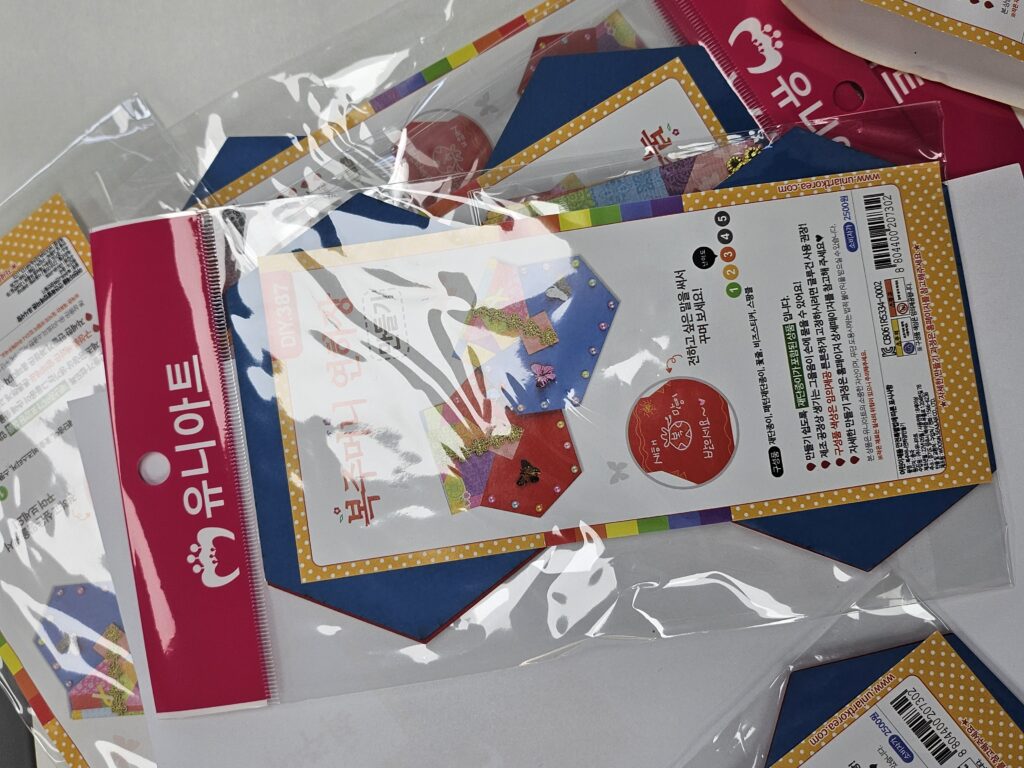
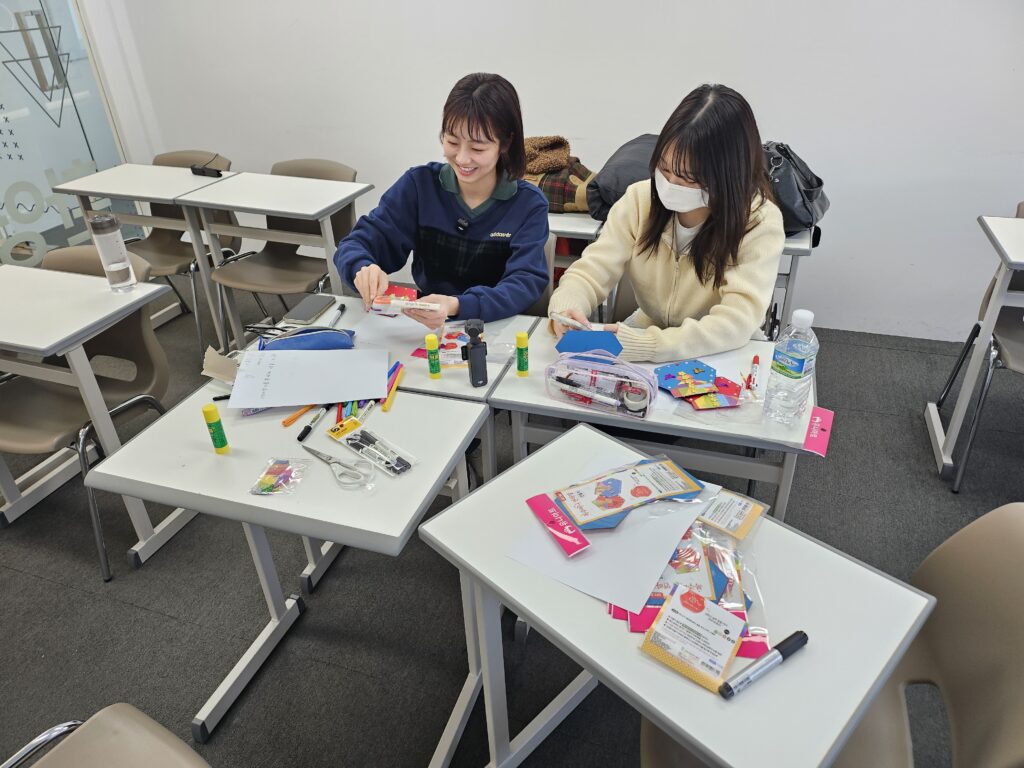
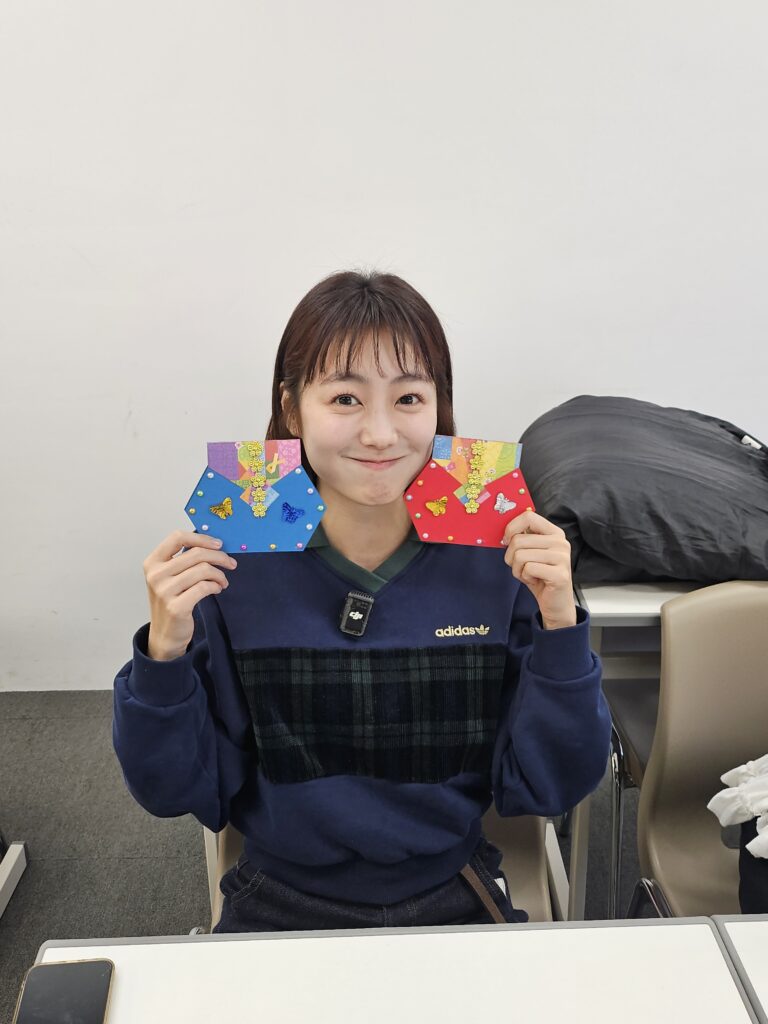
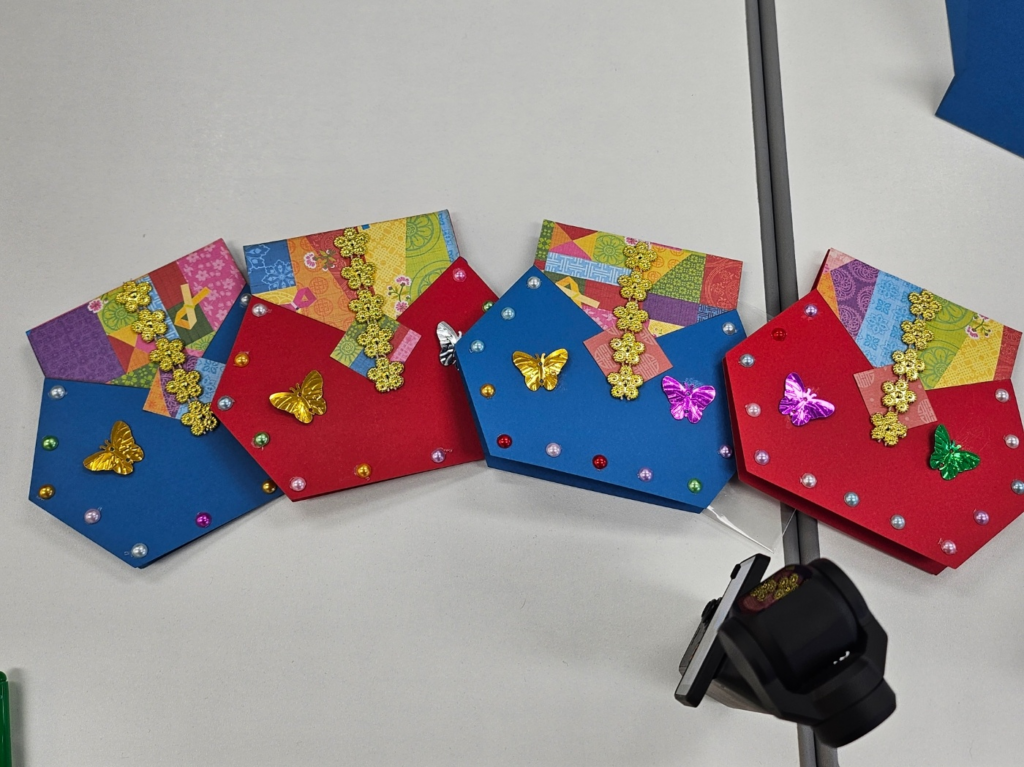
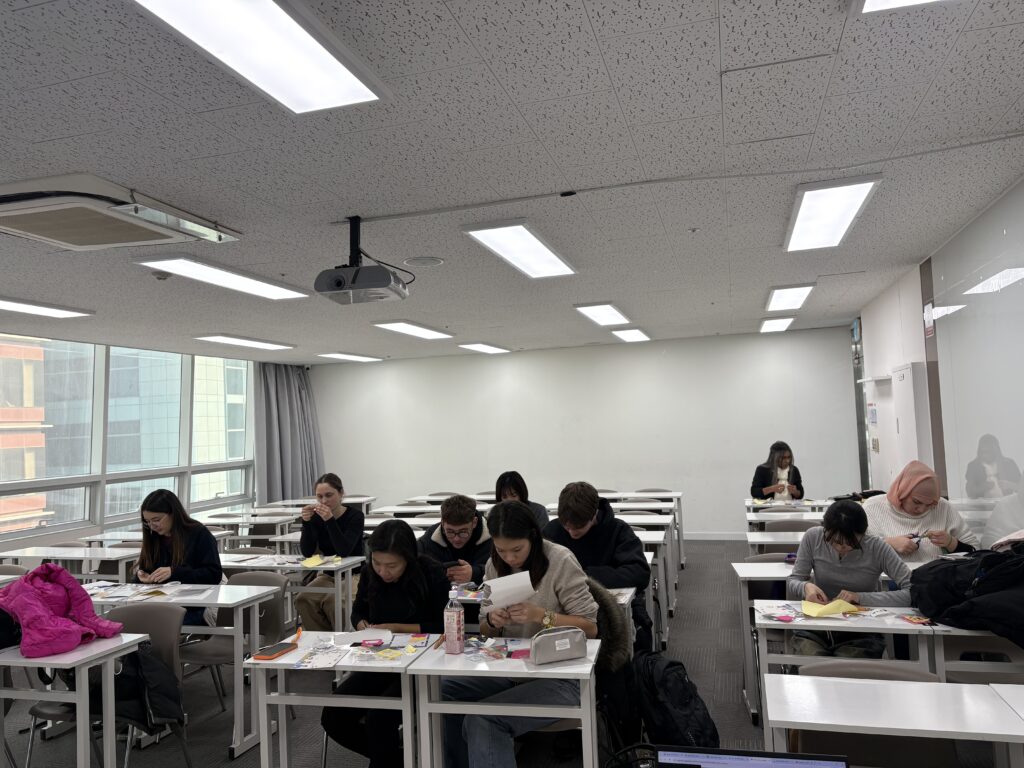
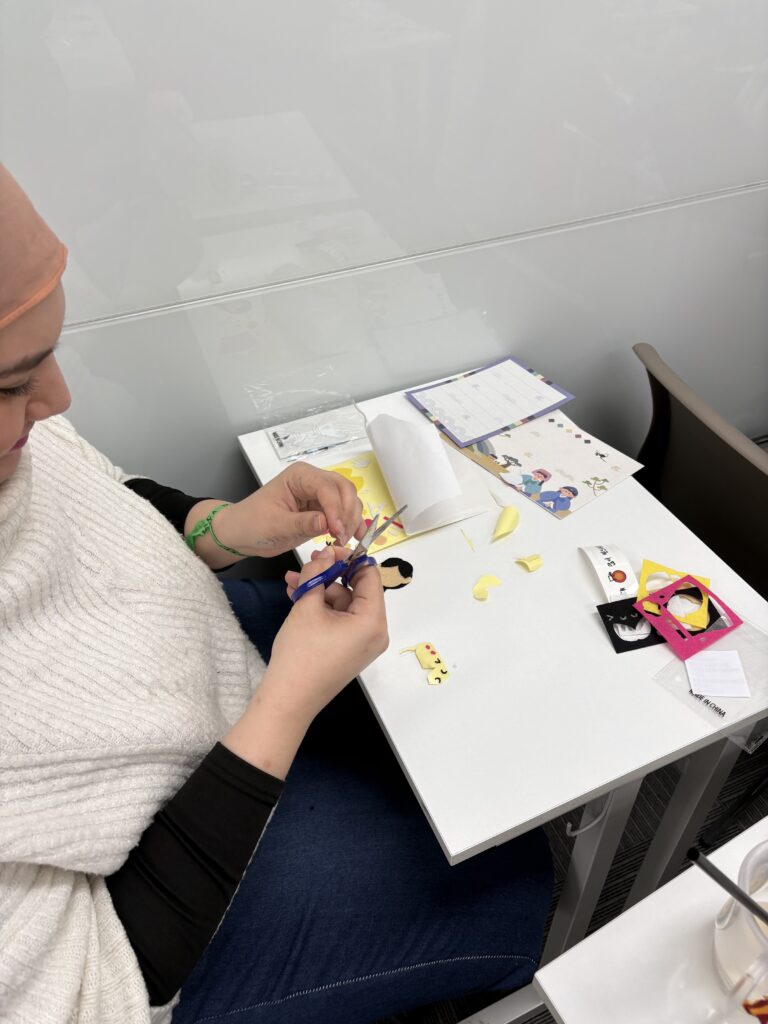
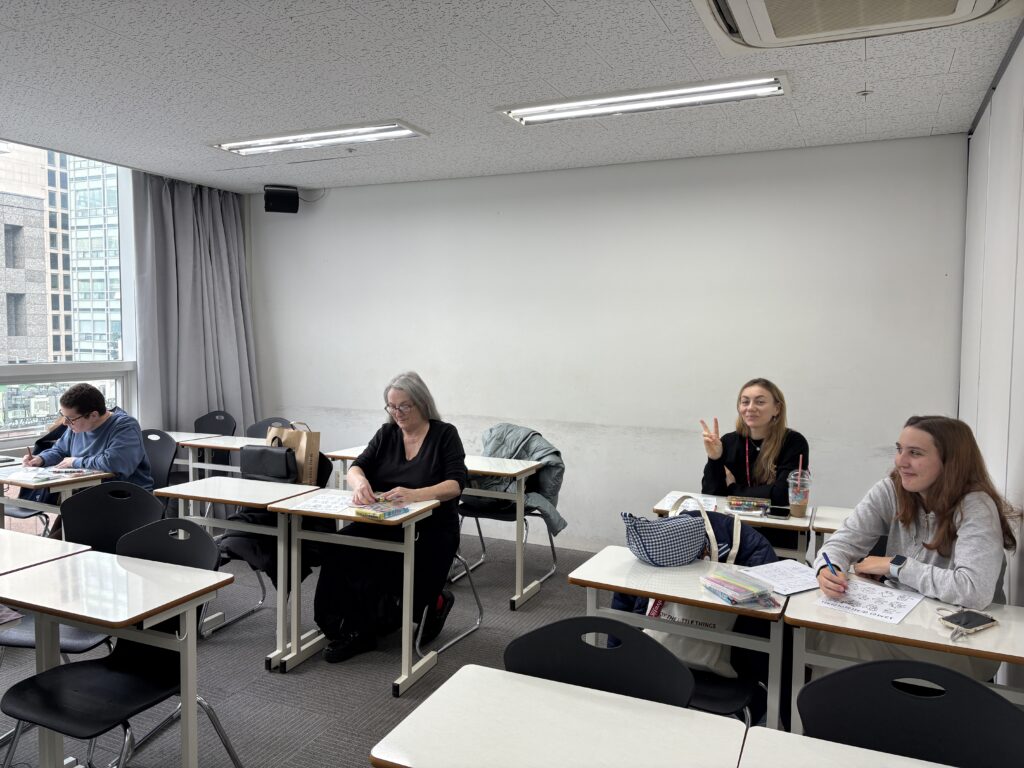
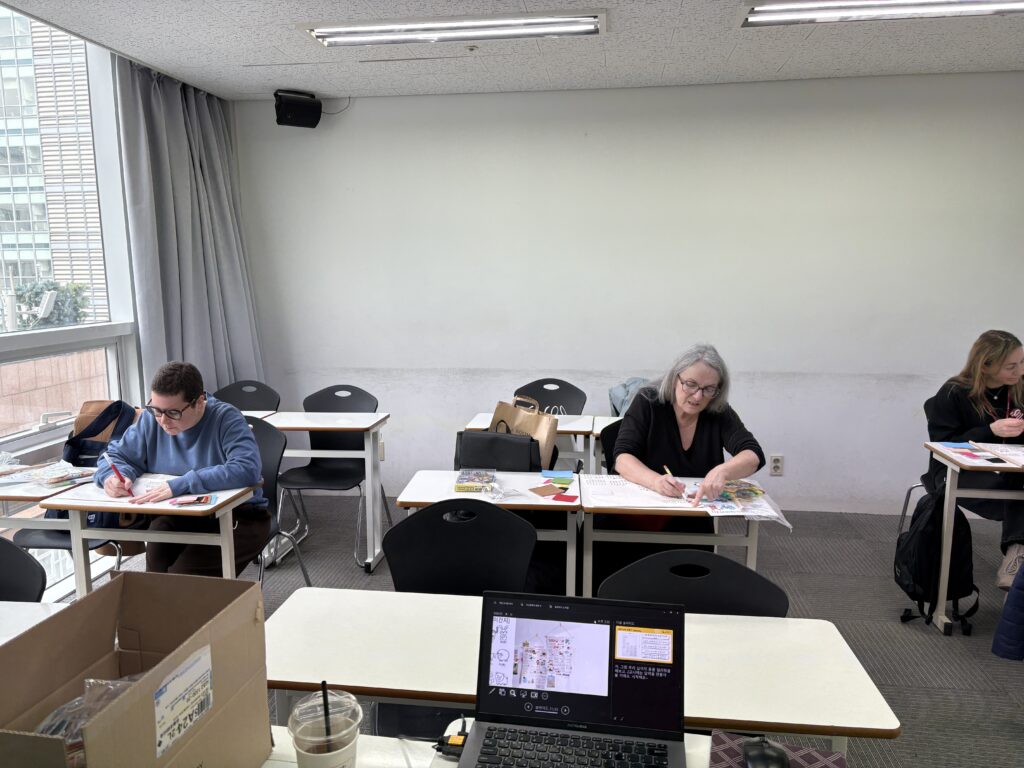
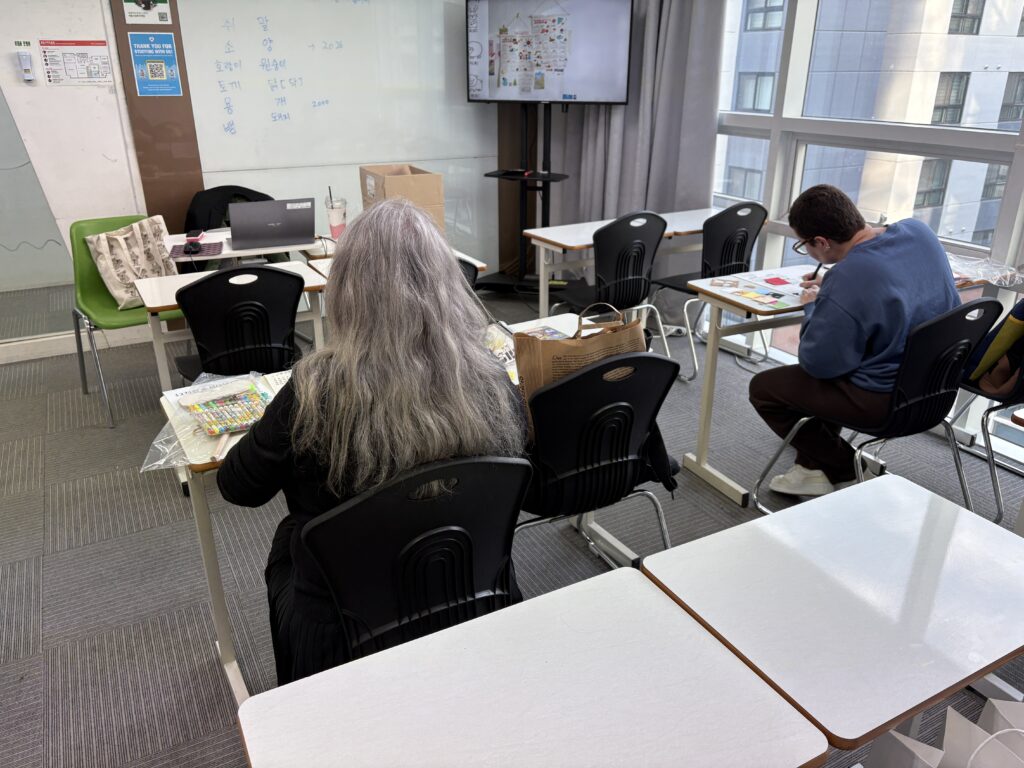
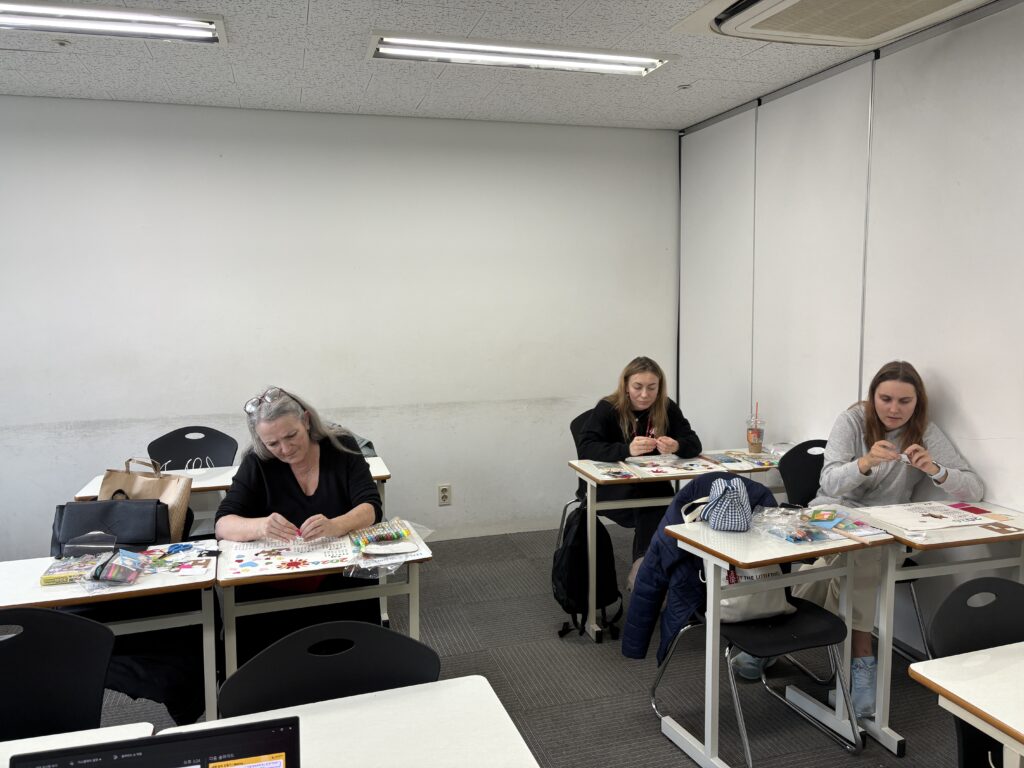
준비된 재료로 연하장을 만들기 시작했어요. 모양은 한국의 전통 복주머니를 닮아 정말 귀여웠답니다. 학생들은 하나하나 정성을 담아 열심히 연하장을 꾸몄어요.
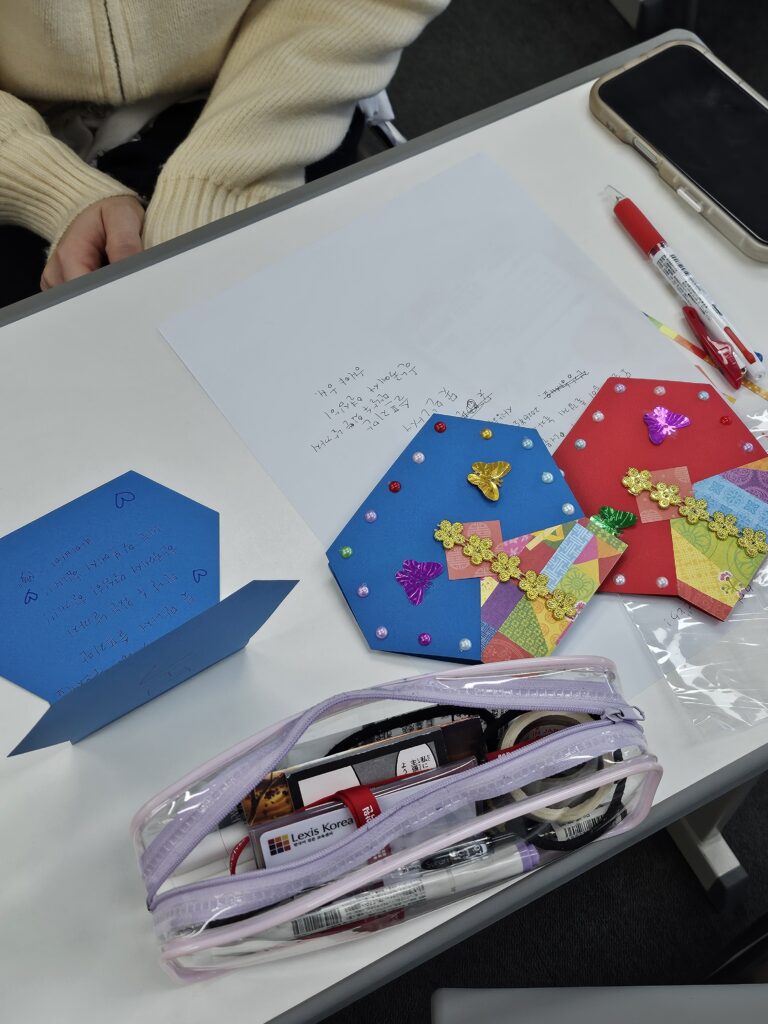
연하장을 다 만든 후, 학생들은 편지를 바로 쓰지 않고 종이에 미리 연습한 뒤 차근차근 연하장에 편지를 써 내려갔습니다.
여태까지 배운 한국어를 열심히 사용해 편지를 쓰기 시작했어요. 배운 한국어로 편지를 쓰니 학생들 스스로 뿌듯함을 느끼기도 하고, 선생님도 학생들이 한국어를 열심히 사용하는 모습을 보며 정말 기뻤답니다.
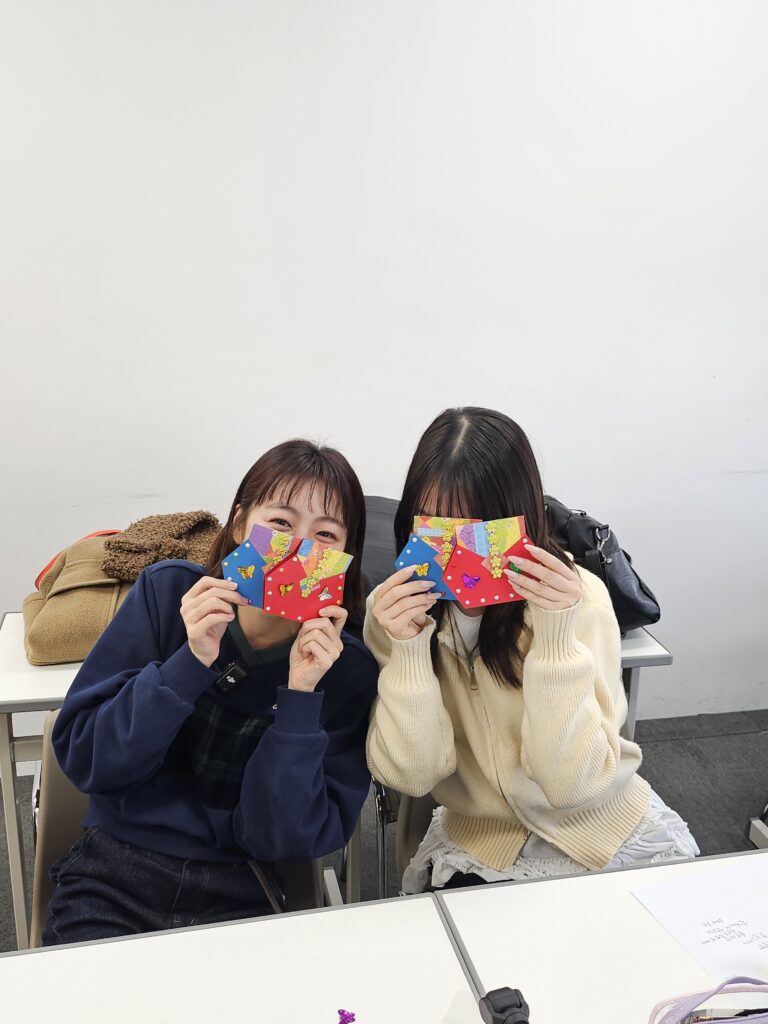
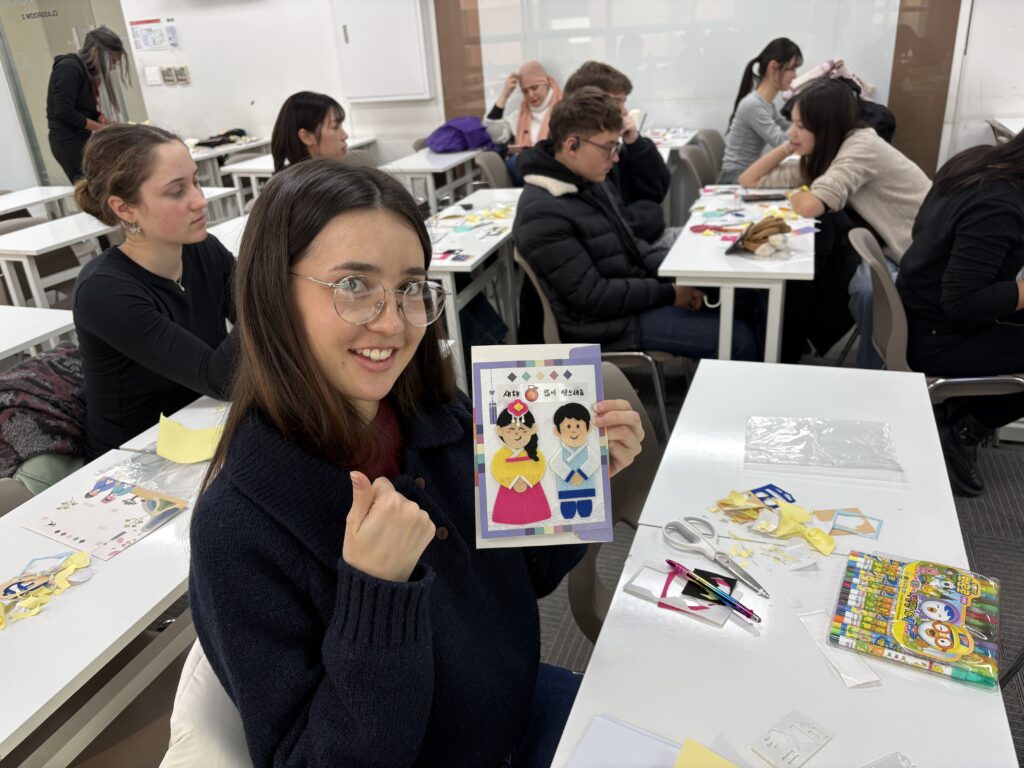
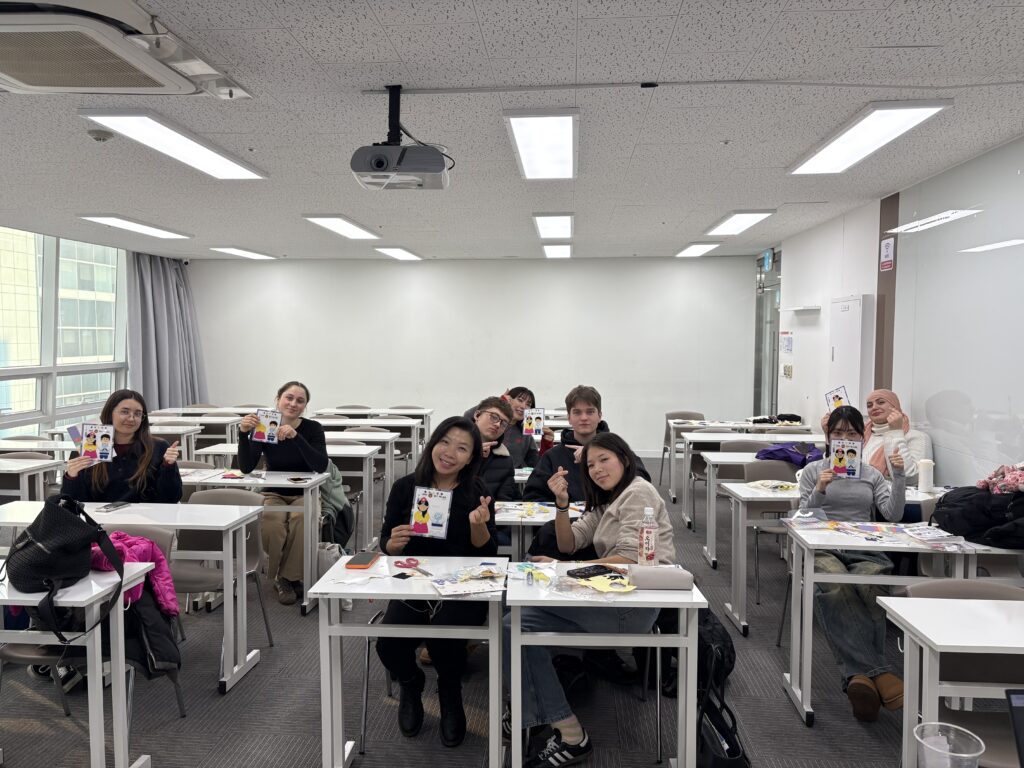
다 만들고 나서 인증샷 찰칵!
완성! 색깔이 정말 예쁘지 않나요? 연하장을 다 만든 뒤에는 각자의 나라에도 연하장이 있는지, 또 누구에게 보낼 건지 이야기하며 활동을 마무리했답니다. 우리 다음에도 재미있는 프로그램으로 다시 만나요!
Making New Year’s Cards
Hello! 🎉 Today, we welcomed the New Year by making New Year’s greeting cards together with the students. In Korea, it’s common to say “Saehae bok mani badeuseyo” (“Happy New Year, wishing you lots of blessings”) to family, friends, teachers, and colleagues. Sending a greeting card makes that message feel even warmer. We started crafting with the prepared materials, and the design looked just like a traditional Korean lucky pouch (bokjumeoni)—so cute! Each student decorated their card with care and creativity. Before writing directly on the card, they practiced their messages on paper first, then carefully wrote them inside the greeting card. Using the Korean they’ve learned so far, they poured their effort into writing heartfelt letters. The students felt proud of themselves, and as a teacher, I was truly happy to see them using Korean so diligently. And of course—click! We took a photo to capture the moment. The finished cards turned out beautifully, don’t you think? Afterward, we talked about whether similar greeting cards exist in each of their countries and who they would send theirs to. We wrapped up the activity with big smiles, and I can’t wait to meet again with another fun program next time!
안녕하세요! 새해를 맞이하여 가족, 친구, 지인에게 새해 인사를 전하는 새해 카드, 연하장 만들기 활동을 진행했습니다. 활동을 시작하기에 앞서, 한국식 새해 인사와 연하장 문화에 대해 간단히 소개하는 시간을 가졌습니다.
먼저 한국 새해 인사면서 연하장 앞면을 꾸밀 ‘새해 복 많이 받으세요.’멘트를 배워보았습니다. 또 설날과 행운을 상징하는 새인 까치와, 새해에 복을 기원하는 그림인 세화에 대해서도 함께 알아보았습니다. 이후 본격적으로 연하장 만들기 활동을 시작하였습니다!
펠트지를 활용해 한복을 입은 사람 모양 장식을 연하장 앞면에 붙이며, 한국의 전통 의상을 자연스럽게 접해볼 수 있었답니다.
연하장 뒷면에는 가족이나 친구를 떠올리며 새해 인사를 담은 편지를 직접 작성해 보았습니다. 짧은 문장이었지만, 진심을 담아 글을 쓰는 시간이라 더욱 의미 있게 느껴졌습니다:)
이번 연하장 만들기 활동을 통해 학생들이 한국의 새해 문화와 인사를 이해하고, 따뜻한 마음을 전하는 방법을 배울 수 있는 시간이 되었기를 바랍니다. 모두에게 행복이 가득한 새해가 되길 바라며, 새해 복 많이 받으세요!🧧
Hello! To celebrate the New Year, we held a New Year card-making activity where students created greeting cards to share New Year wishes with their family, friends, and loved ones. Before starting the activity, we took some time to introduce Korean New Year greetings and the culture of New Year cards.
First, we learned the Korean New Year greeting “Saehae bok mani badeuseyo,” which is commonly written on the front of New Year cards. We also talked about magpies, birds that symbolize Seollal and good luck, as well as Sehwa, traditional pictures that express wishes for good fortune in the New Year. After that, we began the card-making activity.
Using felt paper, students decorated the front of their cards with figures wearing hanbok, allowing them to naturally experience traditional Korean clothing.
On the back of the card, students wrote a New Year message while thinking of their family or friends. Although the messages were short, it was a meaningful time for students to write with sincerity 🙂
Through this New Year card-making activity, we hope students were able to better understand Korean New Year culture and greetings, and learn how to share warm feelings with others. We wish everyone a New Year filled with happiness. Happy New Year!🧧
안녕하세요! 2026년 새해를 앞두고 학생들과 함께 새해 달력 만들기 활동을 진행했습니다.
달력 만들기를 시작하기 전에, 한국 전통 문화인 십이간지를 알아보는 시간을 가졌습니다. 각자의 띠를 알아보고 생일과 함께 기록하고, 십이간지를 색칠해 보았습니다!
열심히 색칠하는 학생들의 모습입니다 🙂
십이간지에 담긴 이야기와 함께 색칠 활동을 마친 후에는 2026년 달력 만들기를 시작했습니다. 2026년은 병오년(말의 해)인 만큼, 달력에 말 모양 스티커를 붙여 각자의 개성을 담아 꾸며보았습니다.
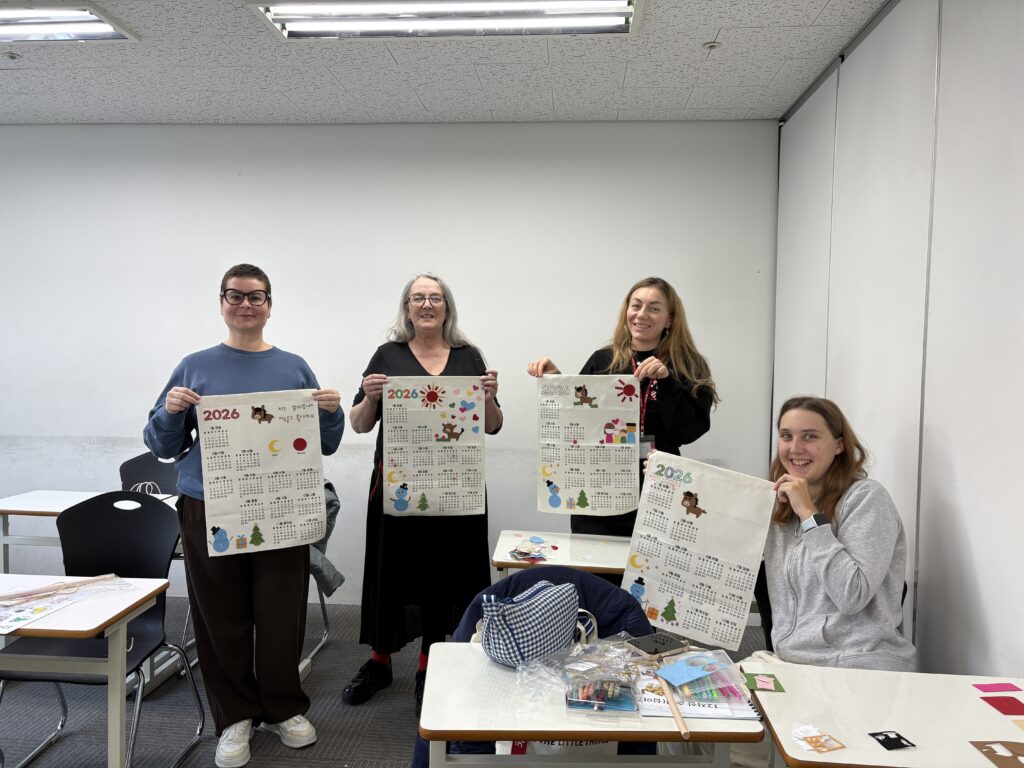
완성한 달력과 함께 다 같이 사진을 찍었는데요, 열심히 집중해서 모두 달력을 완성할 수 있었답니다. 2026년 병오년이 모두에게 행복과 웃음이 가득한 한 해가 되길 바라며, 새해 복 많이 받으세요! 🐎✨
Hello! As the New Year 2026 approaches, we enjoyed a New Year calendar-making activity with our students.
Before starting the calendar activity, we took some time to learn about the Korean traditional zodiac, the twelve zodiac animals. Each student found their own zodiac sign, wrote down their birthday, and colored the zodiac animals.
Here are the students carefully focusing on their coloring activity 🙂
After finishing the coloring activity along with the stories behind the zodiac animals, we began making the 2026 calendars. Since 2026 is the Year of the Horse (Byeong-o), students decorated their calendars with horse-shaped stickers and expressed their own creativity.
After completing their calendars, we took a group photo together. Everyone stayed focused and successfully finished their calendars from start to end.
We hope that 2026, the Year of the Horse, will be filled with happiness and smiles for everyone. Happy New Year! 🐎✨
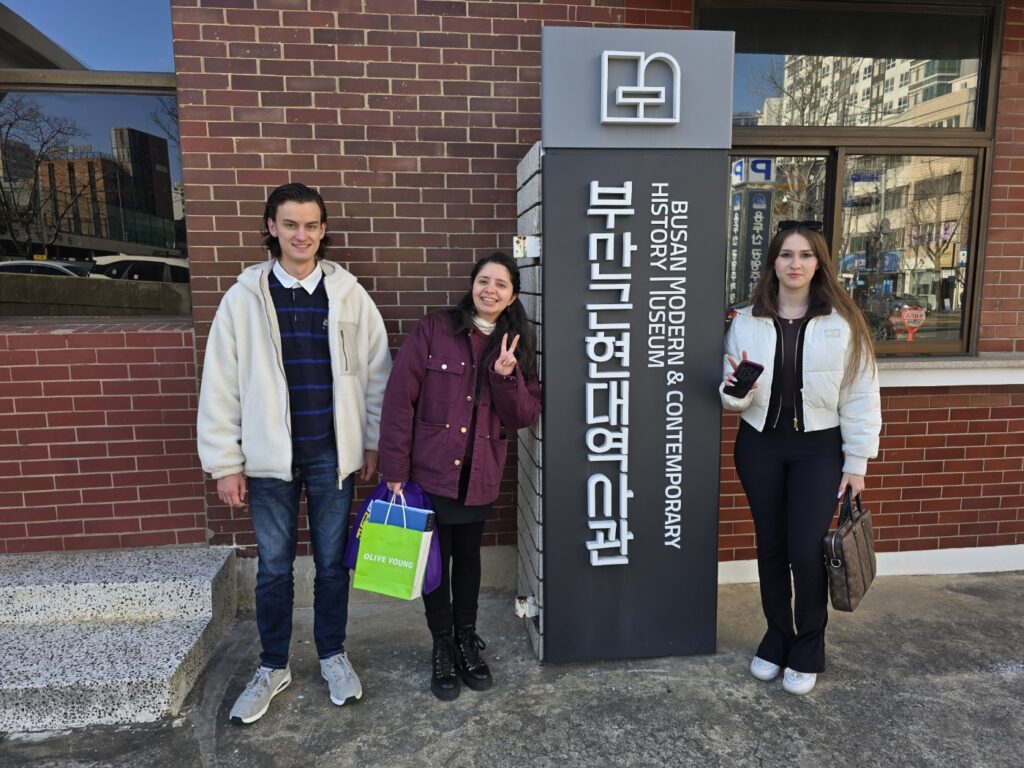
2026년 1월 16일, 렉시스코리아에서 부산근현대사박물관을 방문했어요. 이곳은 부산의 역사를 특히 전통 사회가 끝난 시점부터 살펴볼 수 있는 곳이에요.
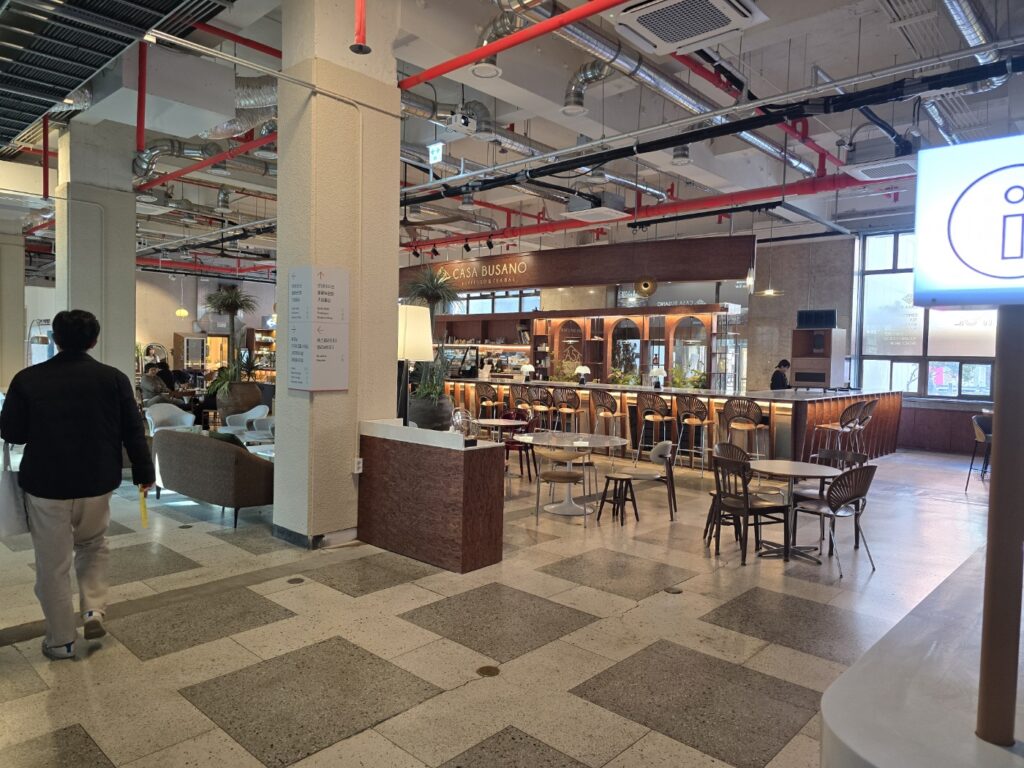
내부 1층에는 ‘Casa Busano’라는 이름의 프랜차이즈 카페도 있어요. 이름이 문법에 맞는 것 같지는 않지만 에스프레소를 중심으로 다루는, 한국에서는 비교적 보기 힘든 종류의 카페이고, 특히 부산의 브랜드이니 들르는 김에 커피 한 잔 하기 좋아요.
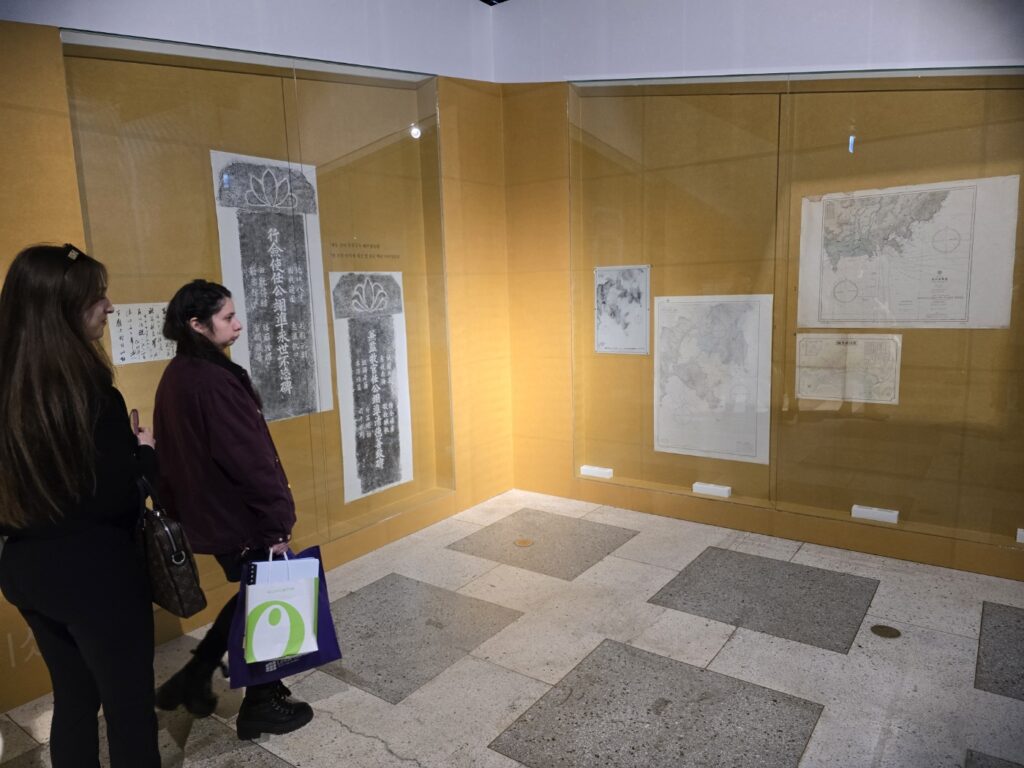
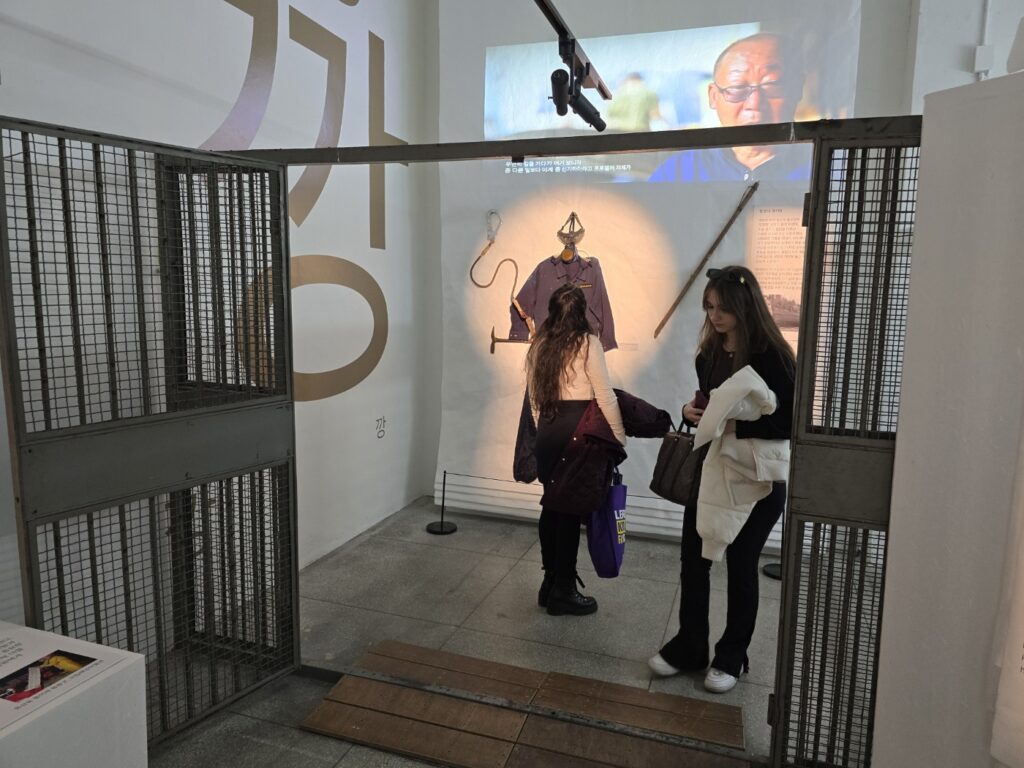
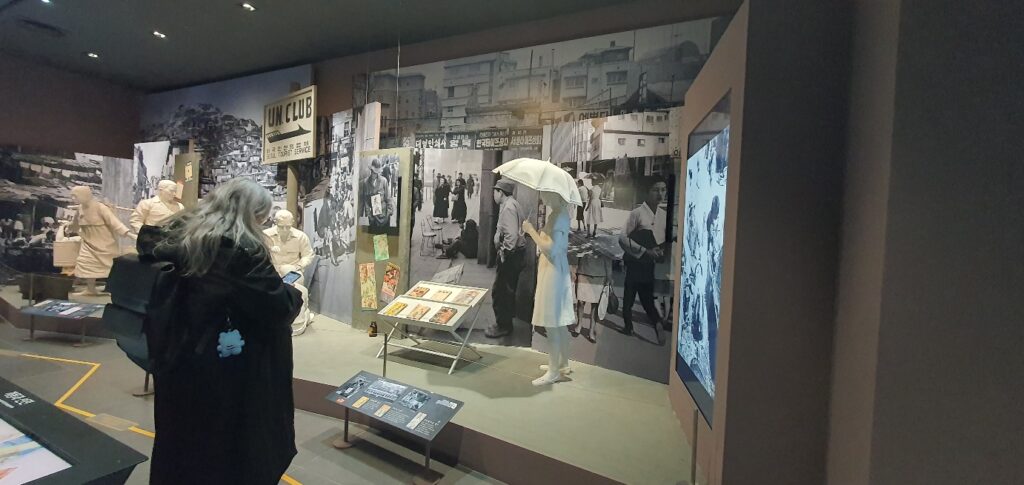
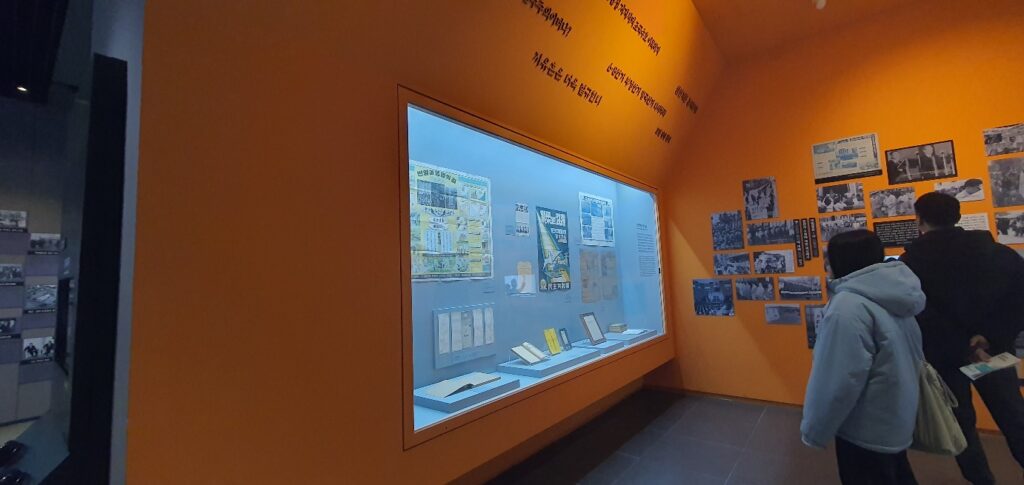
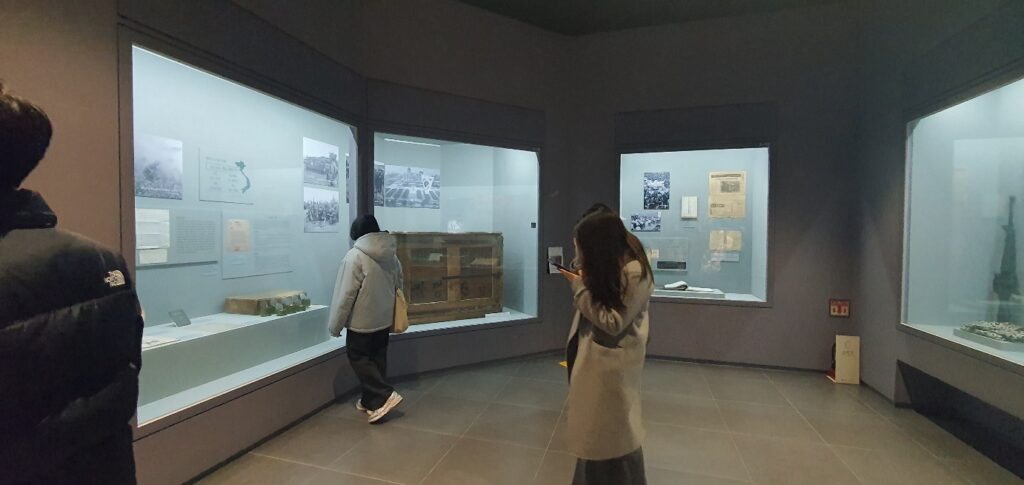
부산의 근대 시절 지도도 살피고 당시의 유물 사진도 봅니다. 깡깡이마을 등 부산의 일부 지역의 이야기도 함께 봐요. 깡깡이마을은 왜 깡깡이마을이라 불렸을까요?
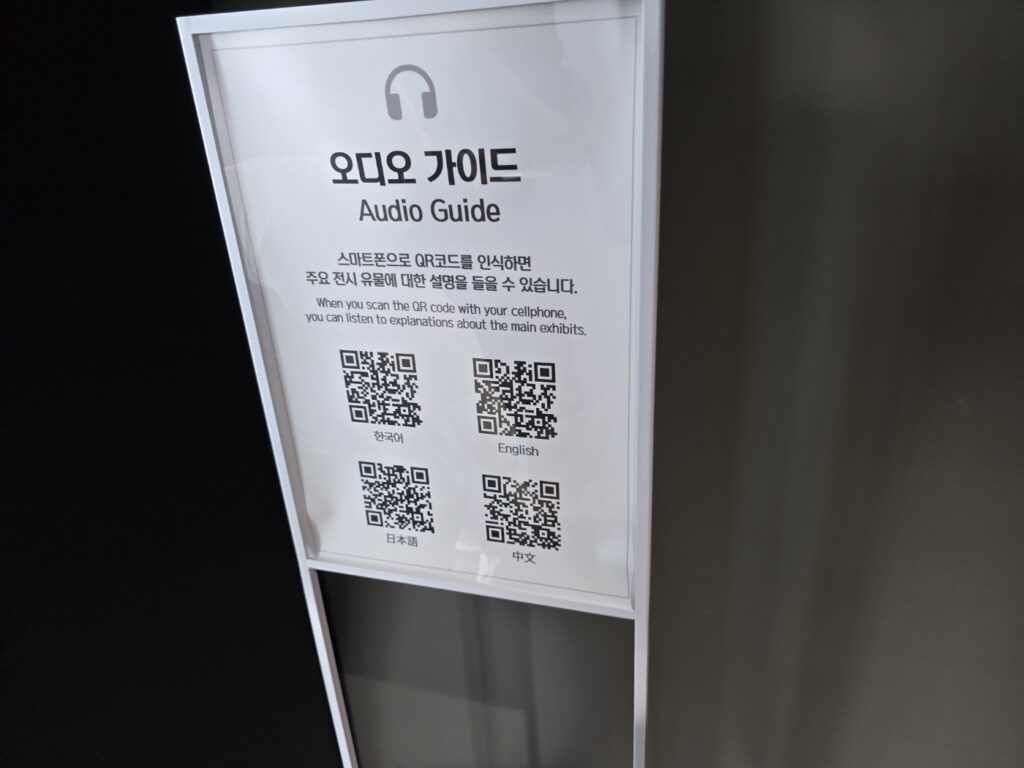
이곳 박물관은 한국어, 영어, 일본어, 중국어의 네 개 언어로 된 오디오 가이드를 제공합니다.
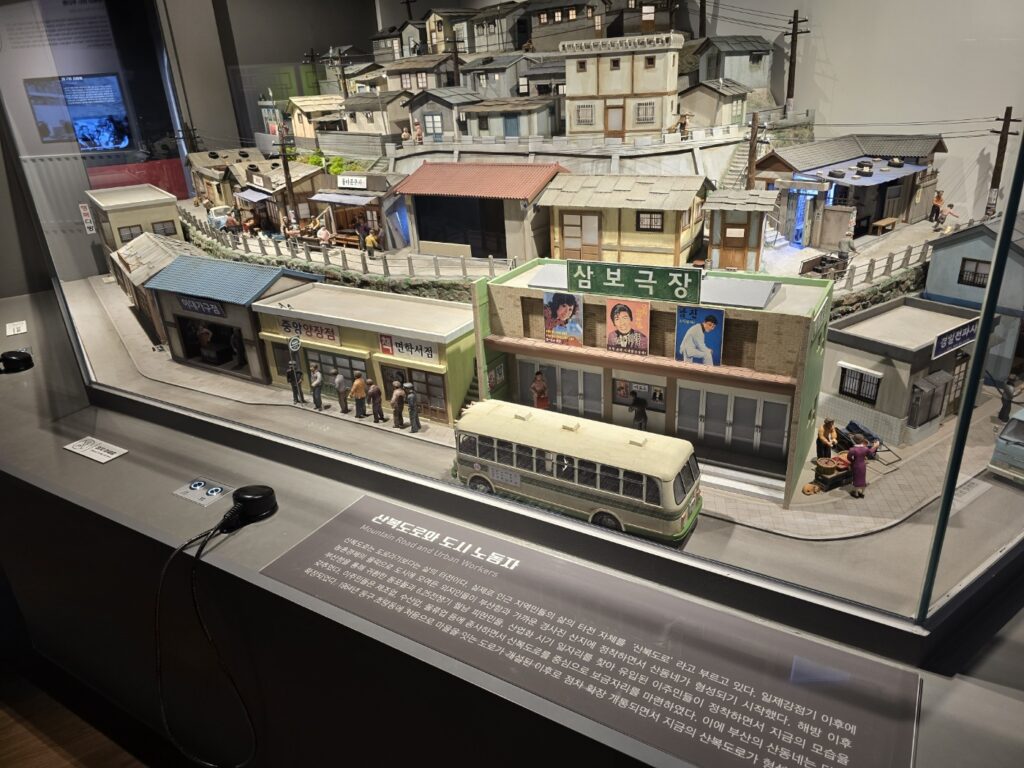
옛 부산의 흔적을 모형으로 만들어 놓은 것도 볼 수 있죠. 부산이 어떤 과정을 거쳐 20세기를 지나며 오늘날에 이르렀는지 알 수 있어요.
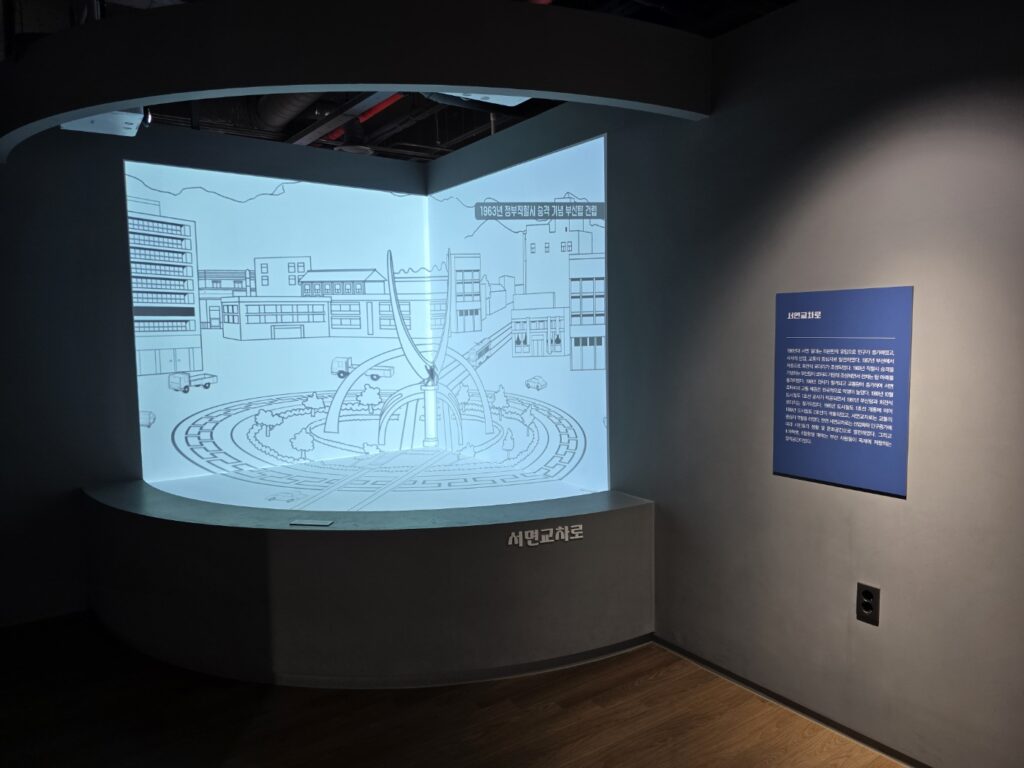
부산을 대표하는 곳 중 하나는 바로 서면이고, 그 서면의 중심에 서면교차로가 있어요. 서면교차로는 본래 서면 로터리였는데 이곳이 어떻게 지금과 같은 형태로 변모했는지도 살펴볼 수 있습니다.
<English translation>
On January 16, 2026, Lexis Korea visited the Busan Modern and Contemporary History Museum. This museum offers an in-depth look at the history of Busan, with a particular focus on the period beginning at the end of traditional Korean society.
On the first floor of the museum, there is a franchise café called Casa Busano. Although the name may not be grammatically conventional, it is a café that specializes in espresso-based coffee, a style that is relatively uncommon in Korea. As it is also a brand originating from Busan, it is a suitable place to stop for a cup of coffee while visiting the museum.
Visitors can examine maps of Busan from the modern era and view photographs of historical artifacts from that time. The museum also introduces stories from specific areas of Busan, including Kkang-Kkang Village. This raises an interesting question: why was it called Kkang-Kkang Village?
The museum provides audio guides in four languages: Korean, English, Japanese, and Chinese.
There are also scale models recreating scenes from old Busan, allowing visitors to understand the process through which the city passed through the 20th century and developed into its present form.
One of the areas that best represents Busan is Seomyeon, and at the center of Seomyeon is the Seomyeon Intersection. Originally known as the Seomyeon Rotary, the museum explains how this location transformed over time into its current form.
대한민국역사박물관은 19세기 말부터 지금까지, 대한민국의 역사를 한눈에 볼 수 있는 국립 근현대사 박물관입니다. 역사는 총 3개의 전시로 나누어져 있어요!
📌 1부: 1894년~1945년, 일제강점기 📌 2부: 1945년~1987년, 광복 이후와 6·25 전쟁 📌 3부: 1987년~현재, 지금의 대한민국
대한민국의 이야기를 직접 보고 느끼기 위해 렉시스 학생들과 함께 출발했습니다!
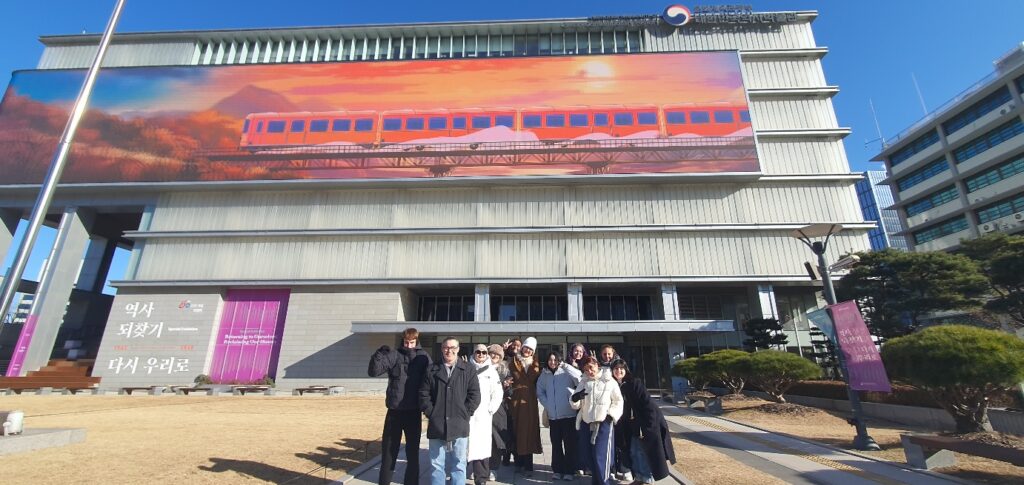
입구에서 단체 기념사진도 찰칵! 📸
전시는 5층에서 시작돼요. 엘리베이터를 타고 올라가면 바로 1부 전시실이 나옵니다!
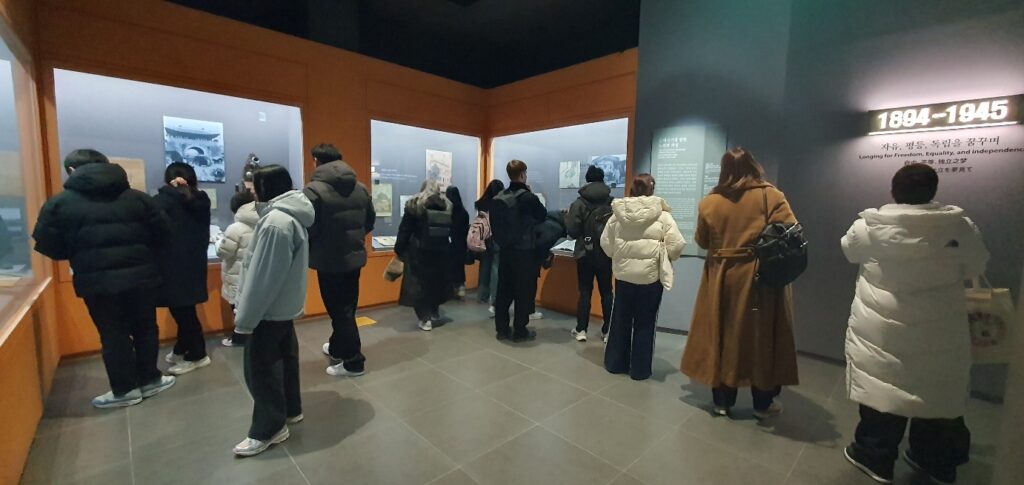
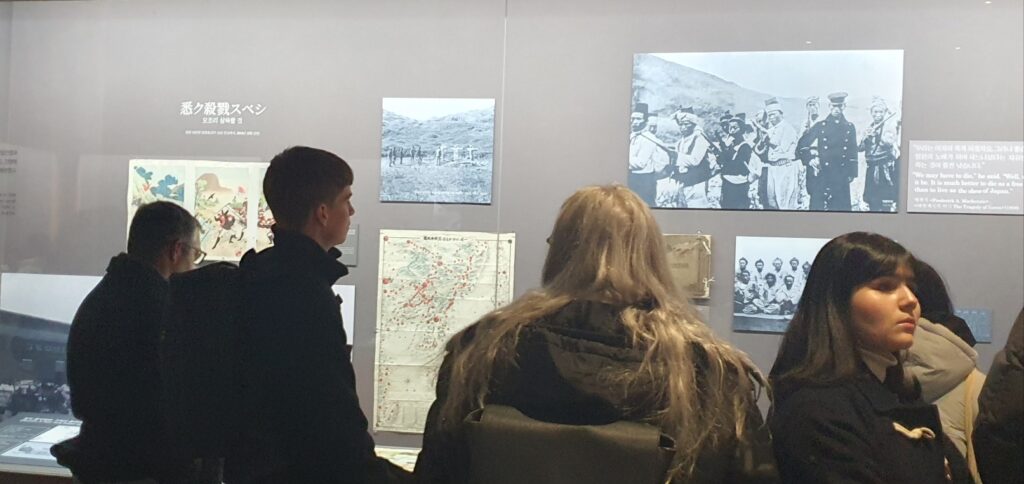
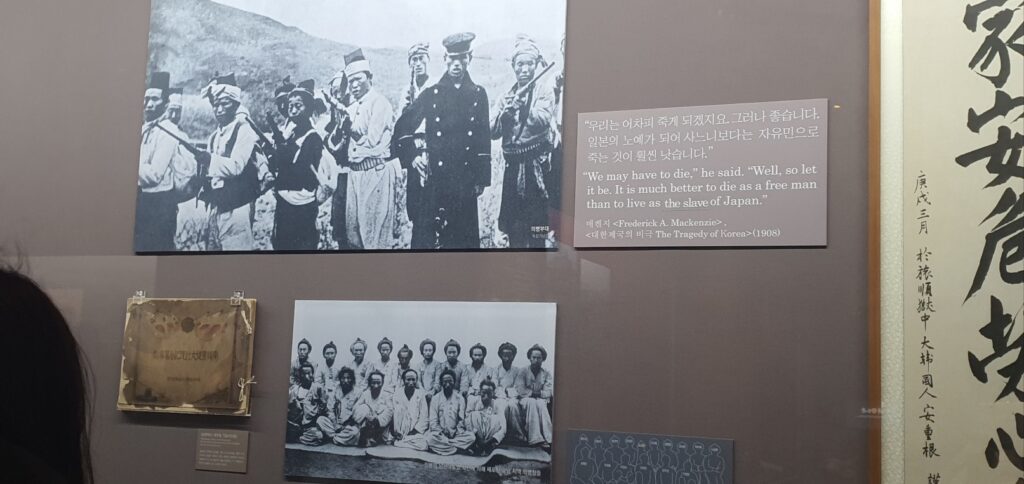
1부에서는 일제강점기 당시의 사진과 기록들을 볼 수 있었어요.
학생들은 전시를 보며 “한국 사람들이 정말 독립을 간절히 원했구나” 하고 느낄 수 있었습니다.
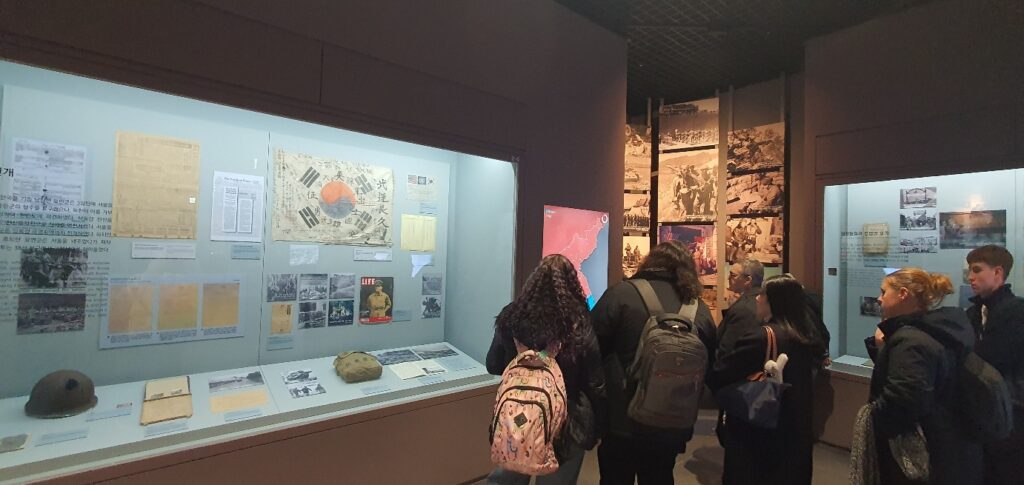
2부에서는 광복 이후 대한민국의 모습과 6·25 전쟁 이후의 이야기가 이어집니다.
영어 설명은 없었지만, 학생들이 집중해서 영상을 시청하는 모습이 인상적이었어요.
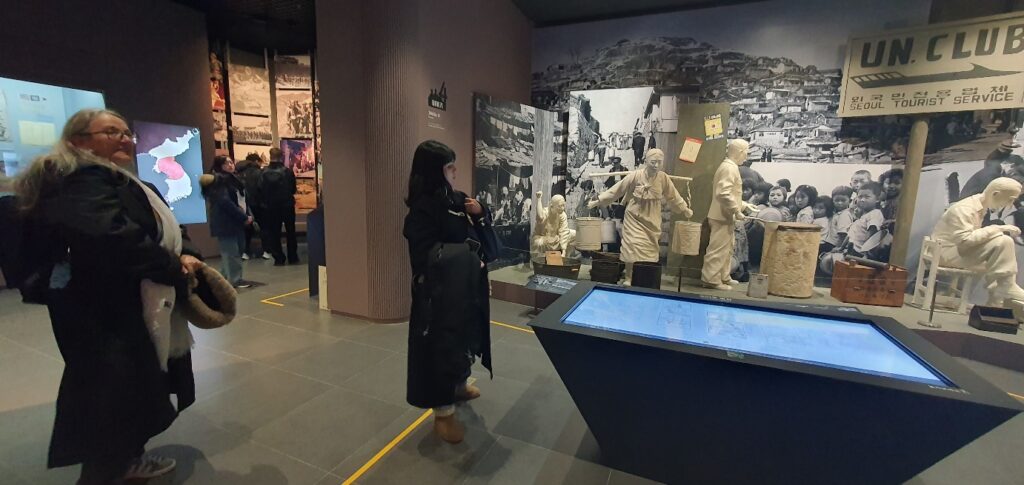
전쟁 이후 한국 사람들의 생활을 보여주는 전시도 있었는데요,
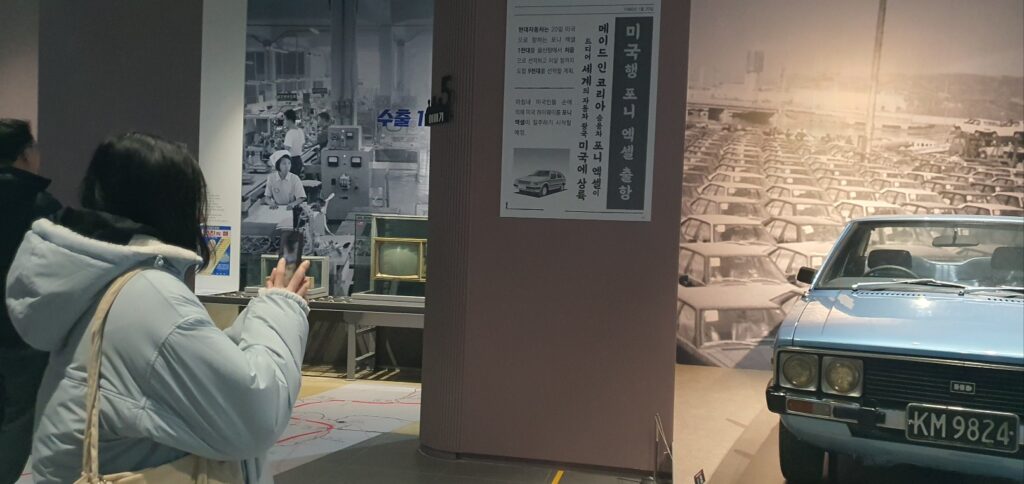
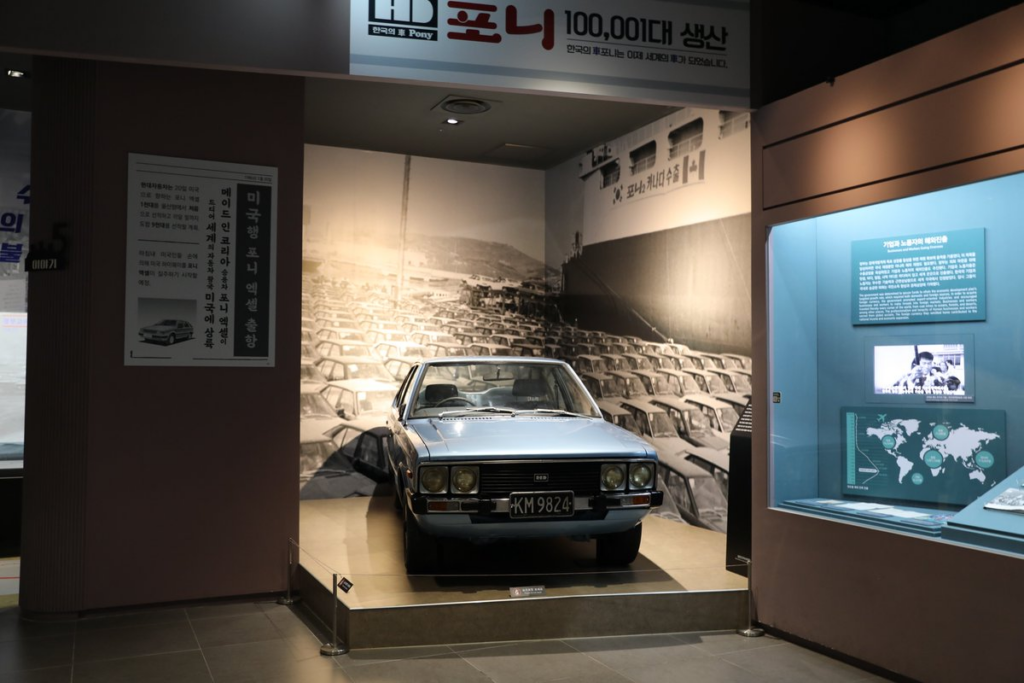
✨ 대한민국 최초의 자동차 ‘포니 엑셀’도 직접 볼 수 있었습니다!
오래된 자동차지만, 생각보다 멋있어서 다들 신기해했어요 😆
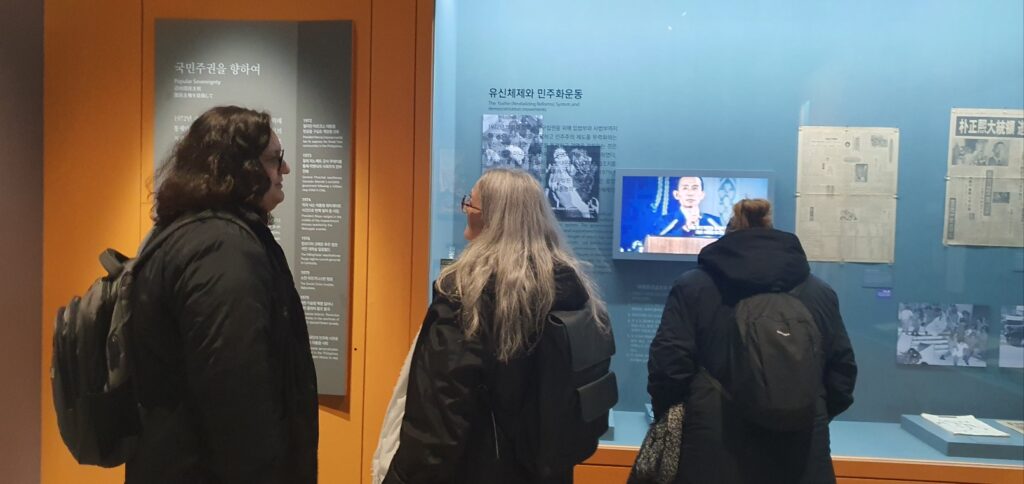
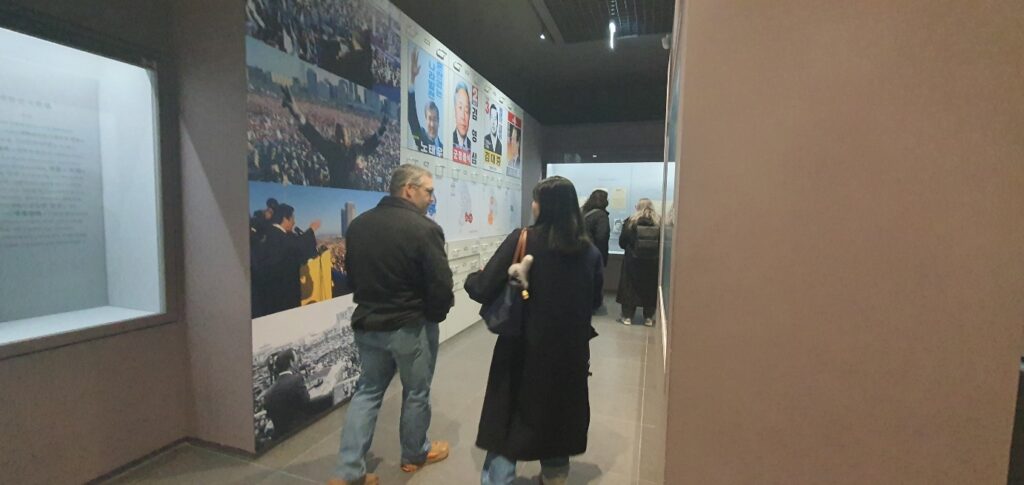
또한 1980년 5·18 광주 민주화운동과 1987년 대통령 선거 당시의 사진과 포스터도 전시되어 있어 한국의 민주주의가 어떻게 만들어졌는지 쉽게 이해할 수 있었습니다.
이제 3부 전시로 이동! 여기서는 1987년 이후, 지금의 대한민국이 되기까지의 이야기를 만나볼 수 있어요.
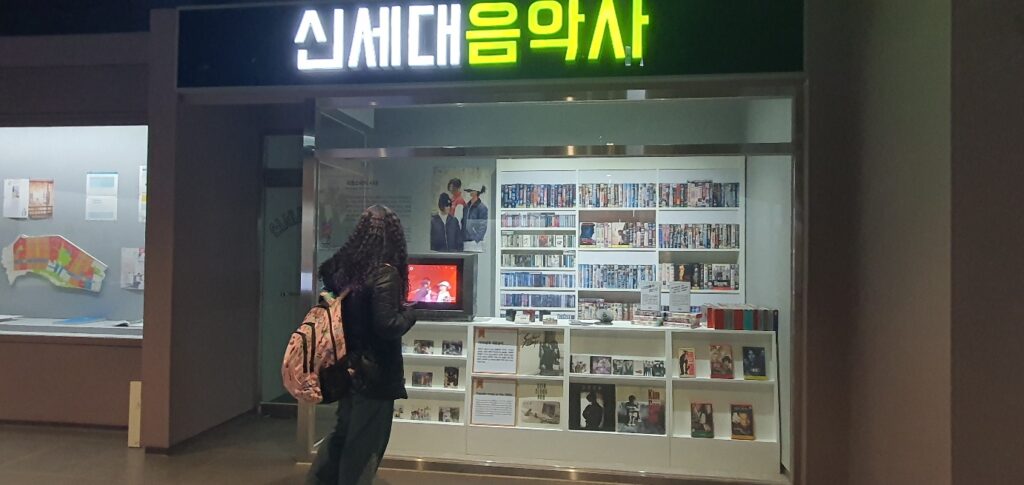
🎶 1990년대 음악 영상과 음반
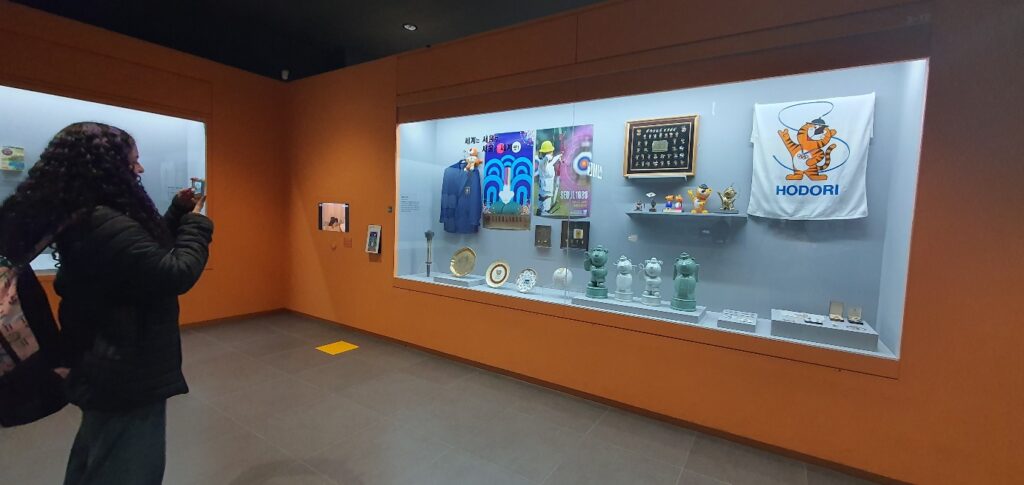
🏅 1988년 서울 올림픽과 귀여운 마스코트 호돌이
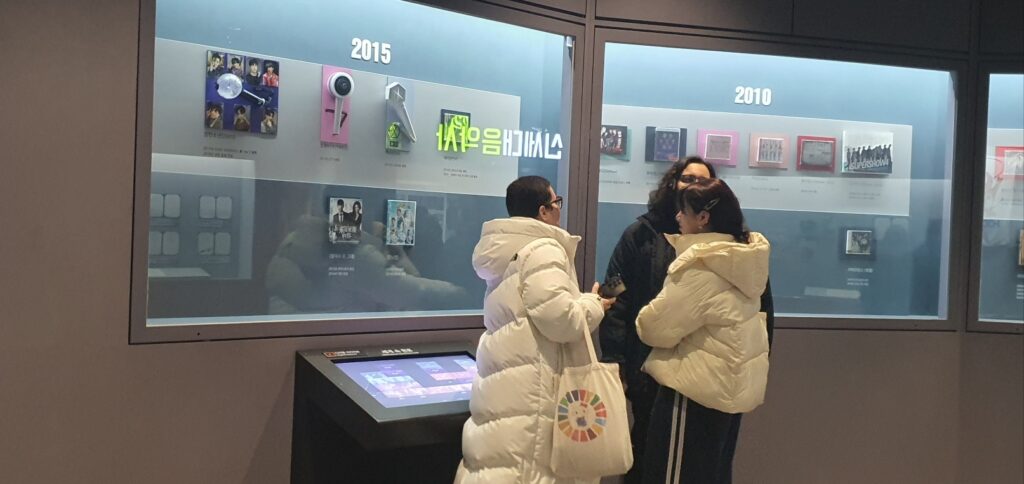
🎤 블랙핑크, 엑소, 소녀시대 등 K-POP 역사까지!
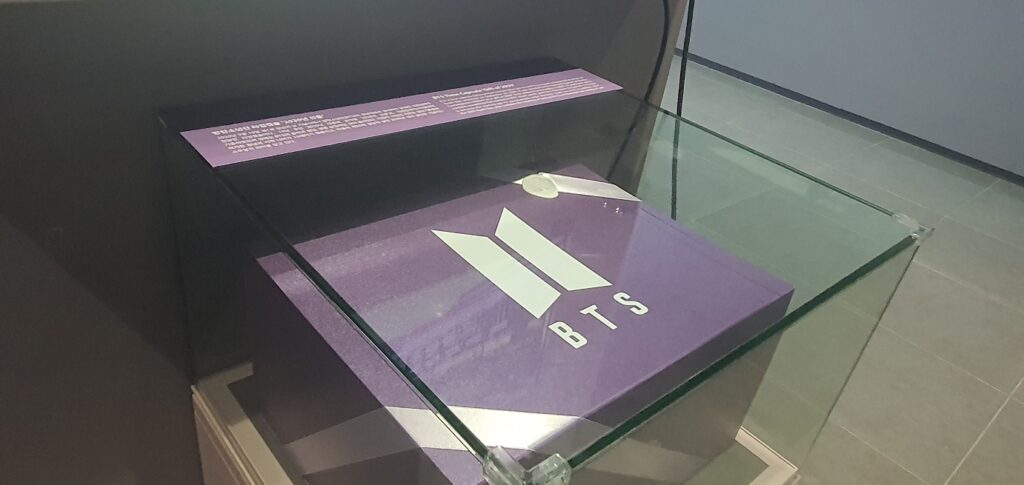
그리고 BTS의 음악과 메시지를 담은 타임캡슐이 전시되어 있는데, 이 타임캡슐은 2039년 청년의 날에 열린다고 합니다!
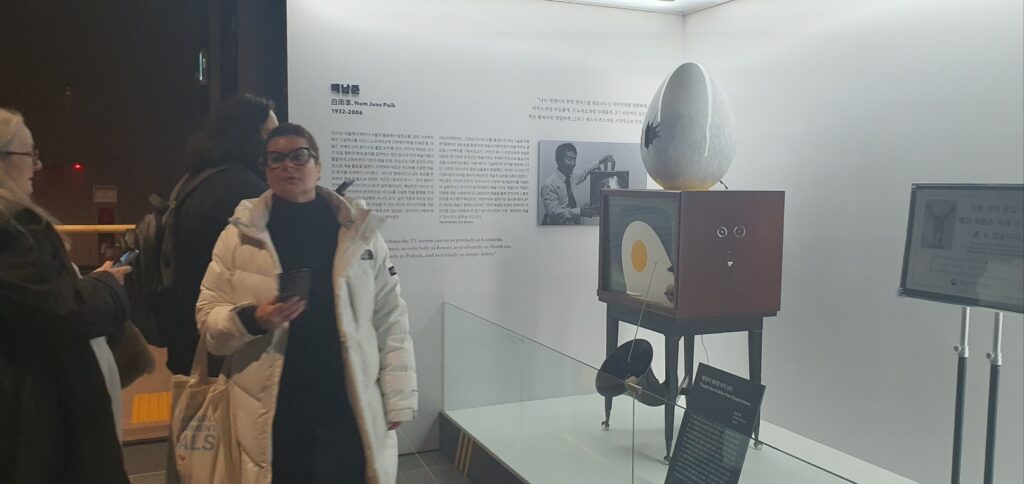
전시실을 나오면 만날 수 있는 작품도 놓치면 안 돼요. 세계적인 아티스트 백남준의 비디오 아트 작품입니다. “이게 뭐지?” 하면서도 다들 신기하게 바라봤어요 👀
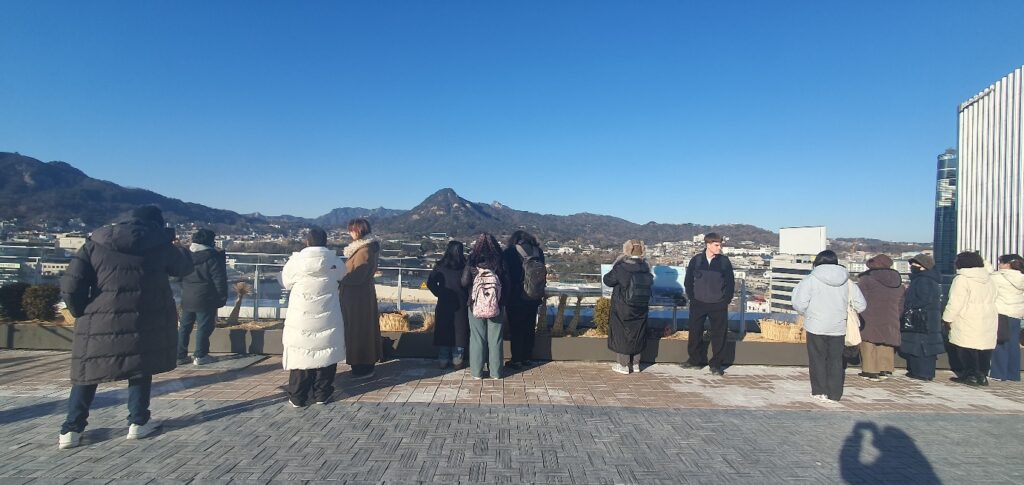
전시를 다 본 후에는 8층 옥상정원으로 이동했어요.
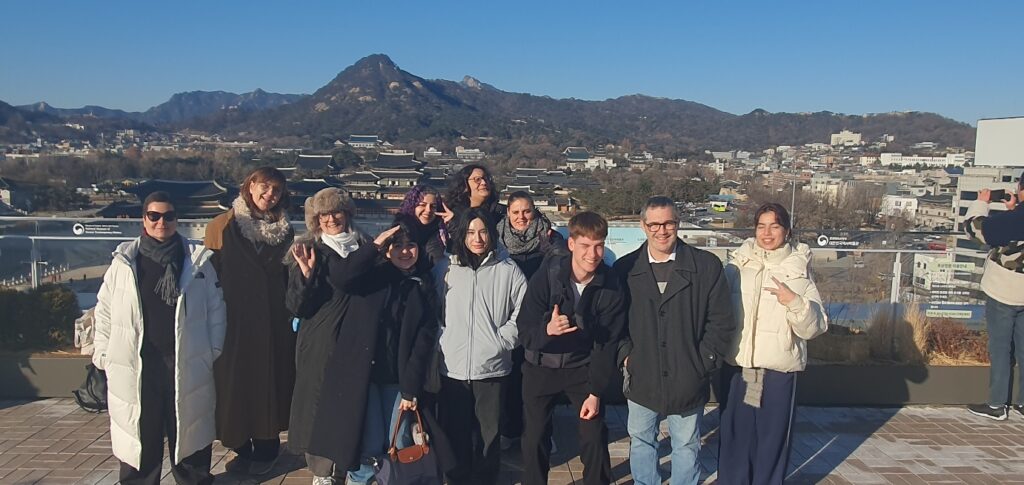
경복궁과 청와대가 한눈에 보이는 멋진 공간이었어요! 날씨는 조금 추웠지만, 아름다운 풍경 덕분에 모두가 창밖을 보며 감탄했답니다 ❄️✨
마지막으로 기념사진도 찰칵! 📸
이렇게 렉시스 학생들은 대한민국역사박물관에서 대한민국의 근현대사를 재미있고 알차게 체험하고 돌아왔습니다!
📍 한국의 역사와 문화를 직접 보고 싶다면? 대한민국역사박물관, 꼭 추천해요!
카메라를 향해 엄지척 👍 해준 렉시스 학생과 함께, 그럼 다음 문화체험에서 또 만나요! 안녕~ 👋
Hello! 😊 We recently went on a cultural field trip to the National Museum of Korean Contemporary History!
This museum is a national museum where you can explore Korea’s modern and contemporary history, from the late 19th century all the way to today. The exhibitions are divided into three sections, making them easy to follow!
📌 Section 1: 1894–1945, The Japanese Colonial Period 📌 Section 2: 1945–1987, Liberation, the Korean War, and the early years of the Republic of Korea 📌 Section 3: 1987–Present, The development of modern Korea
To learn more about Korea’s history, we visited the museum together with Lexis students! Of course, we couldn’t forget to take a group photo at the entrance 📸
The exhibitions start on the 5th floor. As soon as you arrive, you can enter Section 1.
In Section 1, students learned about life during the Japanese colonial period through photos and historical records. Many students could really feel how strongly Korean people wished for independence.
Section 2 introduces Korea after liberation and the Korean War. Although there was no English support for the videos, students watched them very attentively.
There is also an exhibition showing how Korean people lived after the war. One highlight was Korea’s first car, the Pony Excel 🚗
Even though it’s an old car, everyone thought it still looked pretty cool!
Students also learned about the May 18 Gwangju Democratization Movement in 1980, and the presidential election of 1987, which helped shape Korea’s democracy.
Next, we moved on to Section 3. This area shows how Korea has developed from 1987 to the present day.
🎶 Videos and albums from the 1990s music scene 🏅 The 1988 Seoul Olympics and its cute mascot, Hodori 🎤 The history of K-pop, featuring groups like BLACKPINK, EXO, and Girls’ Generation
The BTS exhibition was especially popular! There is a time capsule containing items that represent BTS’s music, youth, and their message symbolized by a pen. It will be opened in 2039 on Youth Day.
After leaving the exhibition hall, students also saw an impressive artwork by world-famous video artist Nam June Paik. Everyone stopped to look and wondered, “Wow, what is this?” 👀
After finishing the tour, we went up to the 8th-floor rooftop garden. From there, we could see Gyeongbokgung Palace, and even the Blue House in the distance!
Although it was very cold, the view was so beautiful that everyone kept looking outside ❄️✨
We took one last group photo before leaving 📸 Through this visit, Lexis students were able to experience Korea’s modern and contemporary history in a fun and meaningful way.
📍 Want to learn more about Korean history and culture? We highly recommend visiting the National Museum of Korean Contemporary History!
With a big thumbs-up 👍 from a Lexis student, see you again on our next cultural trip! Bye~ 👋
이번 주에는 국립중앙박물관에 다녀왔어요. 전 세계적으로 한국 문화에 대한 관심이 높아지면서 국립중앙박물관을 찾는 관람객들도 많이 증가했다고 해요. 특히 외국인 방문객이 2024년 상반기에 9.5만 명이었고 2025년에는 20만 명을 넘어섰다고 해요.
우리는 지하철을 타고 박물관으로 향했어요. 이촌역에 도착한 후에 표지판을 따라서 박물관으로 쉽게 갈 수 있었어요. 가는 통로 벽은 주요 전시품들로 장식되어 있었는데 실루엣만 볼 수 있어서 실제 전시품은 어떻게 생겼을까 궁금했어요.
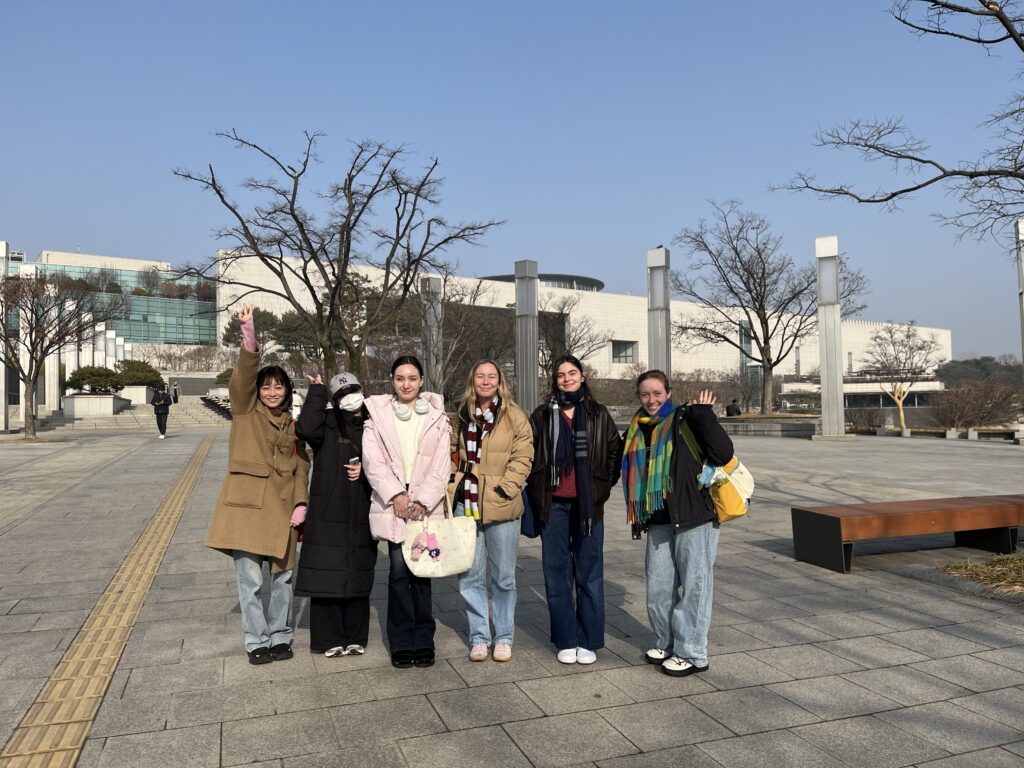
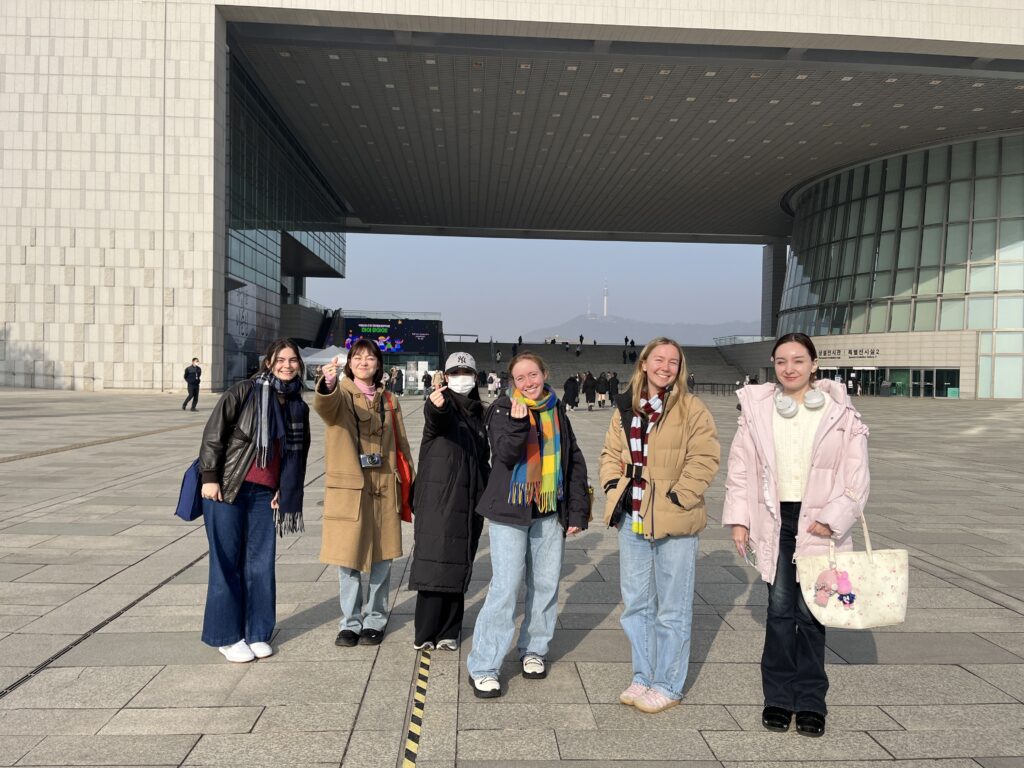
지하철역에서 나오니 박물관 앞에는 넓게 탁 트인 정원이 펼쳐져 있었어요. 기념 사진을 놓칠 수 없죠.
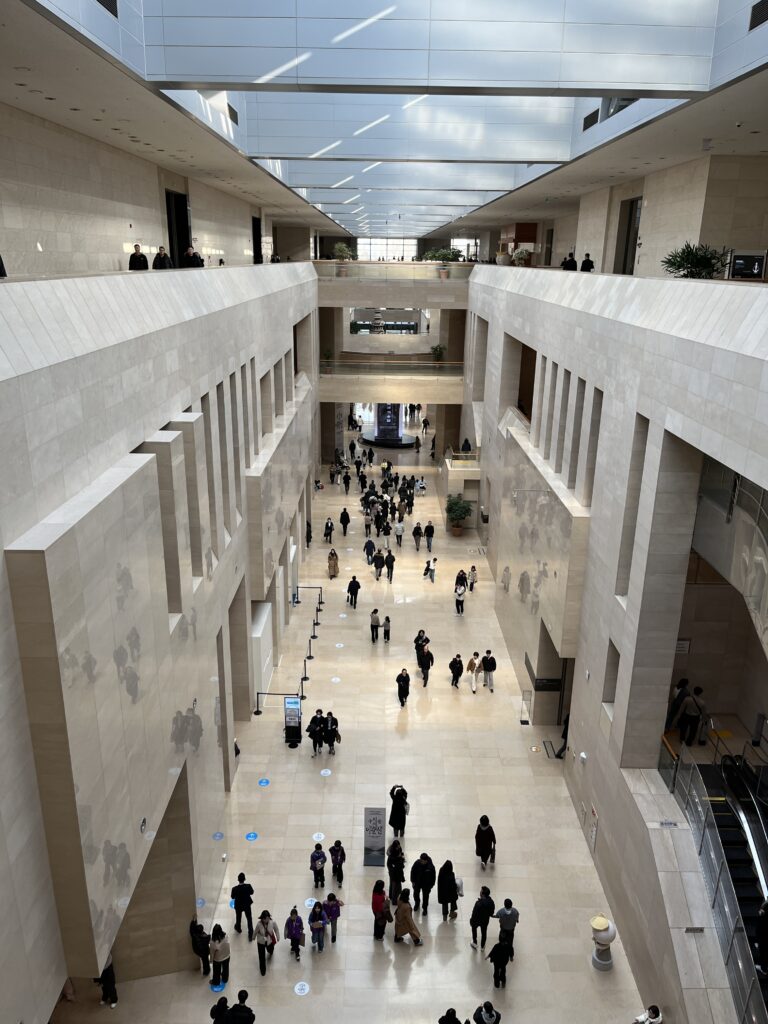
박물관 건물 가운데에는 뻥 뚫린 공간이 있는데 한옥의 대청마루를 형상화한 것이라고 해요. 박물관 건물이 액자처럼 저 멀리에 있는 남산과 남산타워를 보여주고 있었어요.
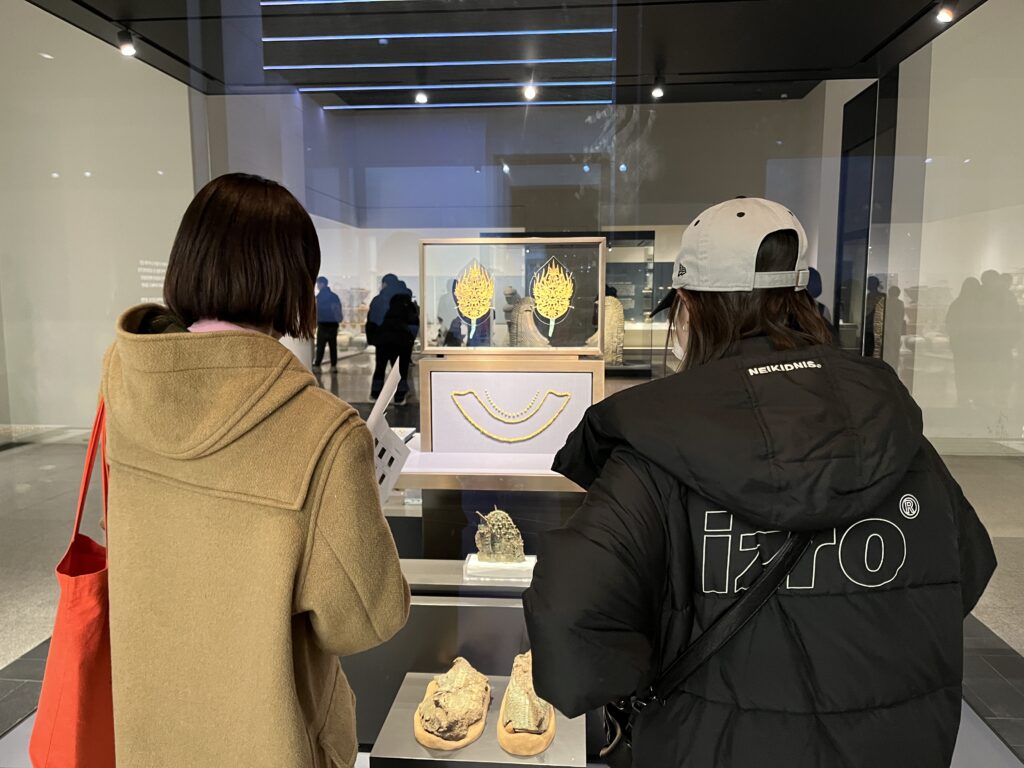
박물관에 들어서자마자 지도를 하나씩 받아 들고 자신이 관심있는 곳을 찾아 갔어요. 박물관으로 떠나기 전에 박물관 사이트에서 ‘명품 30선’을 미리 봤기 때문에 뭘 보고 싶은지 이미 알고 있었거든요.
박물관은 정말 넓었고 유물들도 너무 많아서 정신을 차릴 수가 없었어요. 박물관 사이트를 미리 보지 않았다면 아마 길을 잃고 말았을 거예요. 여러분들도 국립중앙박물관에 가기 전에는 미리 사이트를 보고 내가 보고 싶은 전시품이 어디에 있는지를 찾아본 후에 가세요.
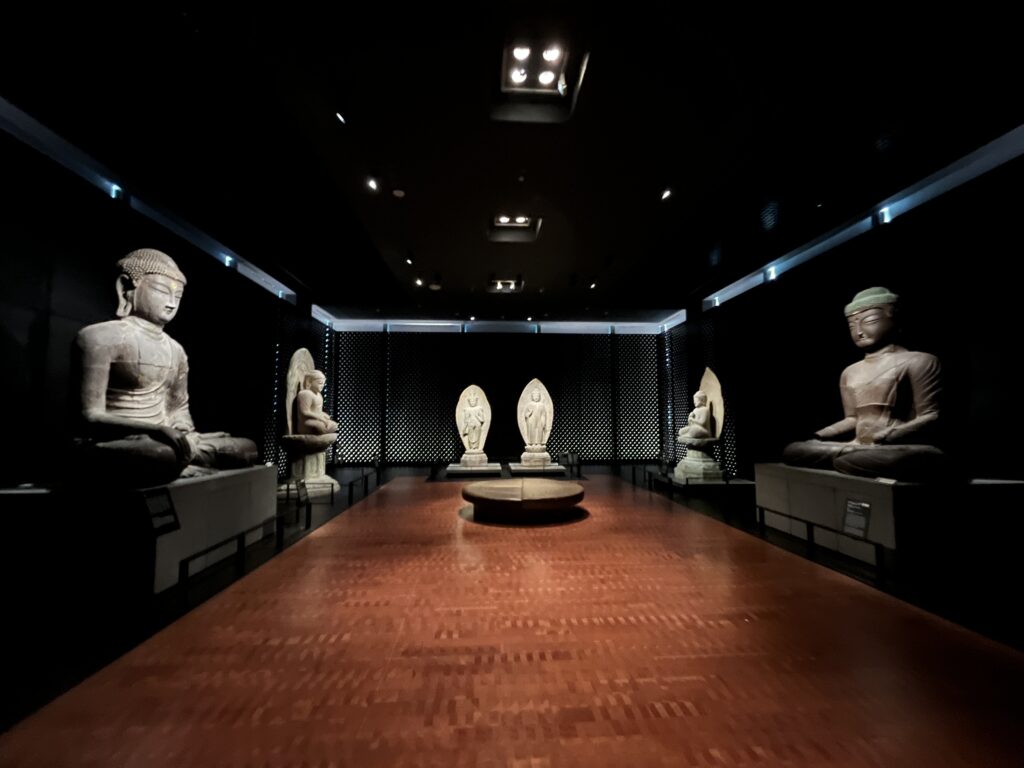
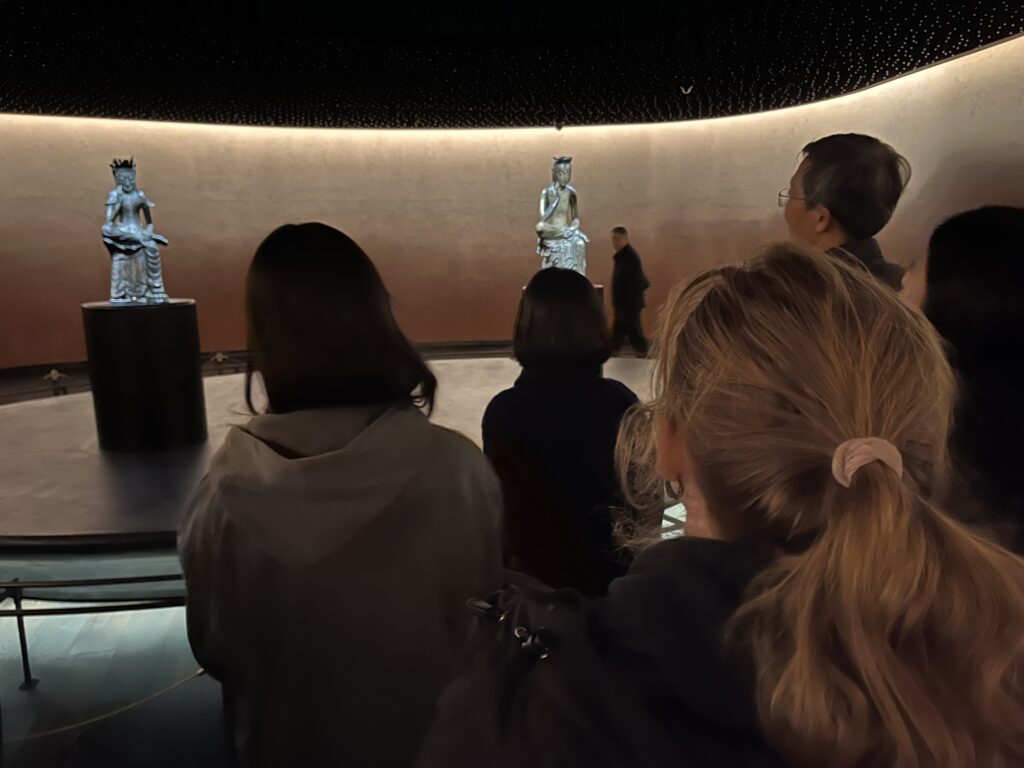
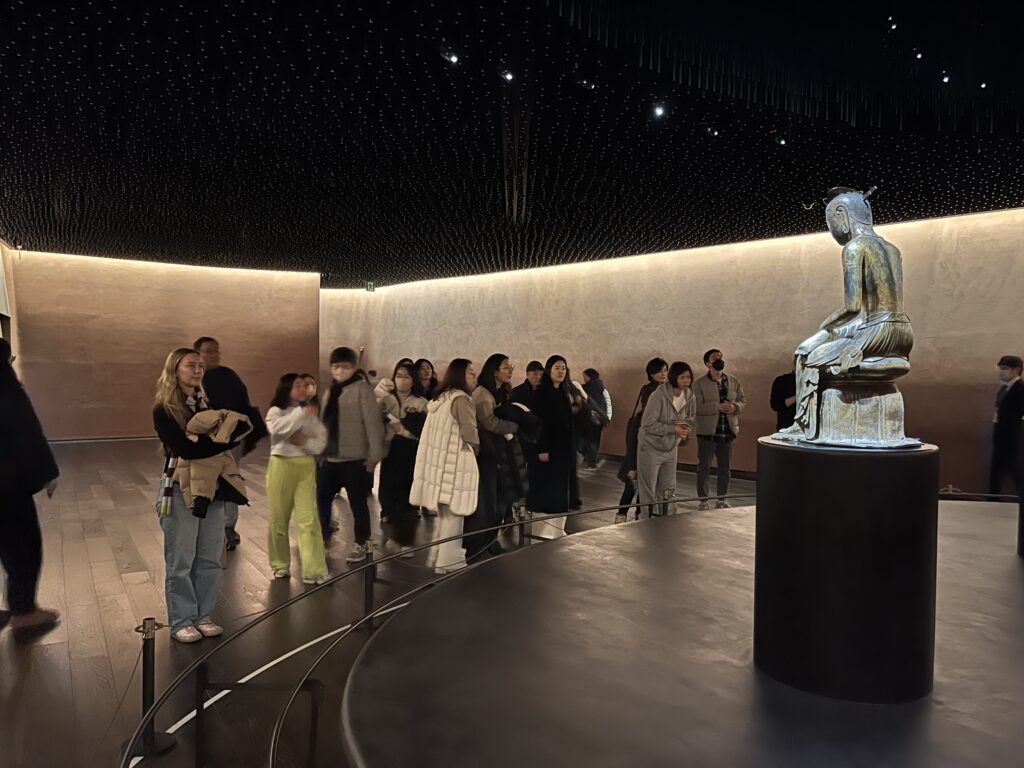
가장 인상 깊었던 곳은 ‘사유의 방’이었어요. ‘사유의 방’에는 반가사유상이 두 개 있는데 조용하고 어두운 방에 조명을 받고 있는 두 불상을 보니 나도 모르게 마음이 평온해지고 바빴던 일상이 정리가 되는 느낌이었어요.
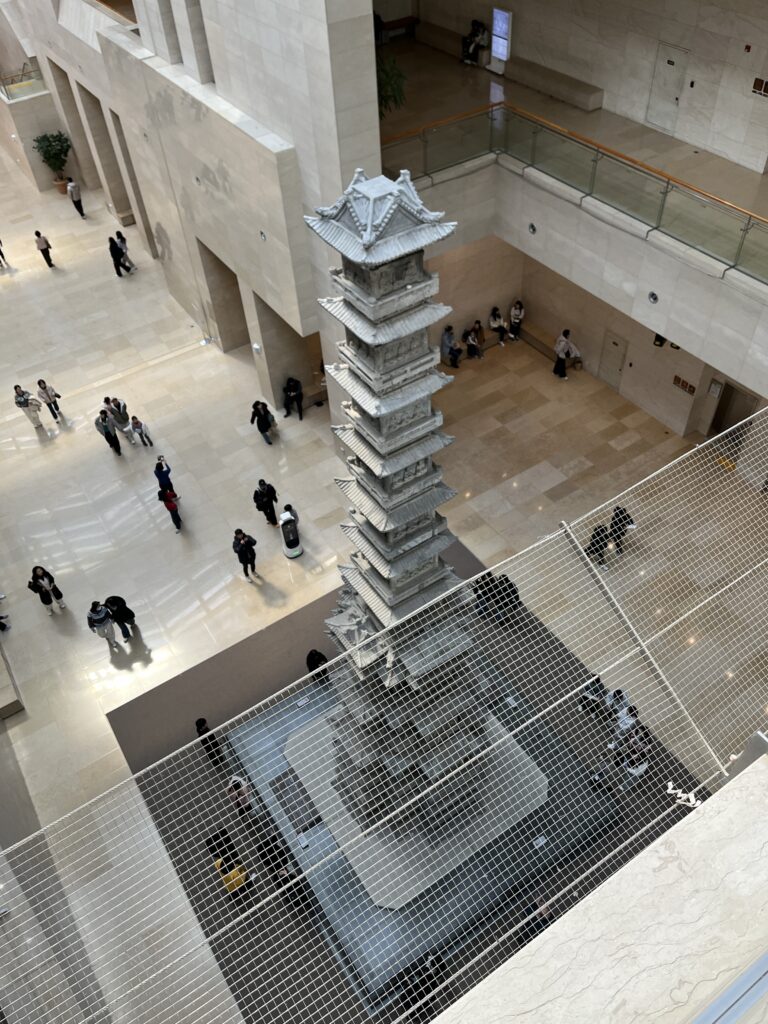
박물관에서 신기한 것을 발견했는데요. 하나는 바로 이 탑이에요. 이렇게 큰 탑이 어떻게 건물 안에 들어와 있을 수 있는지 모르겠어요. 목이 아프도록 한참 올려다 봤어요.
그리고 또 하나는 바로!
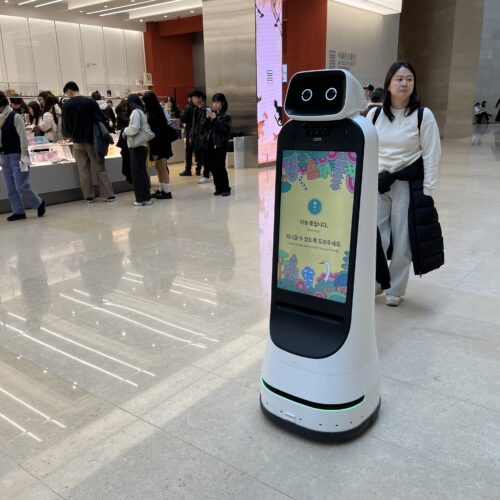
짜잔! 관람객들을 안내하는 이 로봇이었어요. 이 로봇의 이름은 ‘큐아이’라고 하는데 음성인식과 자율주행 기능을 기반으로 관람객에게 전시실 및 전시품 등 문화 정보를 제공한다고 해요. ‘하이 큐아이’라고 말을 걸면 ‘안녕하세요. 무엇을 도와드릴까요?’라고 대답을 해요. 박물관에 소장된 유물과 전시에 대해서 해설을 해주고 안내를 하는 똑똑한 로봇이었어요. 수 천 년 전 유물을 최신식 로봇이 안내해주는 박물관! 정말 재미있지 않나요?
박물관에 정말 많은 사람들이 있었어요. 게다가 학교가 겨울 방학을 해서 학생들도 아주 많이 있었어요. 특히 선생님과 바닥에 앉아서 전시품에 대해 열심히 이야기하던 아이들이 참 귀여웠어요. 아쉽게도 그림이 전시된 서화관이 2월 25일까지 문을 닫아서 못 보고 왔어요. 다음에 다시 가서 보려고 해요. 그 때에는 오늘 보지 못한 유물도 다시 차근차근 볼 거예요. 같이 가실래요?
This week, we took a trip to the National Museum of Korea. As Korean culture gains more love worldwide, the number of visitors here has skyrocketed! In fact, the number of foreign visitors jumped from 95,000 in early 2024 to over 200,000 in 2025. Isn’t that amazing?
We headed to the museum by subway. After arriving at Ichon Station, it was super easy to find our way by following the signs. The walls of the connecting tunnel were decorated with silhouettes of major exhibits, which really made us curious about what they would look like in person!
Stepping out from the station, we were greeted by a vast, beautiful garden. We couldn’t miss the chance to take some commemorative photos!
Did you know the open space in the middle of the museum building is inspired by the ‘Daecheongmaru’ (the main open-floor hall) of a traditional Hanok? The building itself acts like a giant picture frame, capturing a stunning view of Namsan Mountain and Namsan Tower in the distance.
As soon as we entered, we grabbed maps and headed toward the exhibits we were interested in. We had already checked out the “30 Masterpieces” on the museum’s website beforehand, so we knew exactly what we wanted to see!
The museum is truly massive with so many artifacts that it can be a bit overwhelming. If we hadn’t checked the website in advance, we might have gotten lost! I highly recommend checking the website before your visit to see where your favorite pieces are located.
The most memorable spot for me was the ‘Room of Quiet Contemplation.’ It houses two Pensive Bodhisattva statues. Looking at these two statues under the soft lights in a quiet, dark room made me feel so peaceful, as if all the busyness of daily life was just fading away.
We also found some really cool things! First was this huge pagoda. I have no idea how such a massive stone structure fits inside a building! I stared up at it for so long that my neck actually started to hurt.
And the second thing was… Ta-da!
It’s ‘QI’, the guide robot! QI uses voice recognition and autonomous driving to provide cultural info and directions. If you say, “Hi QI,” it replies, “Hello! How can I help you?” It’s a brilliant robot that explains the history of the artifacts. A museum where a high-tech robot guides you through thousands of years of history—don’t you think that’s fascinating?
The museum was buzzing with people, especially since schools are on winter break. It was so cute to see children sitting on the floor with their teachers, chatting away about the history. Unfortunately, the Calligraphy and Painting Gallery is closed until February 25th, so we missed that part.
I’m definitely planning to go back to see what I missed this time. Would you like to join me next time? 😊
한국의 국립중앙박물관은 국립중앙박물관은 연간 관람객 수 기준으로 세계적인 순위를 기록하며, 최근 발표된 자료들에서는 세계 3-4위권 수준으로 평가받고 있습니다. 2023년에는 아시아 1위, 세계 6위, 2024년에는 600만 명 돌파로 세계 4위(루브르, 바티칸, 대영박물관에 이어)까지 올랐으며, 이는 아트 뉴스페이퍼 등 세계 박물관 순위에서 확인된 결과입니다.
렉시스 학생들과 함께 이런 세계적인 박물관으로 함께 떠나 보았습니다.
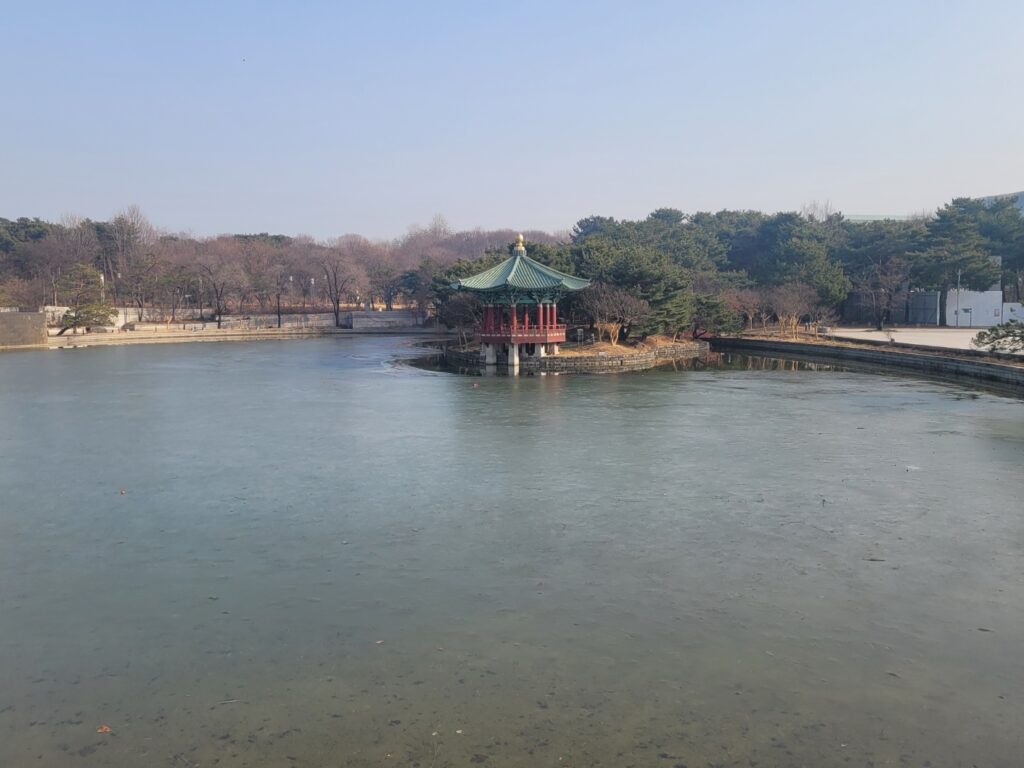
국립중앙박물관 입구 ‘거울못’ 옆의 정자 이름은 청자정(靑瓷亭)이며, 박물관 개관 100주년을 기념하여 청자 기와를 얹어 건립된 상징물입니다.
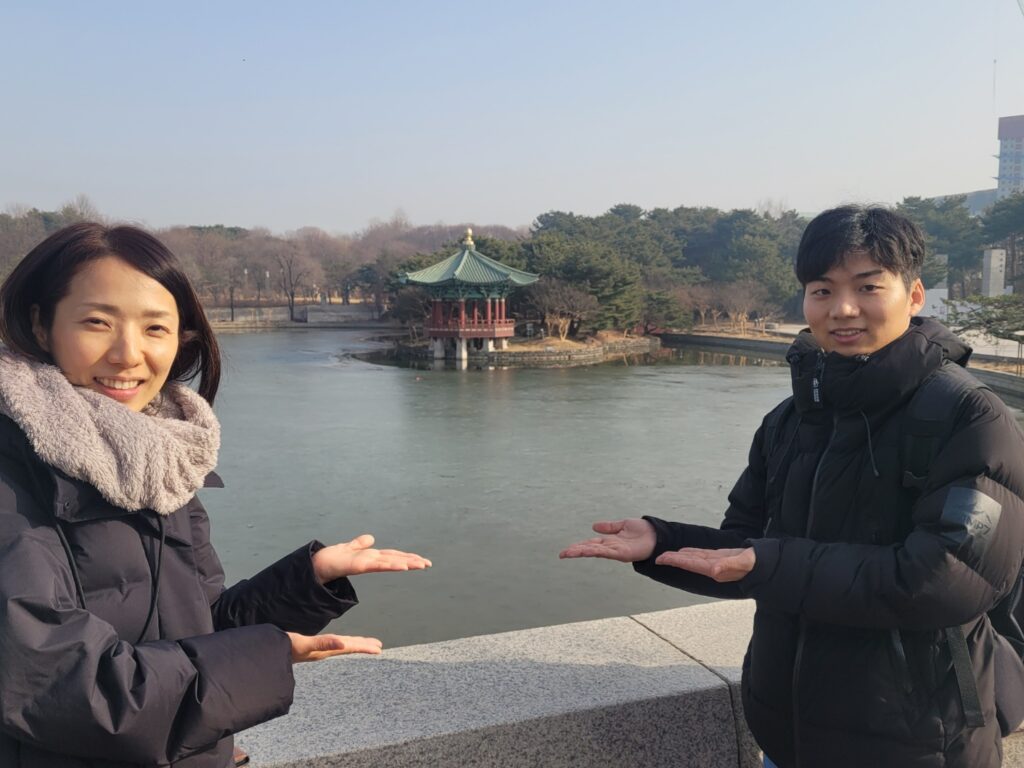
아름다운 연못과 청자정을 배경으로 찰칵!
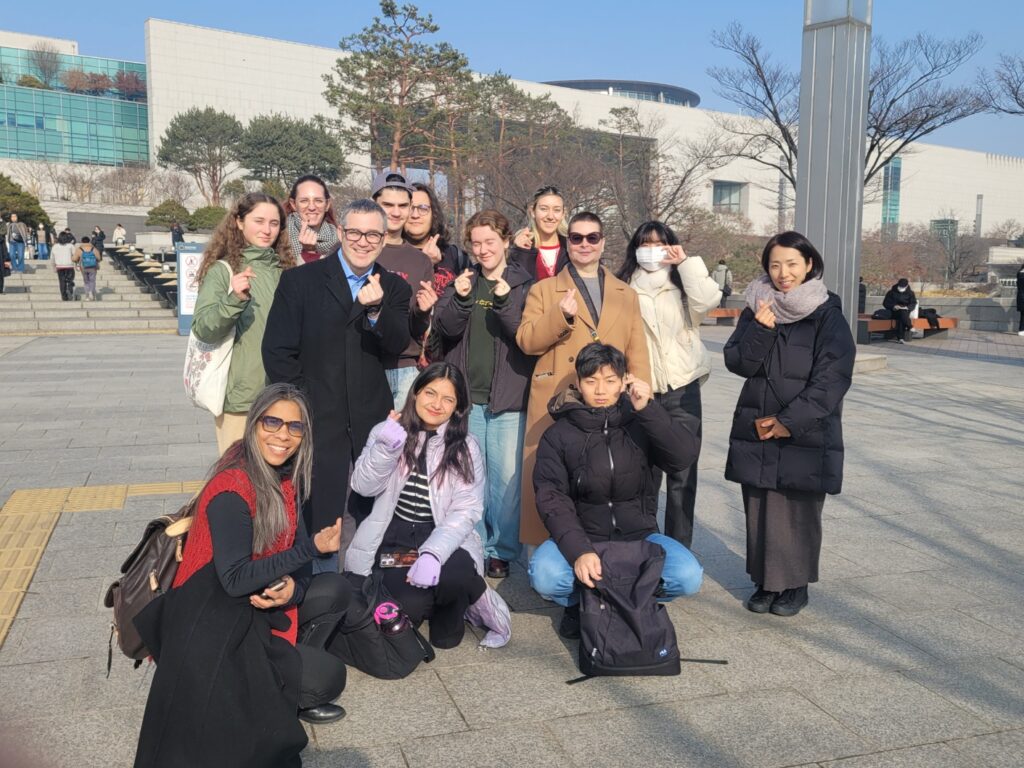
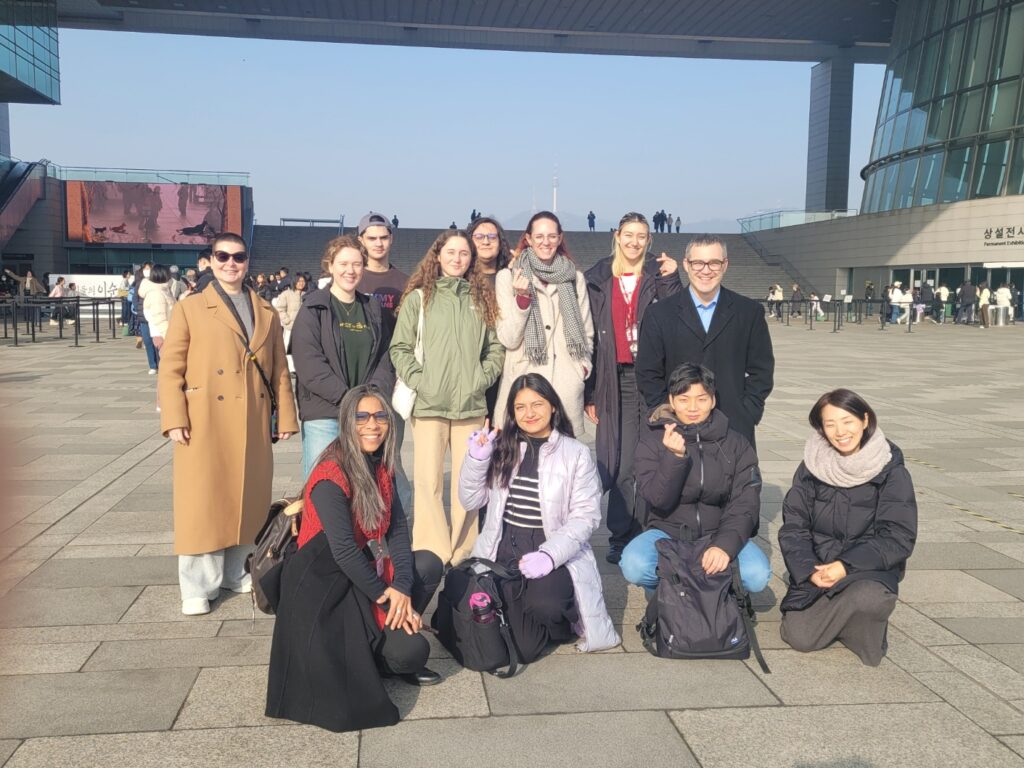
본관 건물에 들어 가기에 앞서, 참가한 학생들과 단체 사진으로 추억을 남겼습니다.
짜잔~~!!! 조금 추운 날씨에도 관람에 앞서 들뜬 모습들이지요?
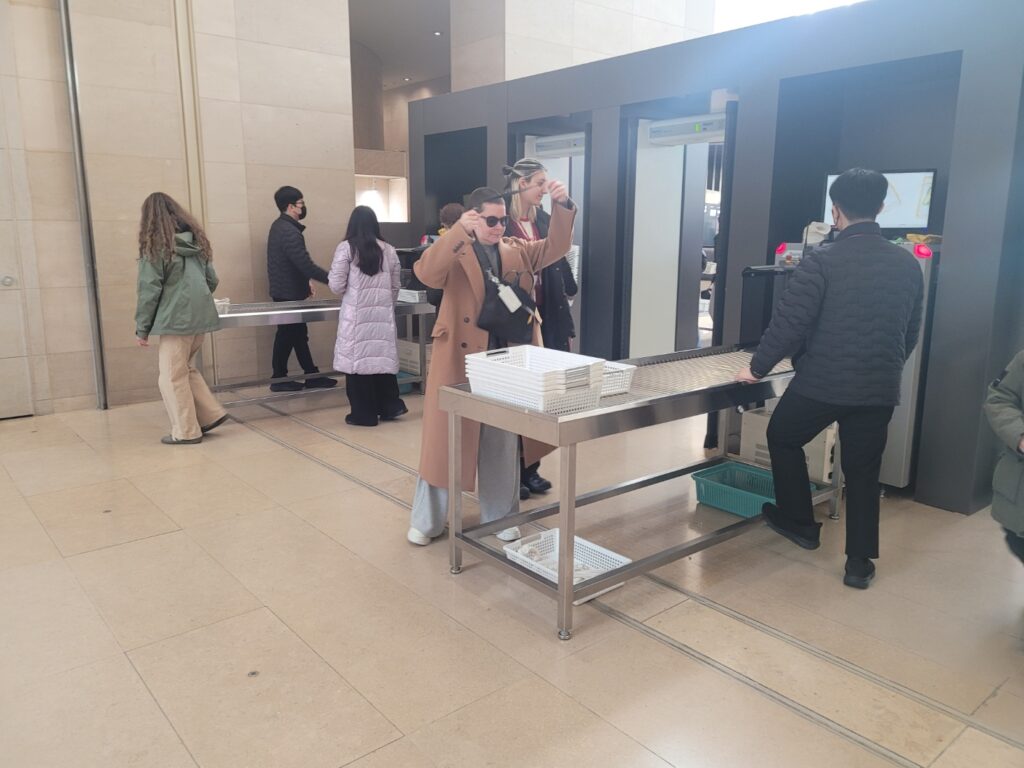
가방을 들거나 메고 온 학생들은 간단한 짐 검사를 거쳐야 합니다.
걱정마세요~! 특별히 이상한 물건이 아니면 1분 내로 통과가 된답니다.
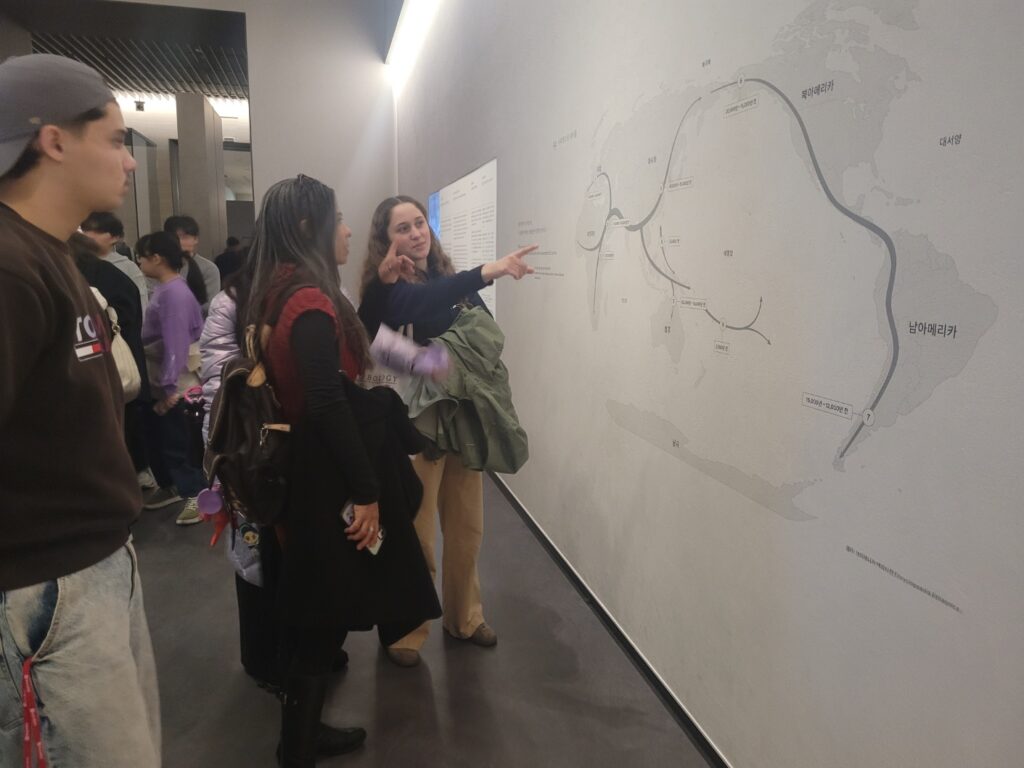
인류의 기운에 대해 보고 있어요. 최초 인류가 아프리카에서 출발하여 5대양 6대주로 뻗어나가는 그림을 감상 중이에요.
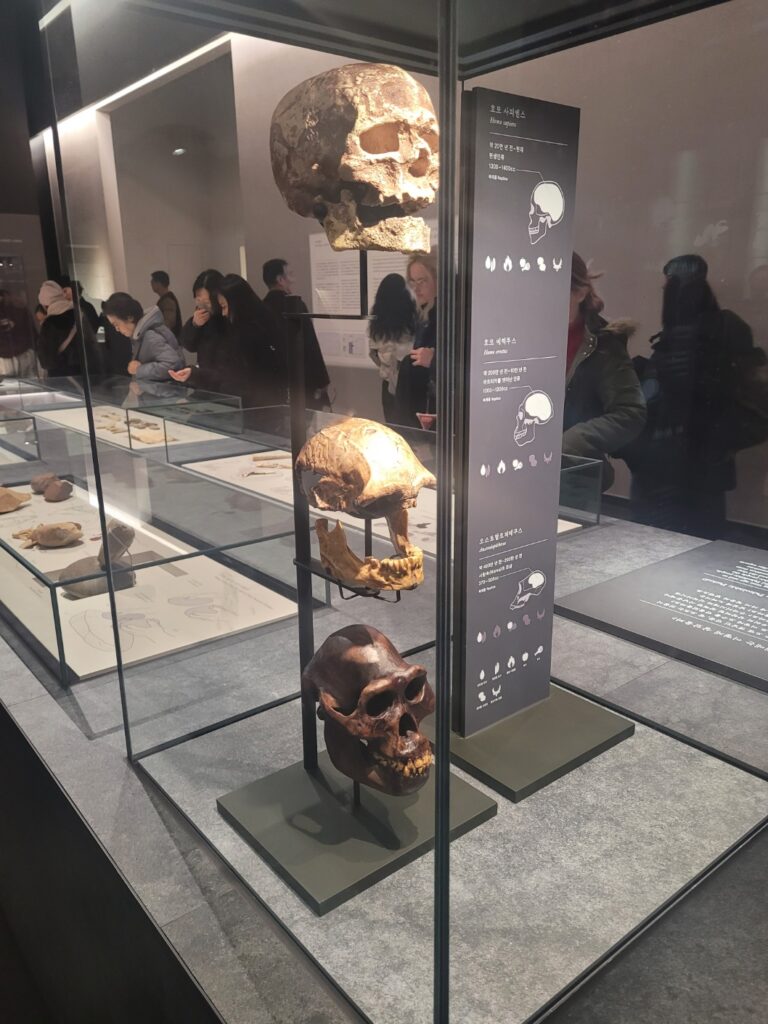
인류의 기원은 무엇인가? 영원한 수수께끼일지도 몰라요.
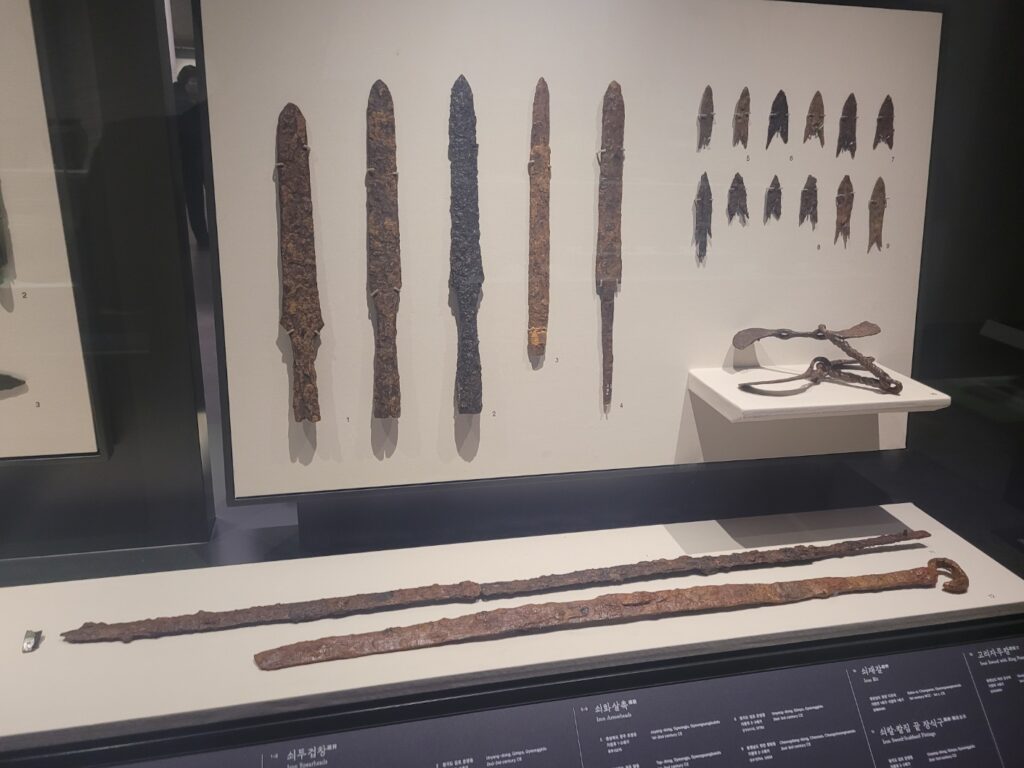
고대 시대에 사용했던 각종 도구와 검들이에요. 그 시절에는 저런 것도 신분의 상징이었겠죠?
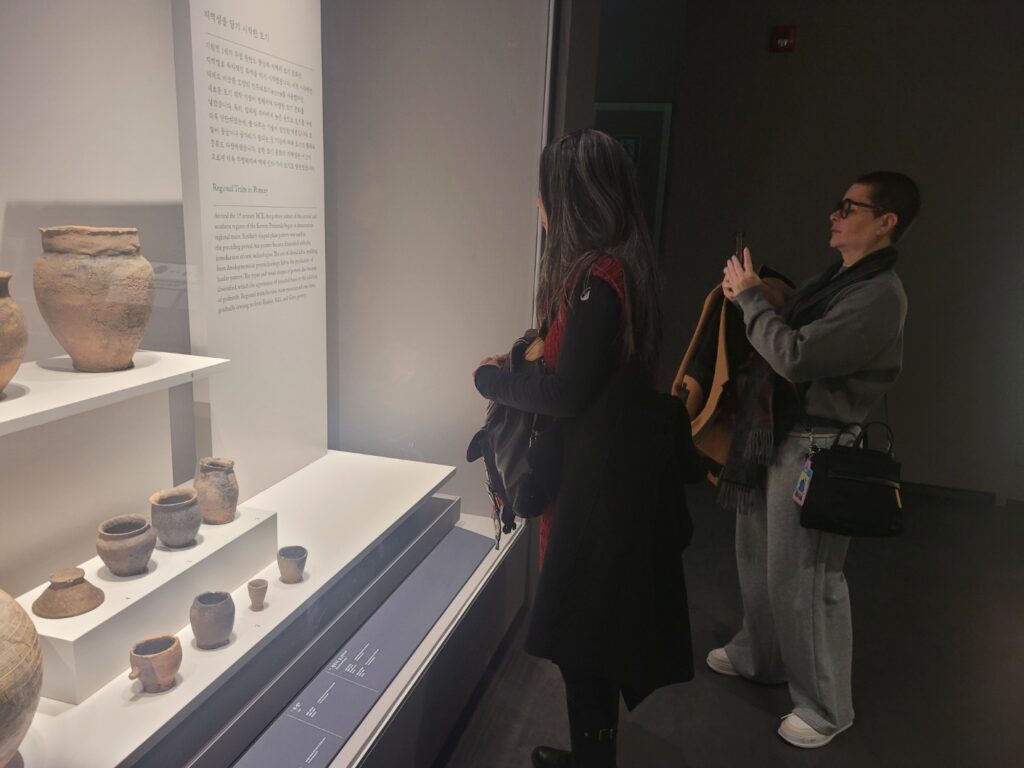
학생들이 옛날 토기들을 보고 흥미롭게 감상하고 있어요.
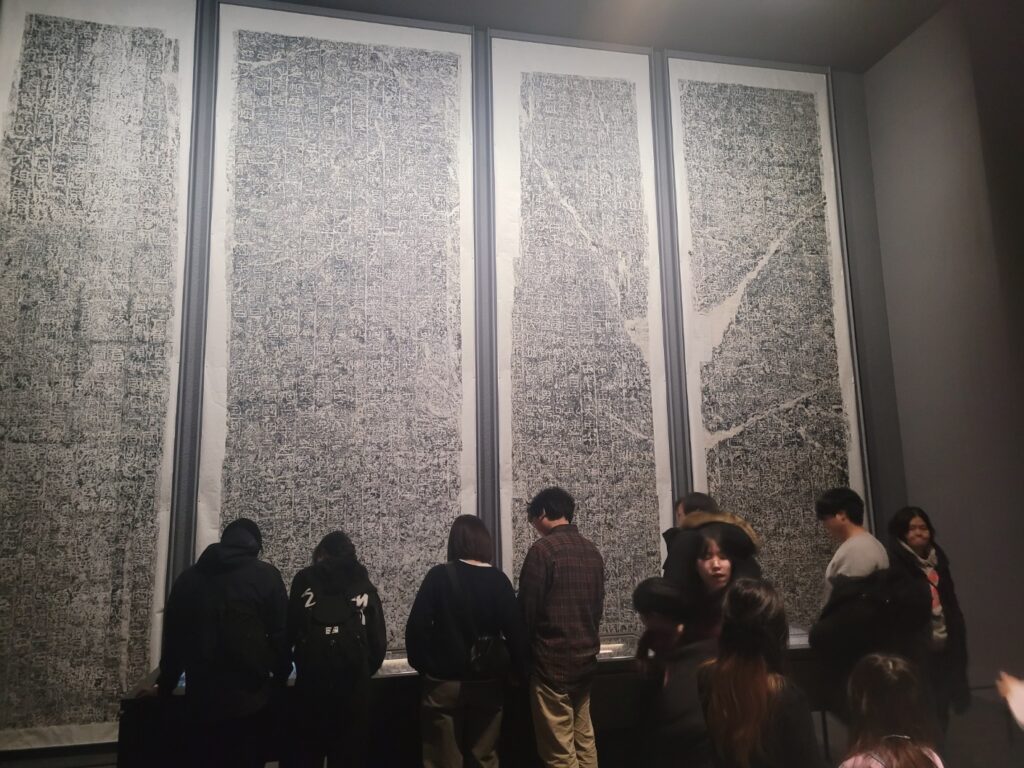
이것은 광개토대왕릉비의 내용을 옮겨왔어요. 광개토대왕은 한국 역사상 가장 넓은 영토를 확장했던 왕이에요.
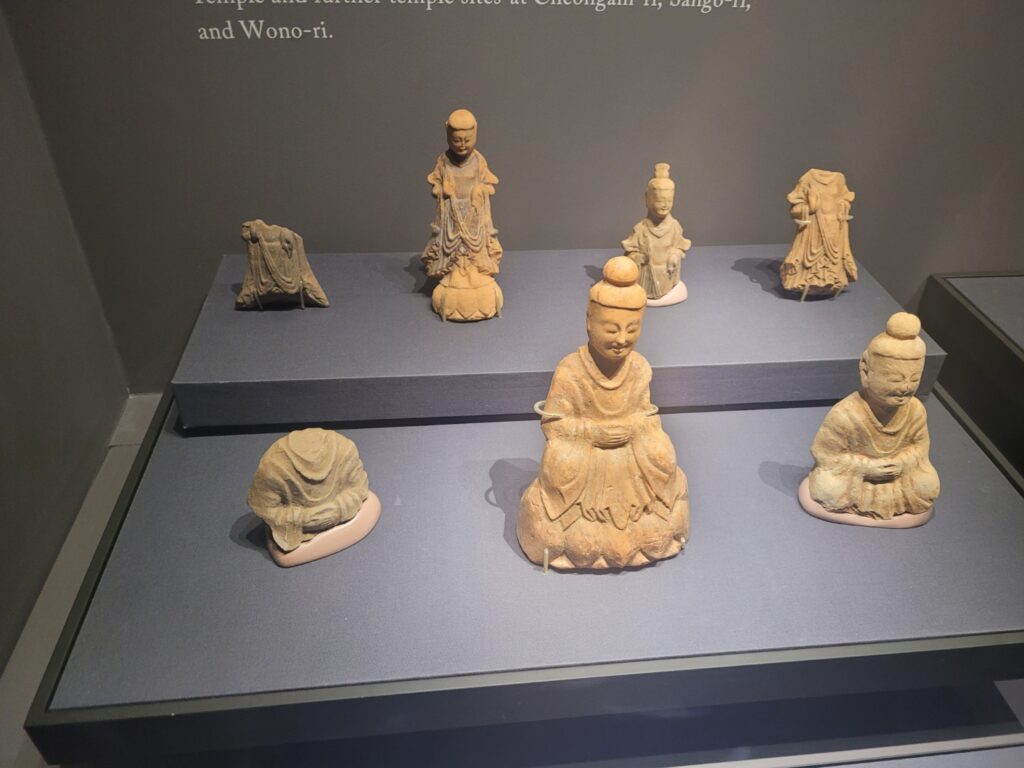
조선 시대 전까지는 불교가 융성했고 많은 불교 유물들이 남아 있어요.
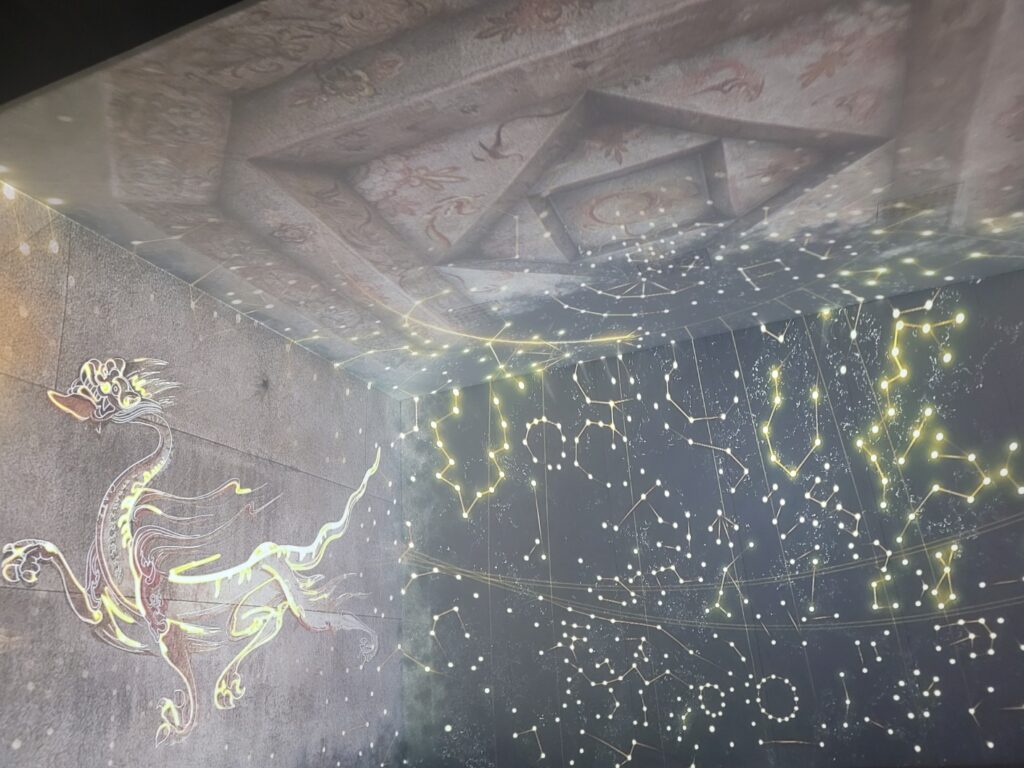
고대 벽화를 조명으로 화려하게 구현했어요. 아주 멋있죠?
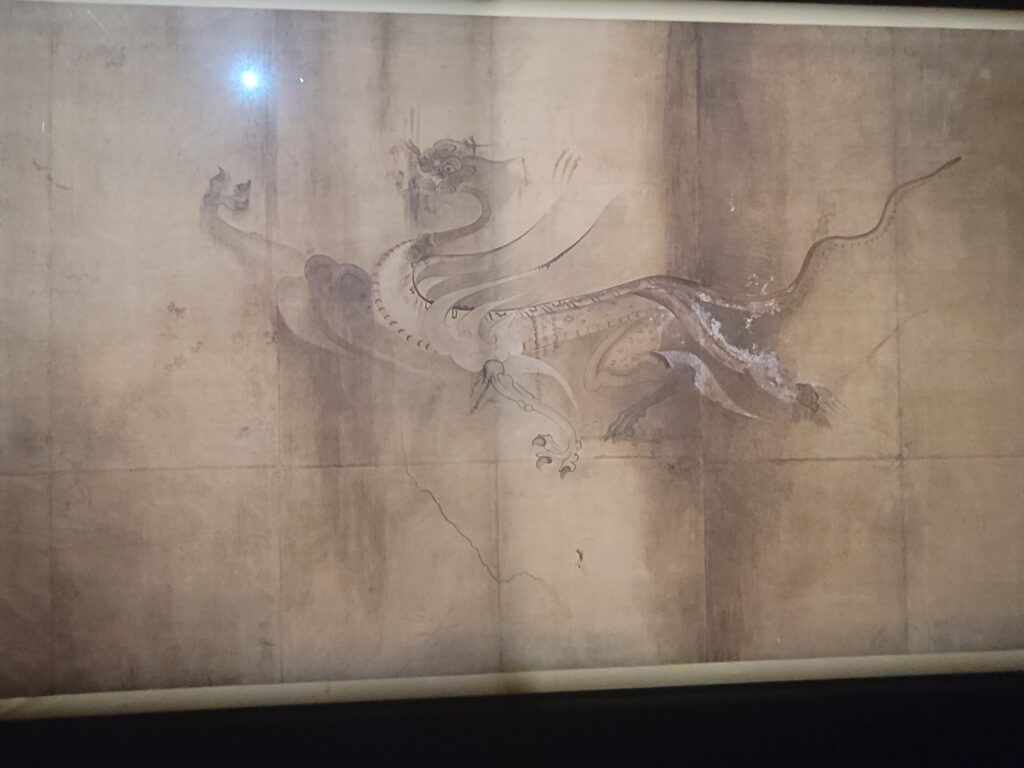
고대 사람들은 여러 가지 신화적인 동물들이 존재한다고 믿었어요.
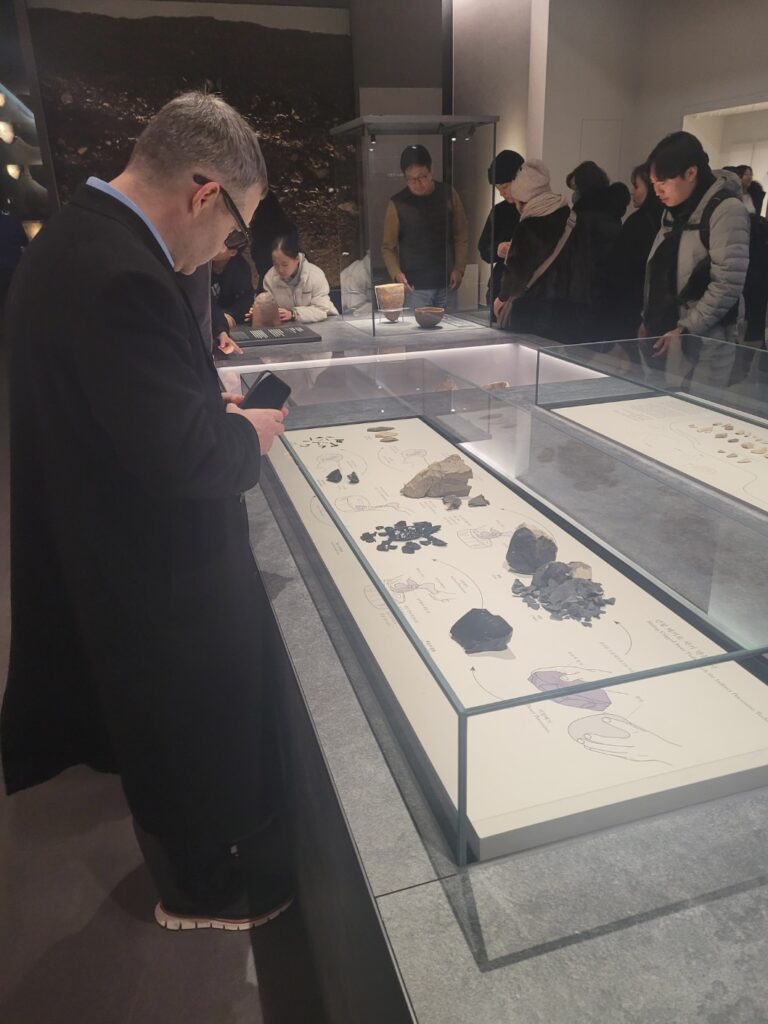
학생들이 옛날에 도구를 만드는 방법에 대해서 주의 깊게 살펴보고 있어요.
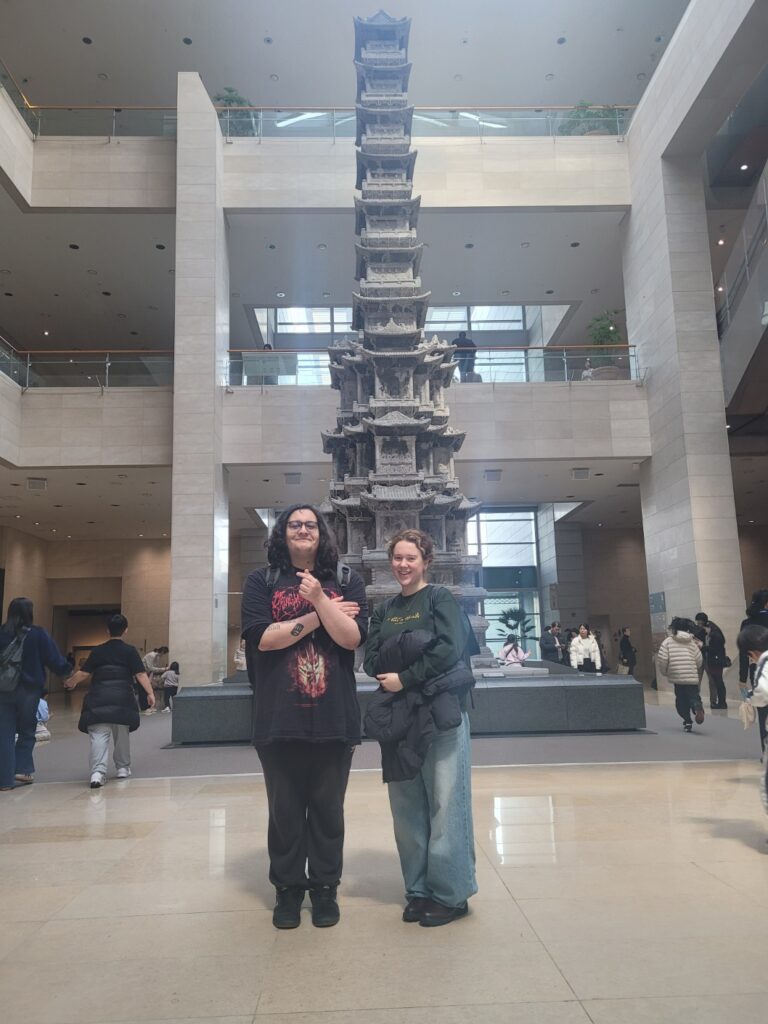
와우! 박물관 로비에 정말 높은 탑이 위치해 있어요.
지금도 저렇게 만들기가 쉽지 않을 텐데 옛날 사람들의 지혜와 기술도 대단하죠?!
이렇게 렉시스 학생들은 국립중앙박물관에서 고대인들의 지혜와 사상을 마음껏 느끼고 즐거운 관람을 했습니다.
여러분도 다음에 같이 해요!
Hello everyone! This time, we went on a special cultural field trip to the National Museum of Korea — one of the most prestigious museums in the world!
Did you know that the National Museum of Korea ranks among the top three to four museums worldwide in annual visitor numbers? In 2023, it was ranked No. 1 in Asia and No. 6 in the world, and by 2024, it proudly welcomed over six million visitors, making it the 4th most visited museum globally—right after the Louvre, the Vatican Museums, and the British Museum.
Together with Lexis students, we set off to discover this world-class museum! Right beside the museum’s entrance pond, you’ll find a beautiful pavilion called Cheongjajeong (Celadon Pavilion), built to celebrate the museum’s 100th anniversary and decorated with elegant celadon roof tiles. Of course, we couldn’t miss the chance to snap some photos with the pavilion and its lovely reflection in the water! Before entering the main building, we took a cheerful group photo. Even though the weather was chilly, everyone was full of excitement. Students with bags had a quick security check — don’t worry, it only takes about a minute! Inside the galleries, we explored humanity’s journey from its origins in Africa to all corners of the world. It’s mind-blowing to think about where we all came from! We also saw ancient tools, swords, and pottery — symbols of status and daily life in ancient times. The Replica of King Gwanggaeto the Great’s Stele fascinated many students, who were amazed by his vast conquests in Korean history. The Buddhist artifacts and illuminated murals from the ancient kingdoms were breathtaking, glowing with color and life. Many mythical creatures appeared in the paintings, reflecting ancient people’s beliefs about their world. At the center of the main lobby stood a towering stone pagoda. “Wow, how did they build something like that back then?” the students exclaimed — truly in awe of the wisdom and craftsmanship of our ancestors. It was a wonderful day at the National Museum of Korea! Lexis students experienced ancient people’s creativity, philosophy, and artistry while discovering the depth of Korean history.
Join us next time for another amazing cultural adventure!
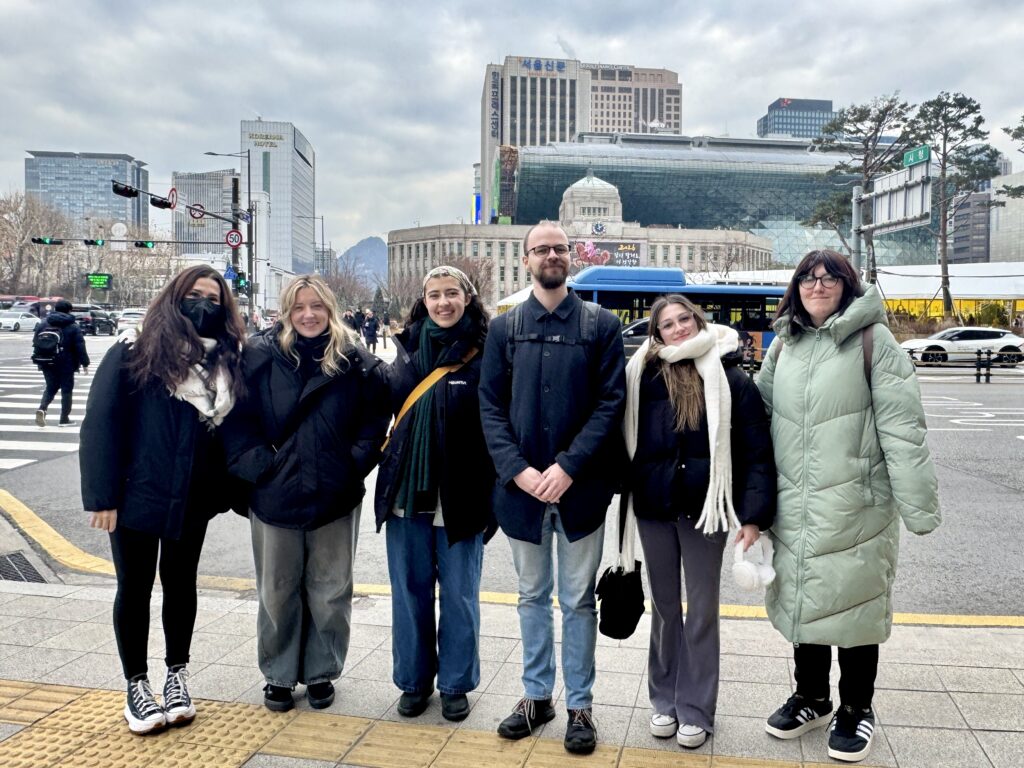
우리는 버스를 타고 시청역으로 갔어요~ 버스에서 친구들과 한국 생활에 대한 이야기도 하며 40분을 달려갔습니다:)
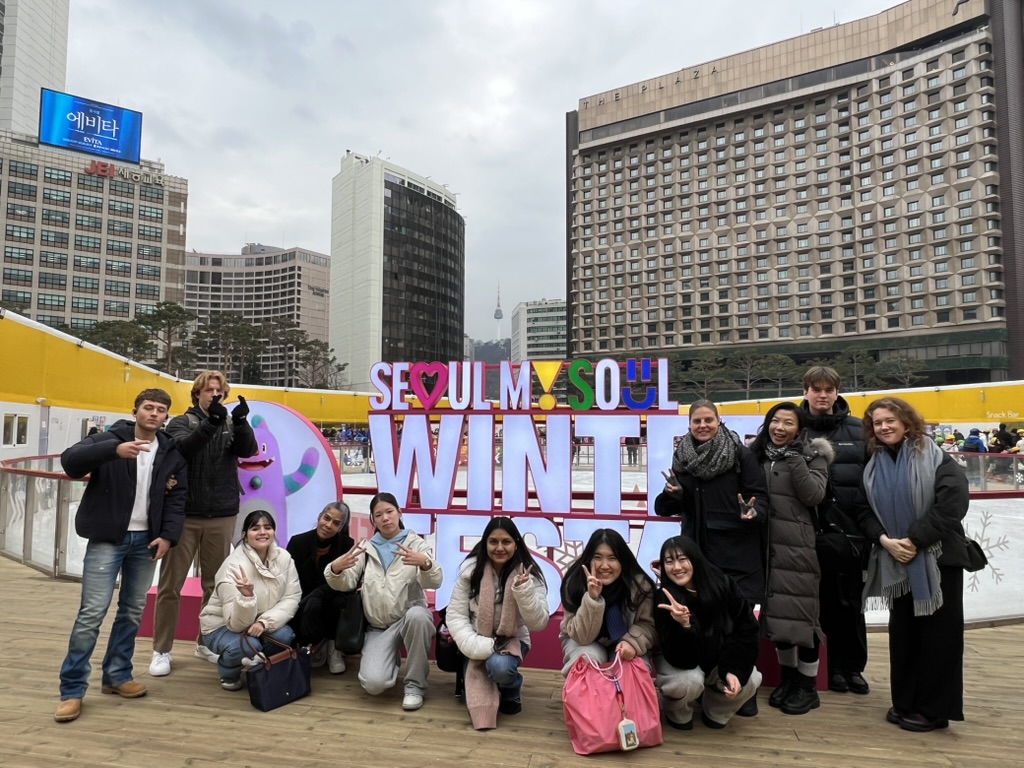
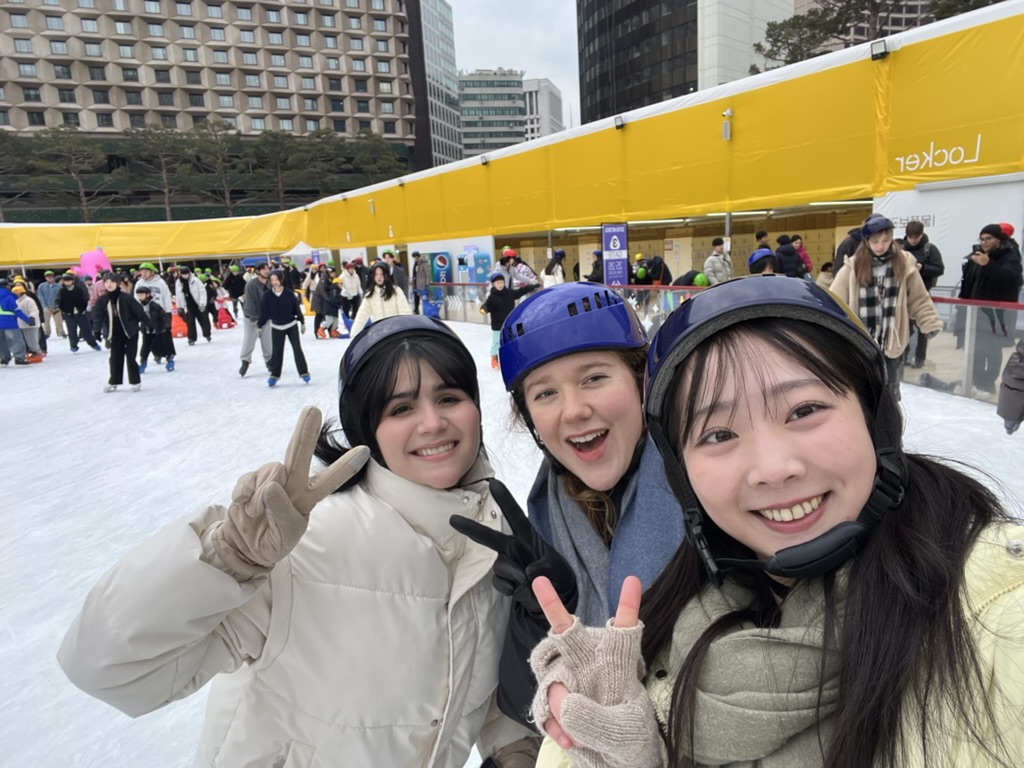
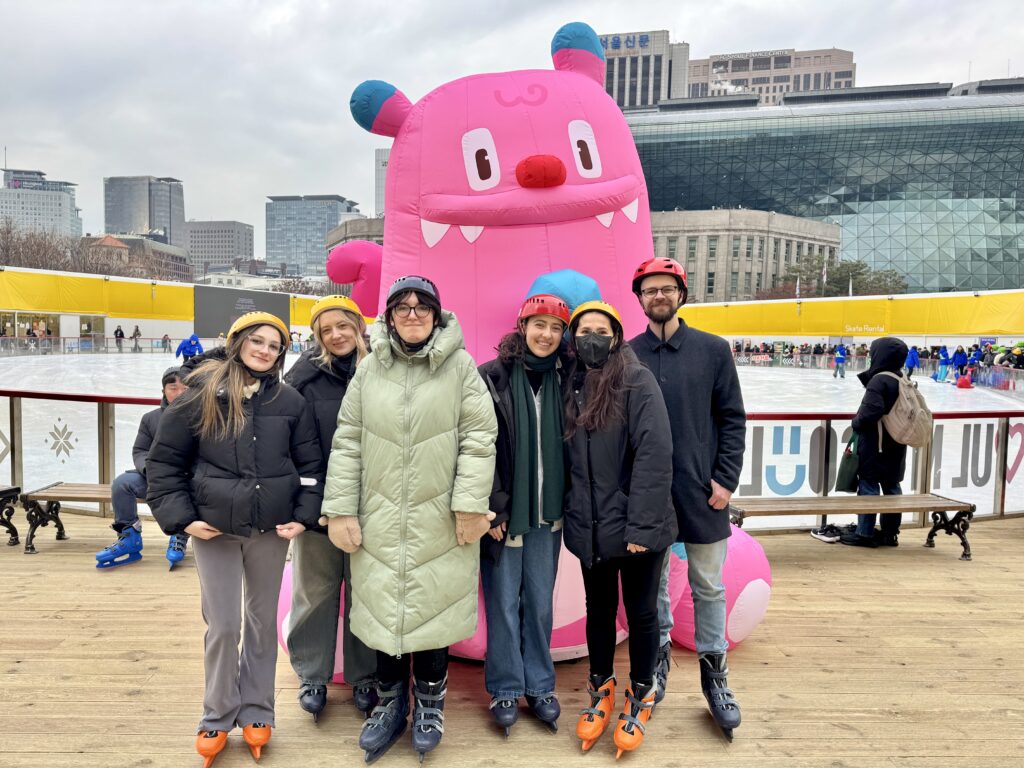
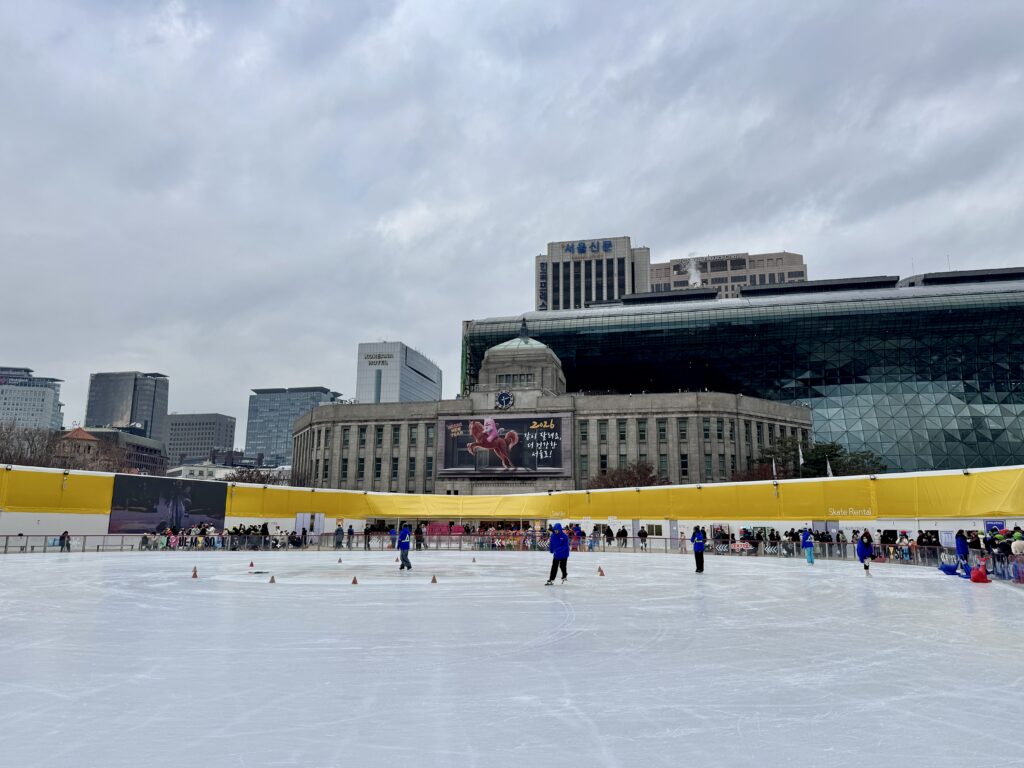
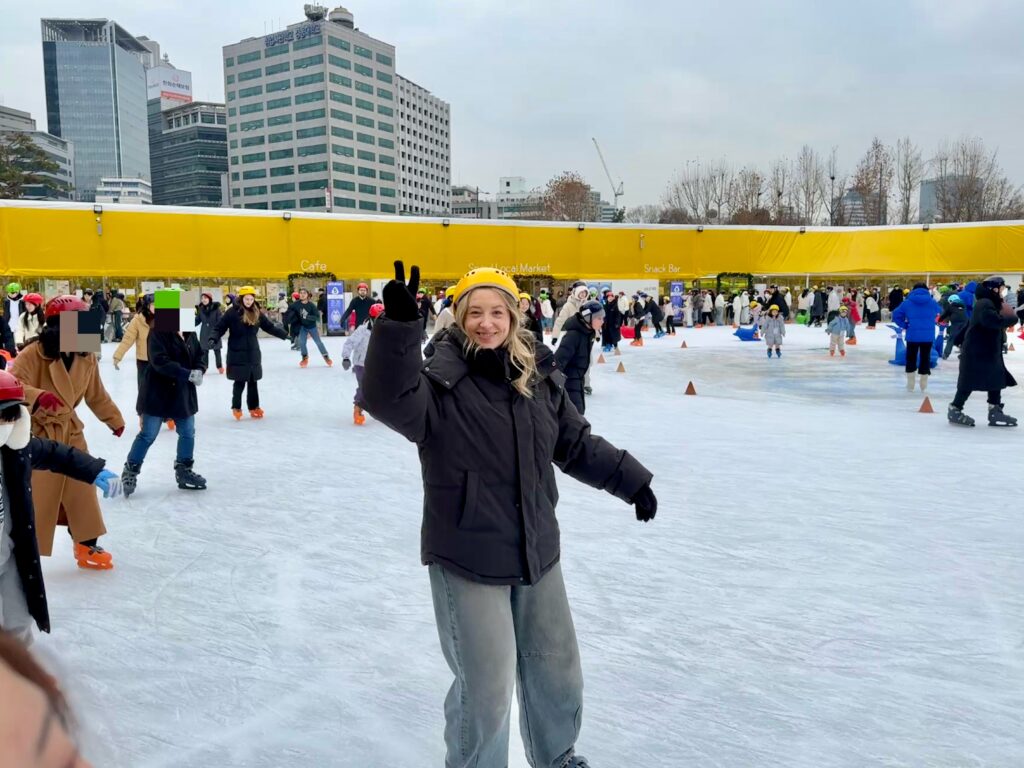
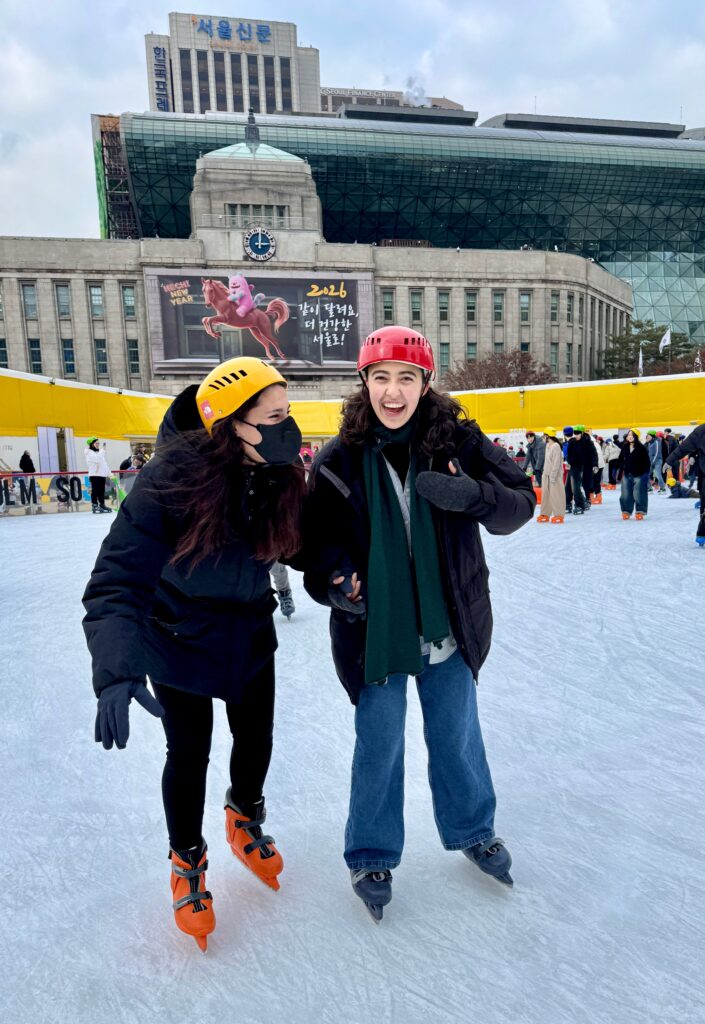
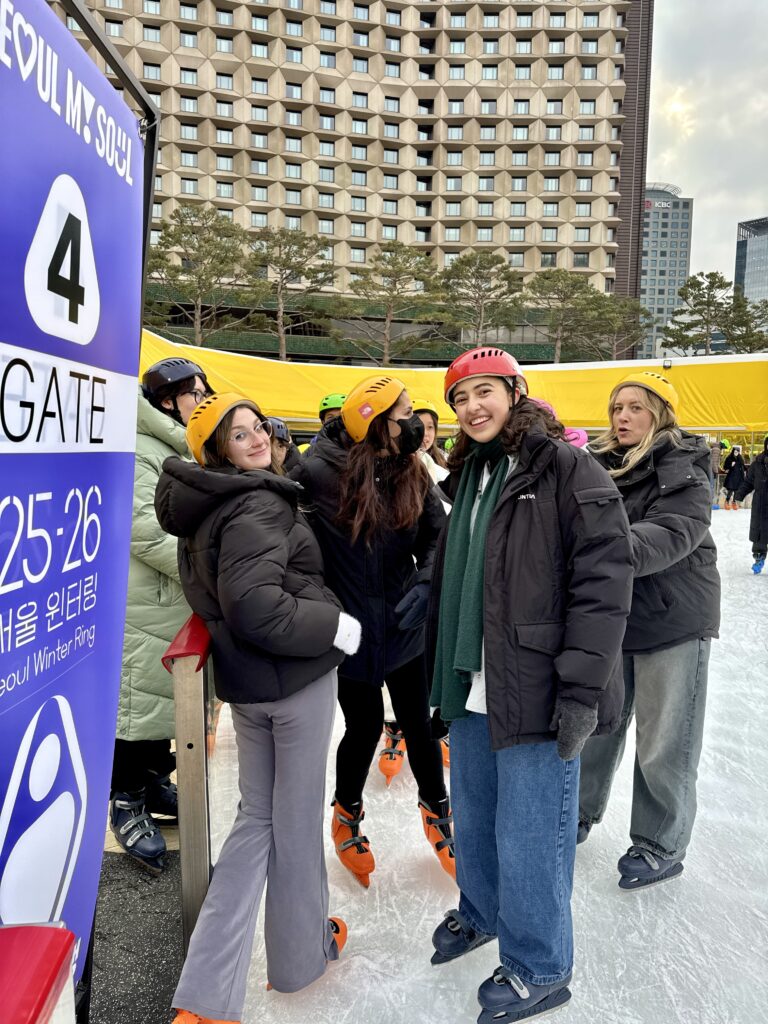
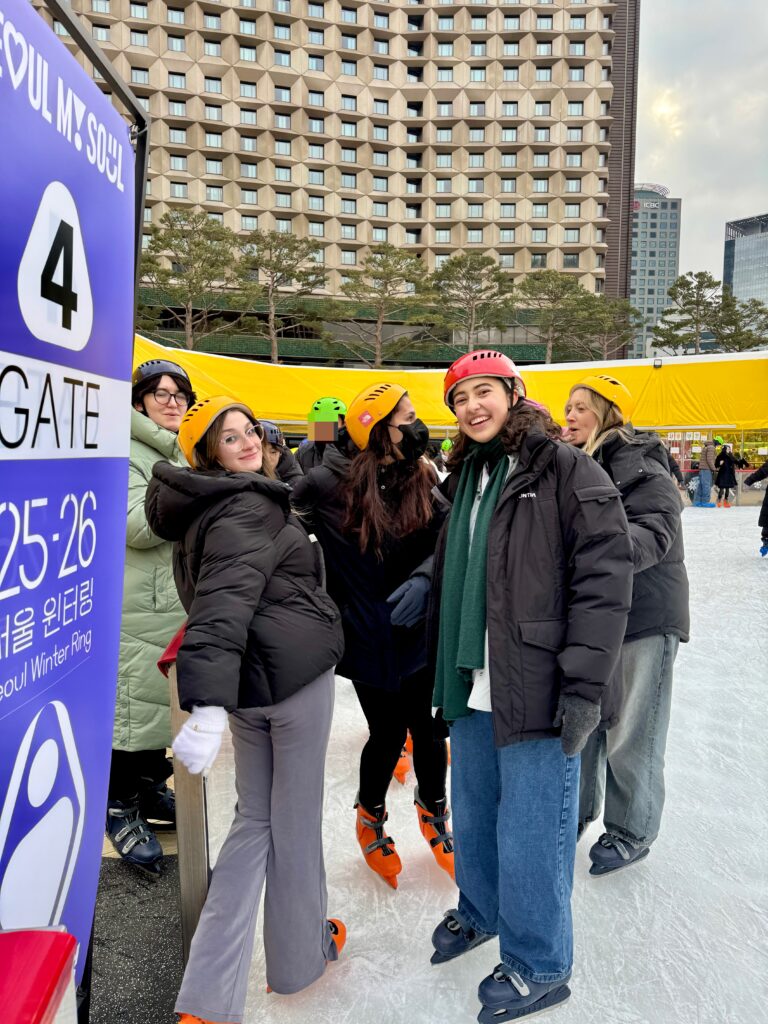
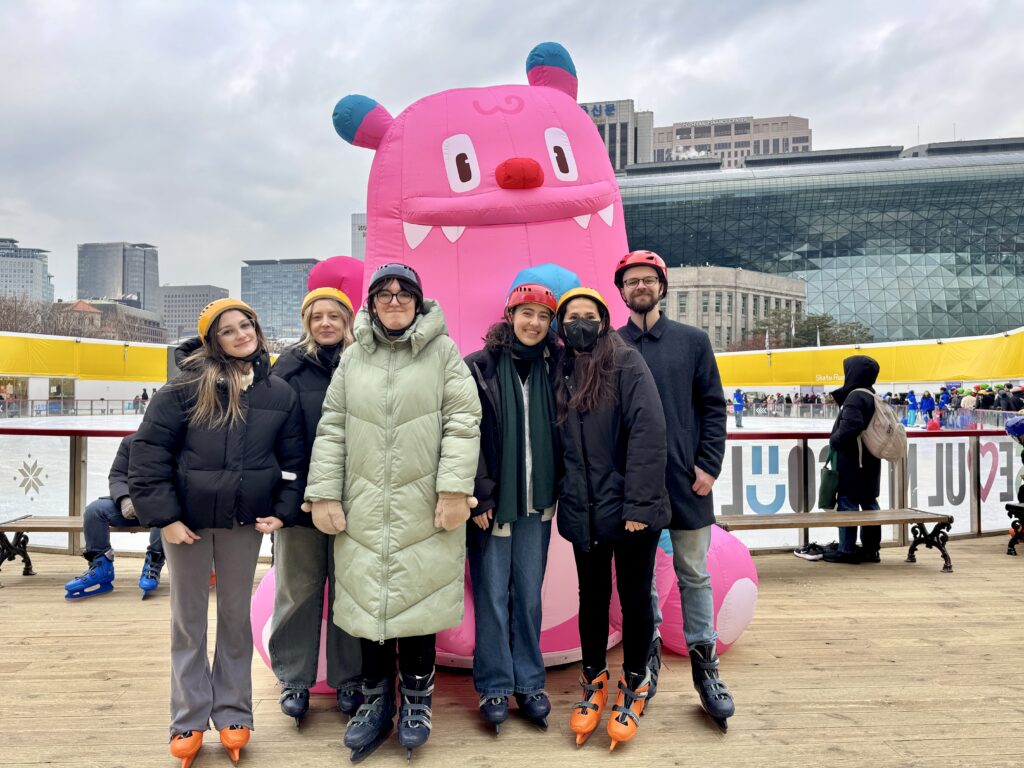
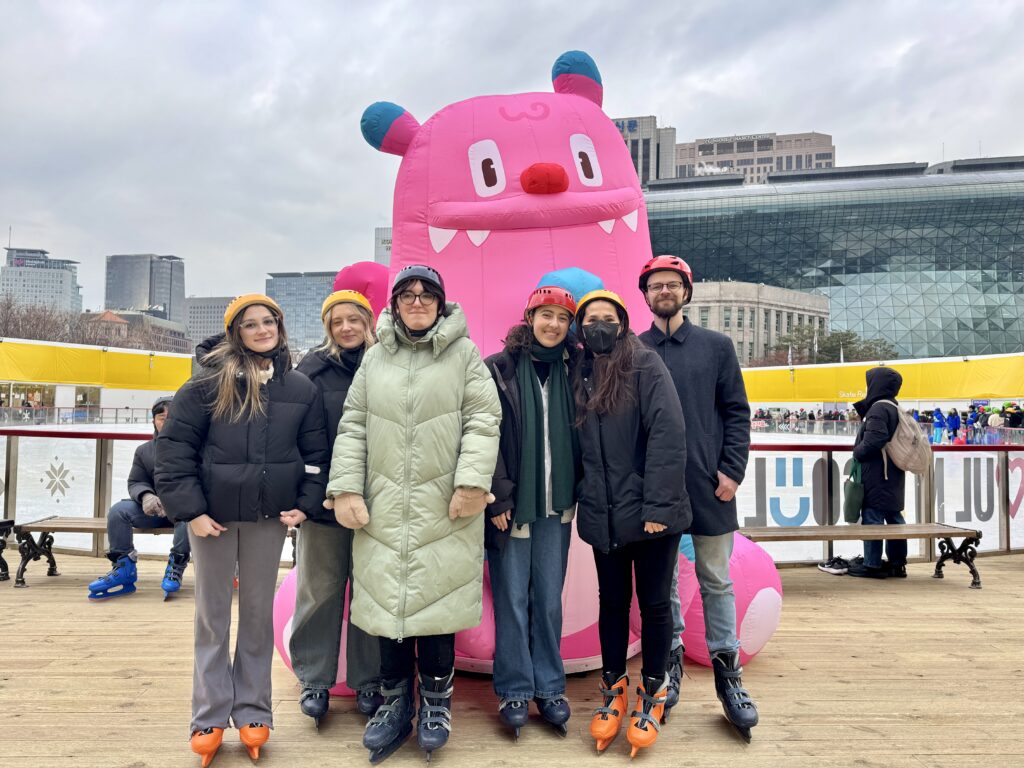
서울 광장 스케이트장에 도착했어요! 모두 함께 같이 사진을 찍었어요~
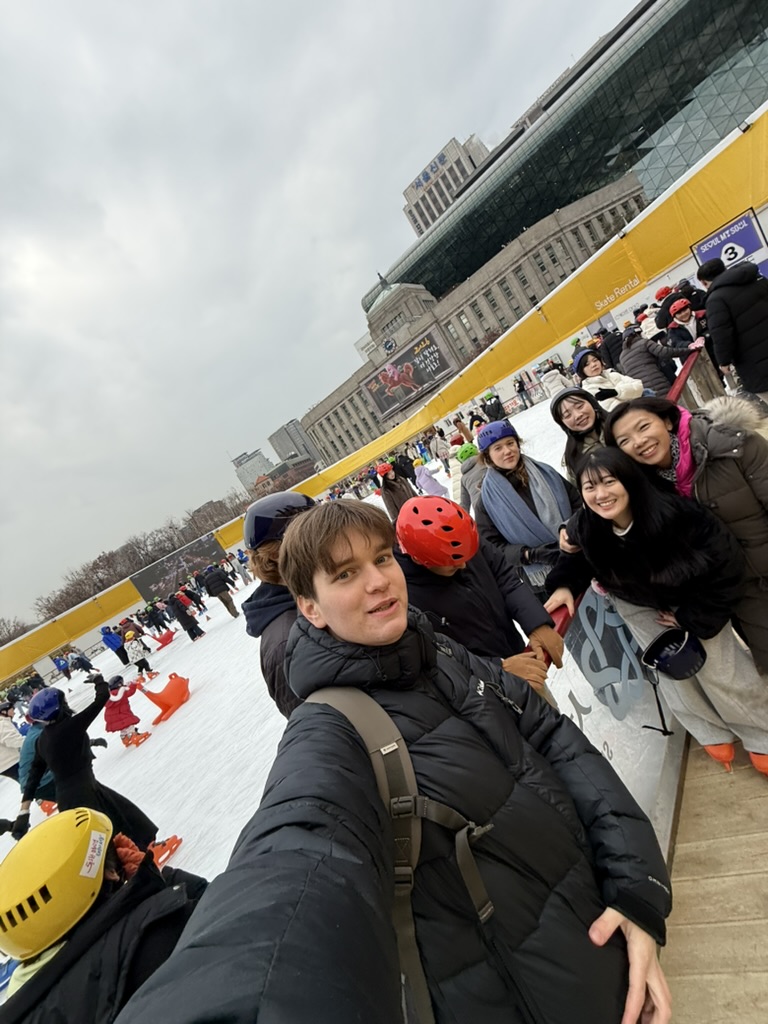
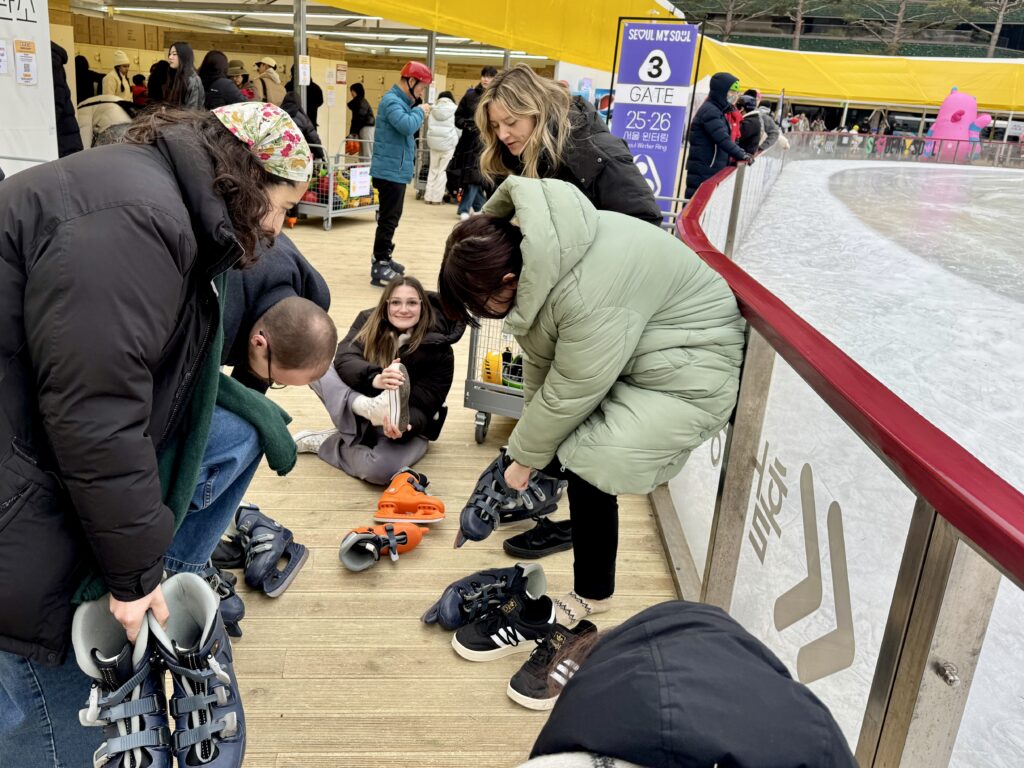
사람들이 정말 많았어요! 모두 스케이트를 즐기러 나왔나봐요. 여기에는 K-POP 노래도 계속 나와요~ 친구들과 즐겁게 흥얼거리며 스케이트를 탈 준비를 마쳐요!
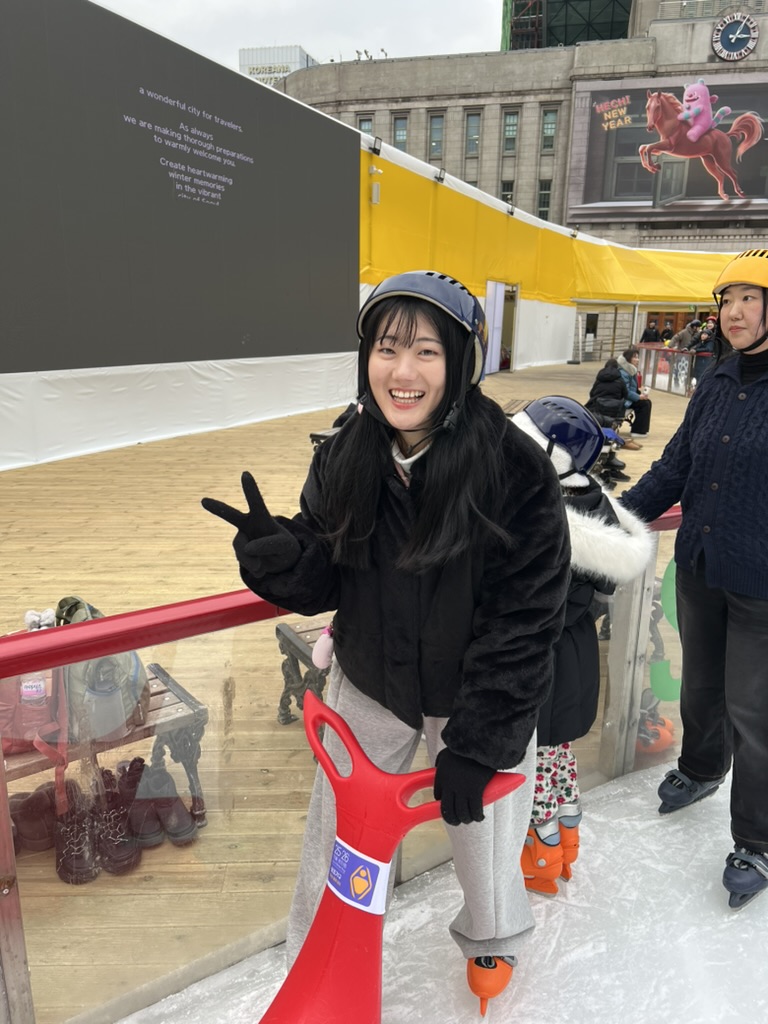
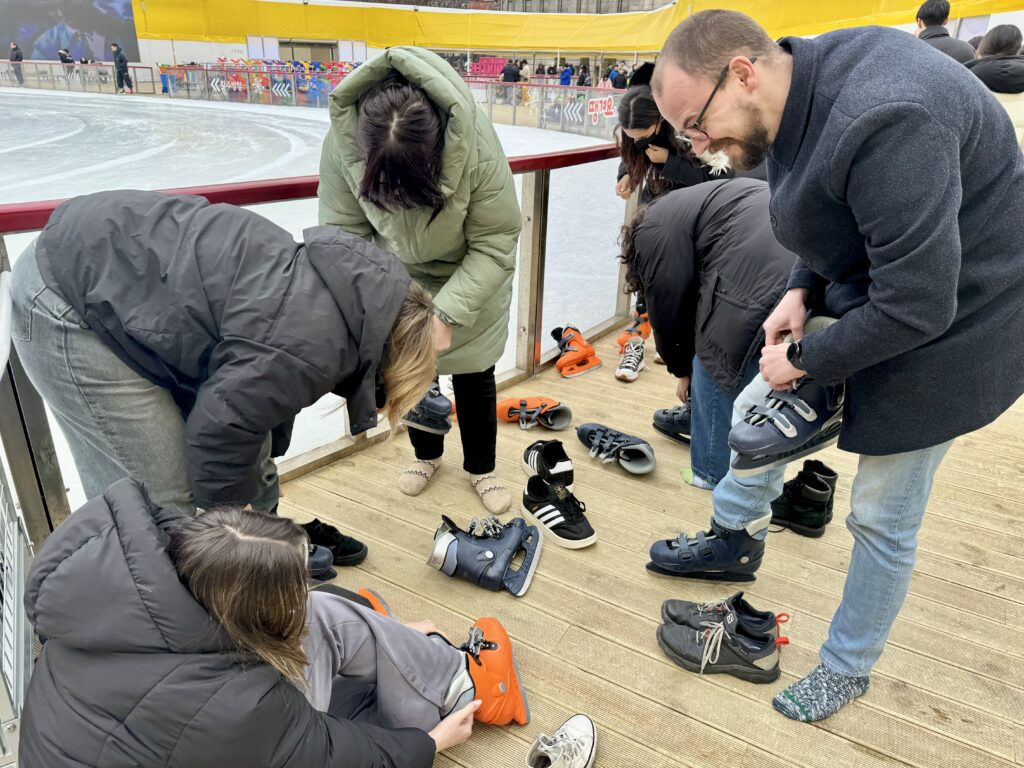
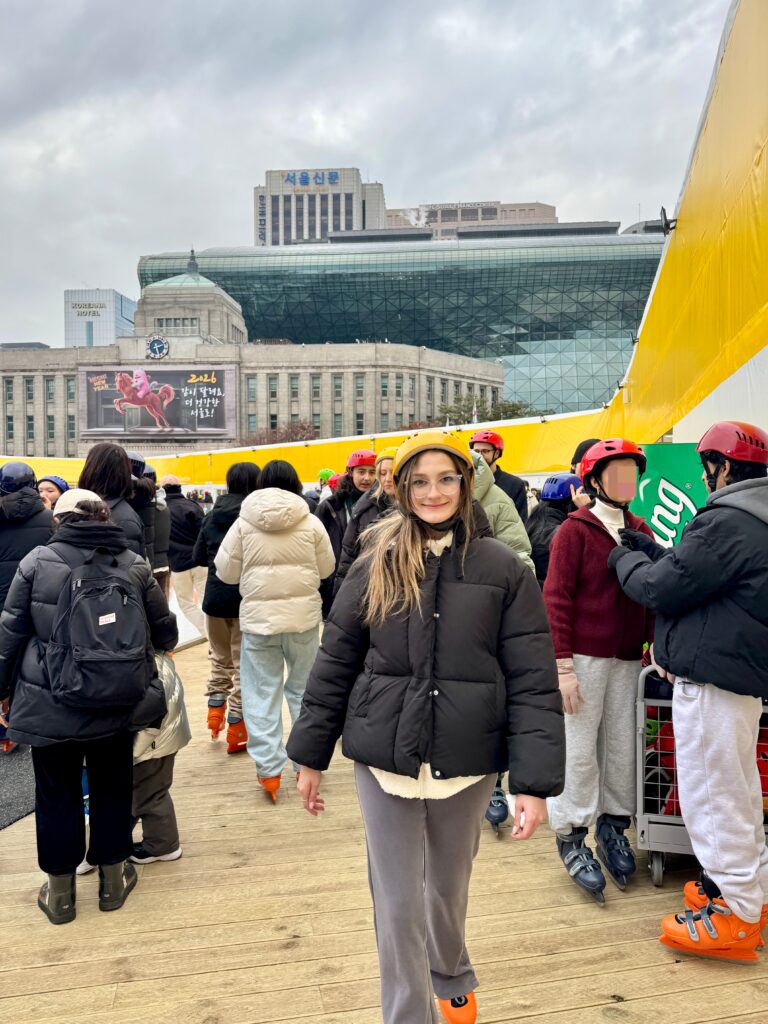
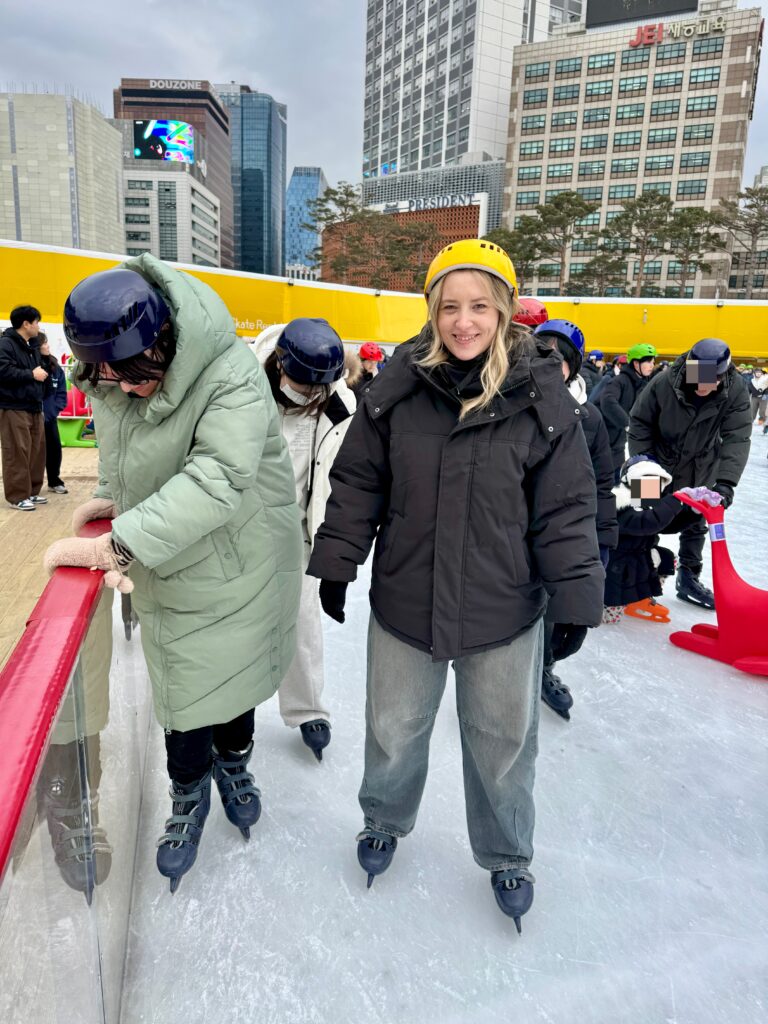
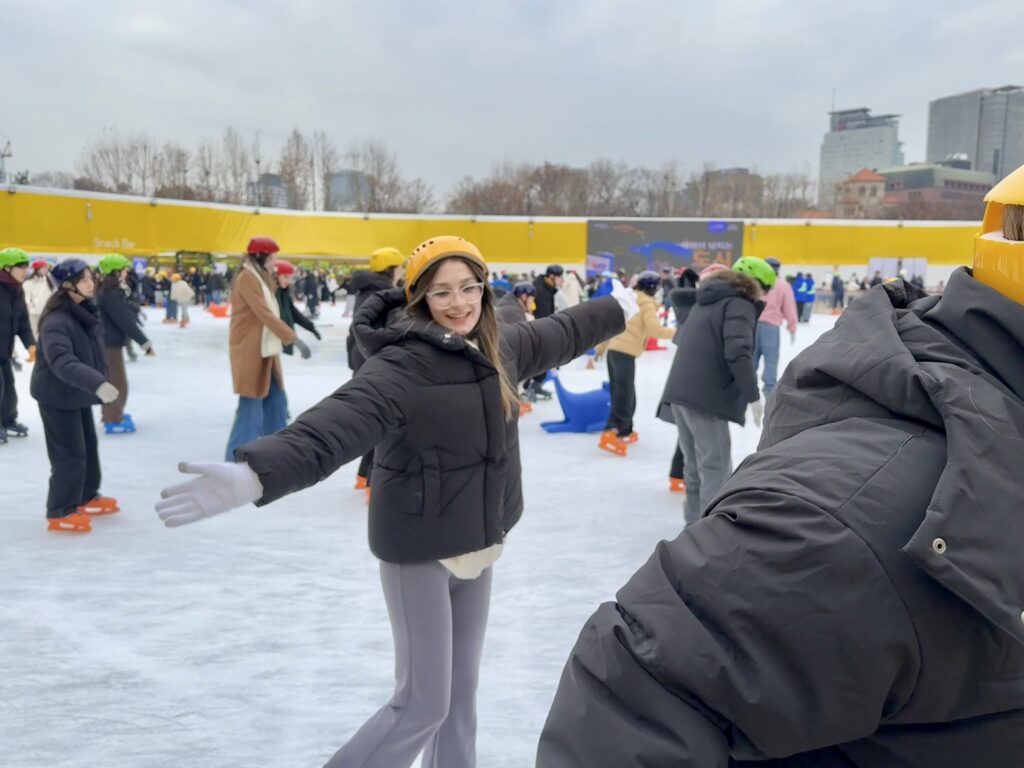
헬멧을 쓰고, 장갑도 꼈어요! 헬멧과 장갑이 없으면 스케이트를 탈 수 없으니 미리 준비해요~
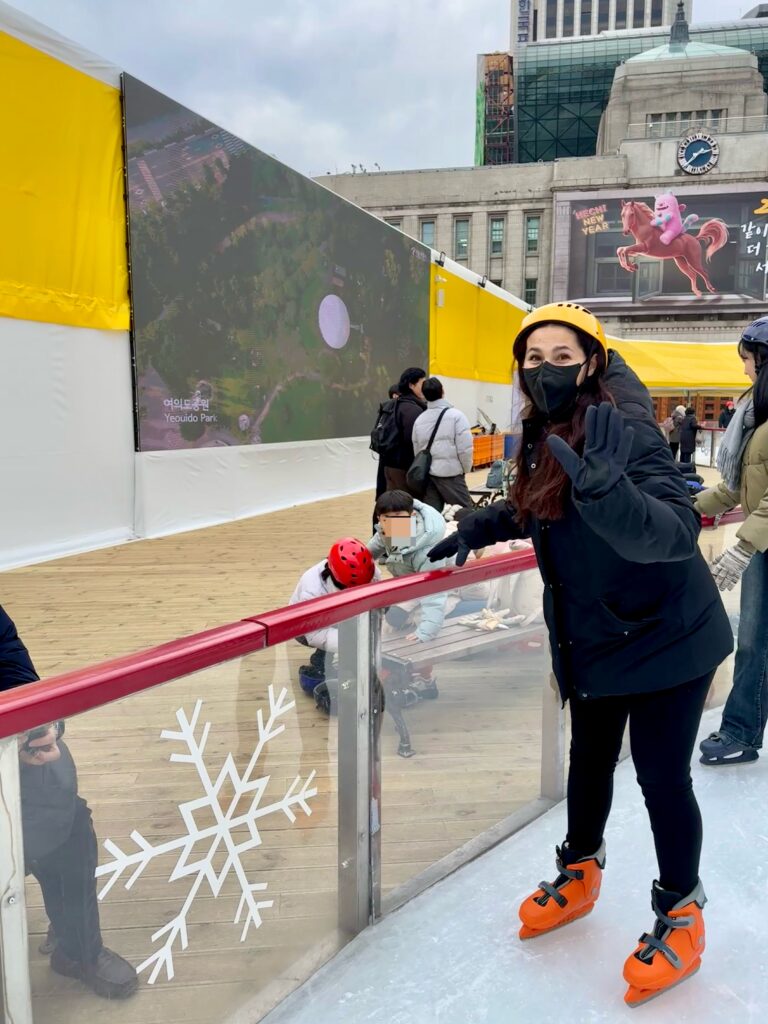
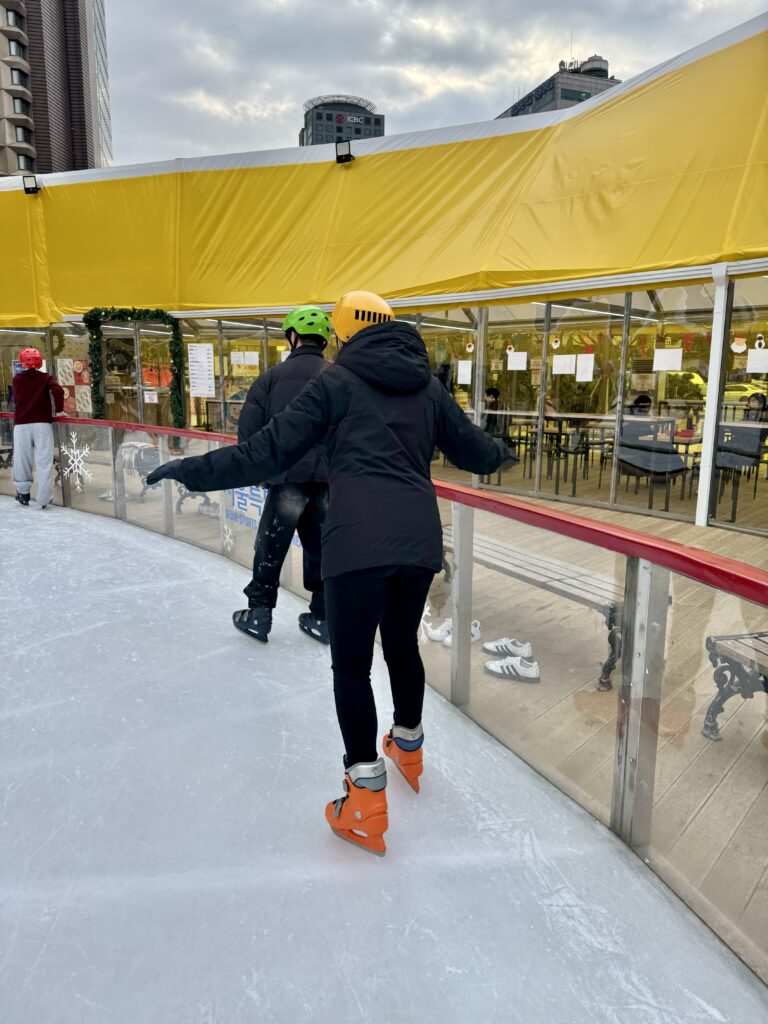
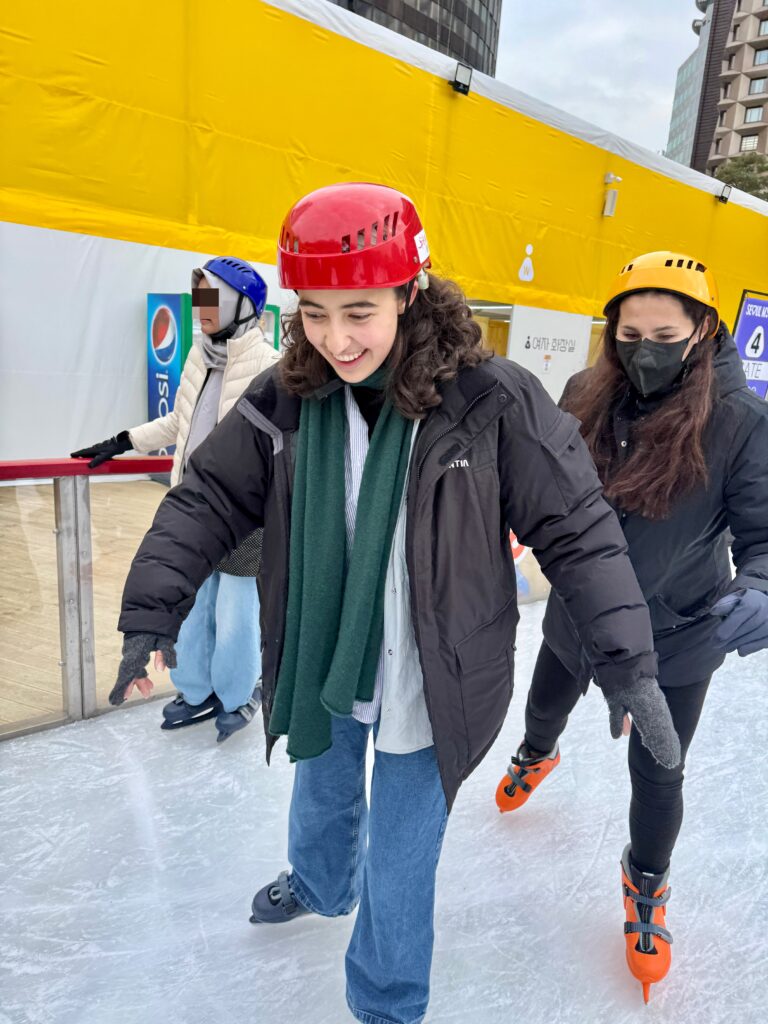
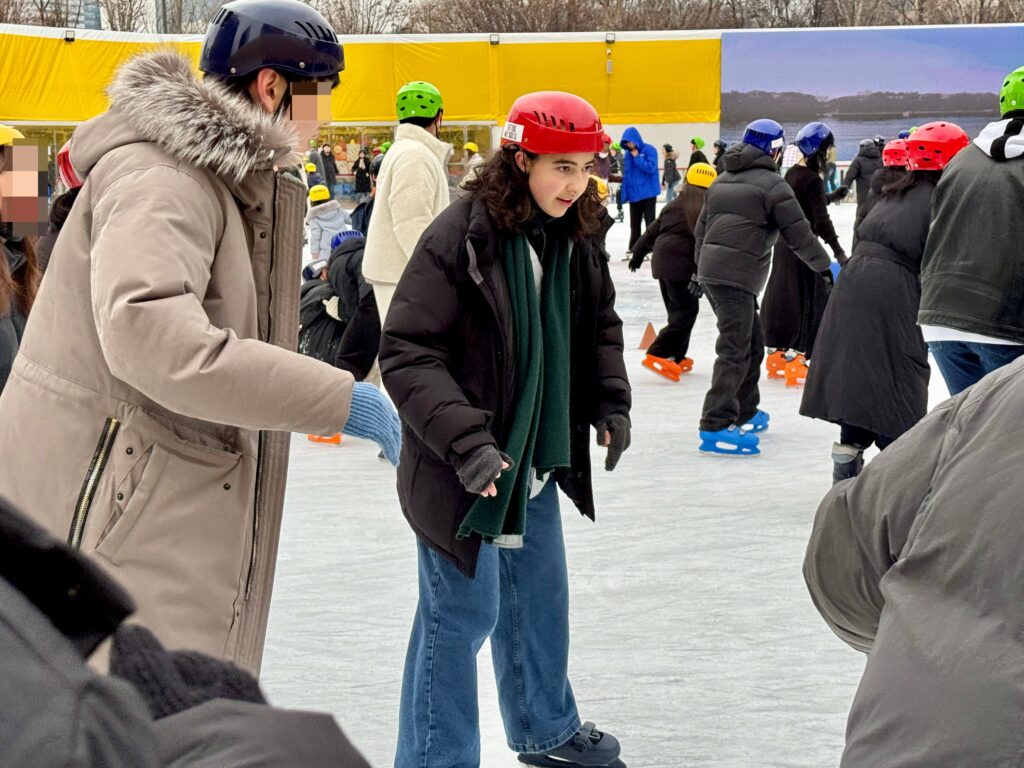
처음에는 조금 무서웠지만 타타 보니까 재미있었어요.
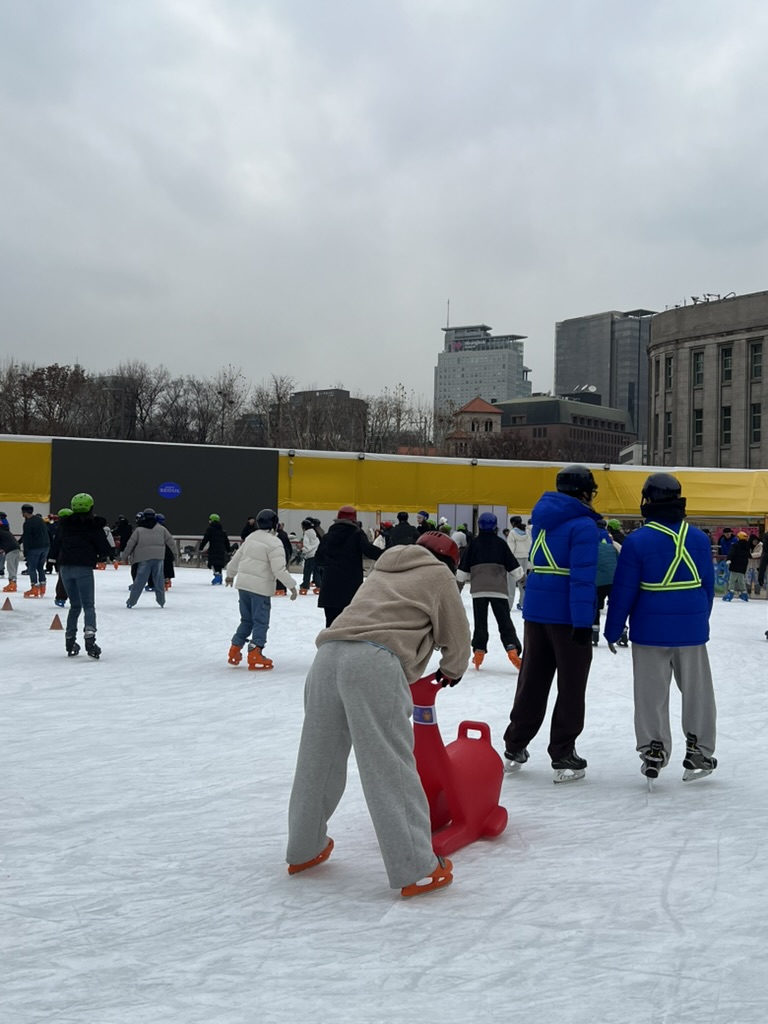
스케이트를 못 타는 사람들은 이런 보조기를 이용할 수 있어요.
친구들과 정말 즐거운 시간을 보냈어요. 여러분도 스케이트를 타고 싶다면, 서울 광장 스케이트장을 추천해요!
Hello everyone!
Last Friday, we visited the Seoul Plaza Ice Skating Rink together.
This skating rink is one of the most popular winter spots in Korea, where many people come to enjoy ice skating during the cold season.
We took a bus to City Hall Station, and the ride took about 40 minutes. On the bus, we chatted with friends about life in Korea, which made the time pass quickly 🙂
When we arrived at the Seoul Plaza Ice Skating Rink, we took photos together to capture the moment!
There were so many people there—everyone seemed to have come out to enjoy skating. K-pop music was playing throughout the rink, and we happily hummed along while getting ready to skate.
We put on our helmets and gloves. Helmets and gloves are required, so make sure to prepare them in advance!
At first, skating felt a little scary, but after a while, it became really fun.
For those who couldn’t skate well, there were skating aids available to help them stay balanced on the ice.
We had such a great time together with our friends.
If you’d like to try ice skating in Korea, we highly recommend visiting the Seoul Plaza Ice Skating Rink!